
Marine Elevator Repair: A Professional Guide from Fault Report to Return-to-Service Checks
Marine elevators work amid vibration, salt-laden air, humidity and vessel movement. Equipment makes, control systems and safety arrangements can also differ with vessel age and modification history. Professional marine elevator repair is therefore more than replacing a failed part: it connects the reported symptoms, equipment records, vessel schedule and boarding arrangements with risk control, diagnosis, corrective work and return-to-service verification. For ships calling at China ports, preparing the technical file and using the port-call window effectively can make onboard work more focused.
1. Report the fault clearly before the service visit
Accurate information helps the engineer assess likely causes and prepare instruments and compatible spares before boarding. From a safe position, the vessel can compile:
- Equipment details: manufacturer, model, rated load and speed, number of stops, controller type, and the date of the latest repair or modernization.
- Symptoms: when the issue began, how often it occurs, car location, direction of travel, loading condition, door behaviour, whether anyone is trapped and whether the fault can be repeated.
- Alarm information: displayed fault code, indicator status and whether it returns after a reset. Do not repeatedly reset the lift just to obtain a code.
- Photos or video: from a safe location only, without opening covers, entering hazardous areas or touching live equipment; identify where each image was taken.
- Technical records: electrical and mechanical drawings, operating and maintenance manual, previous inspection reports, service history and part numbers of replaced components.
If a passenger is trapped, follow the vessel's emergency procedure, alert the duty crew and contact qualified rescue personnel. Untrained staff should not force doors or enter the hoistway to attempt a rescue.
2. Common fault areas and diagnostic focus
Control logic and repair methods vary by equipment. The following categories help structure communication; they are not a crew repair procedure or a universal fault-code reference.
| Fault area | Possible symptom | Professional diagnostic focus |
|---|---|---|
| Car and landing doors | Doors will not close, cycle repeatedly, interlock fault or door-zone stop | Operator condition, interlock contacts, vane and roller alignment, sill debris and wiring connections |
| Power and controller | Lift will not start, intermittent shutdown, recurring alarm or unusual cabinet noise | Supply quality, protection devices, control power, terminals, drive and fault history |
| Traction machine and brake | Abnormal noise, vibration, signs of drift or levelling error | Brake release and stopping, traction components, bearings and mechanical fixings |
| Suspension ropes and guidance | Unusual wear, broken wires, oil contamination or rough travel | Rope condition under applicable criteria, tension and traction conditions, rail and guide-shoe condition |
| Emergency and communication systems | No contact during a power loss, unanswered alarm or rescue function issue | Communication path, backup supply, alarm and emergency-device operation |
3. A structured marine elevator repair workflow
- Initial assessment: the vessel provides symptoms, technical records, flag, port and estimated arrival, berthing and departure times. The service provider assesses the technical scope and feasibility of boarding.
- Method and quotation: define the inspection scope, diagnostic approach, likely spares, labour plan, limitations and expected handover records. Findings that have not yet been confirmed by onboard inspection should be identified as preliminary.
- Boarding coordination: confirm the ship agent, invitation letter, personnel documents, technical credentials, insurance, tools and any spare-parts declaration process required by the vessel and port. Port entry and boarding remain subject to the agent's and port authority's requirements.
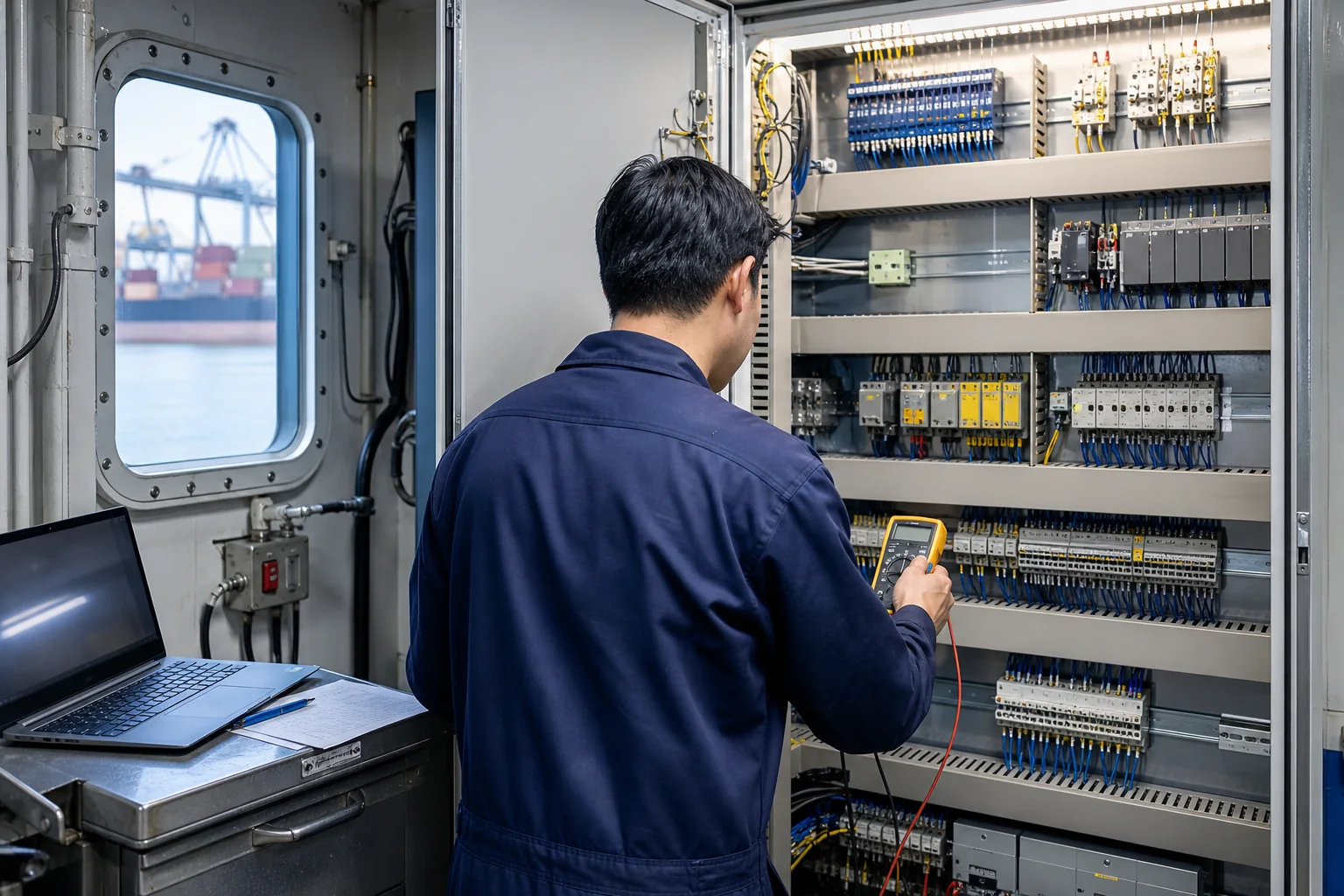
- Onboard inspection and cause confirmation: the engineer verifies nameplate and drawings, applies the approved risk assessment and isolation procedure, performs checks, then explains findings, repair scope and any additional parts or approvals required.
- Corrective work: repair, replace or adjust components under the approved scope, recording part numbers, setting changes, measurements and unresolved items. If the scope changes, discuss and obtain approval before proceeding.
- Verification and handover: perform operating checks under the equipment manual, applicable rules and approved scope. Confirm door interlocks, safety circuits, braking, levelling, alarms and emergency functions, then issue a repair report and hand over to the vessel.
4. Why rope and safety-component work needs a system-level assessment
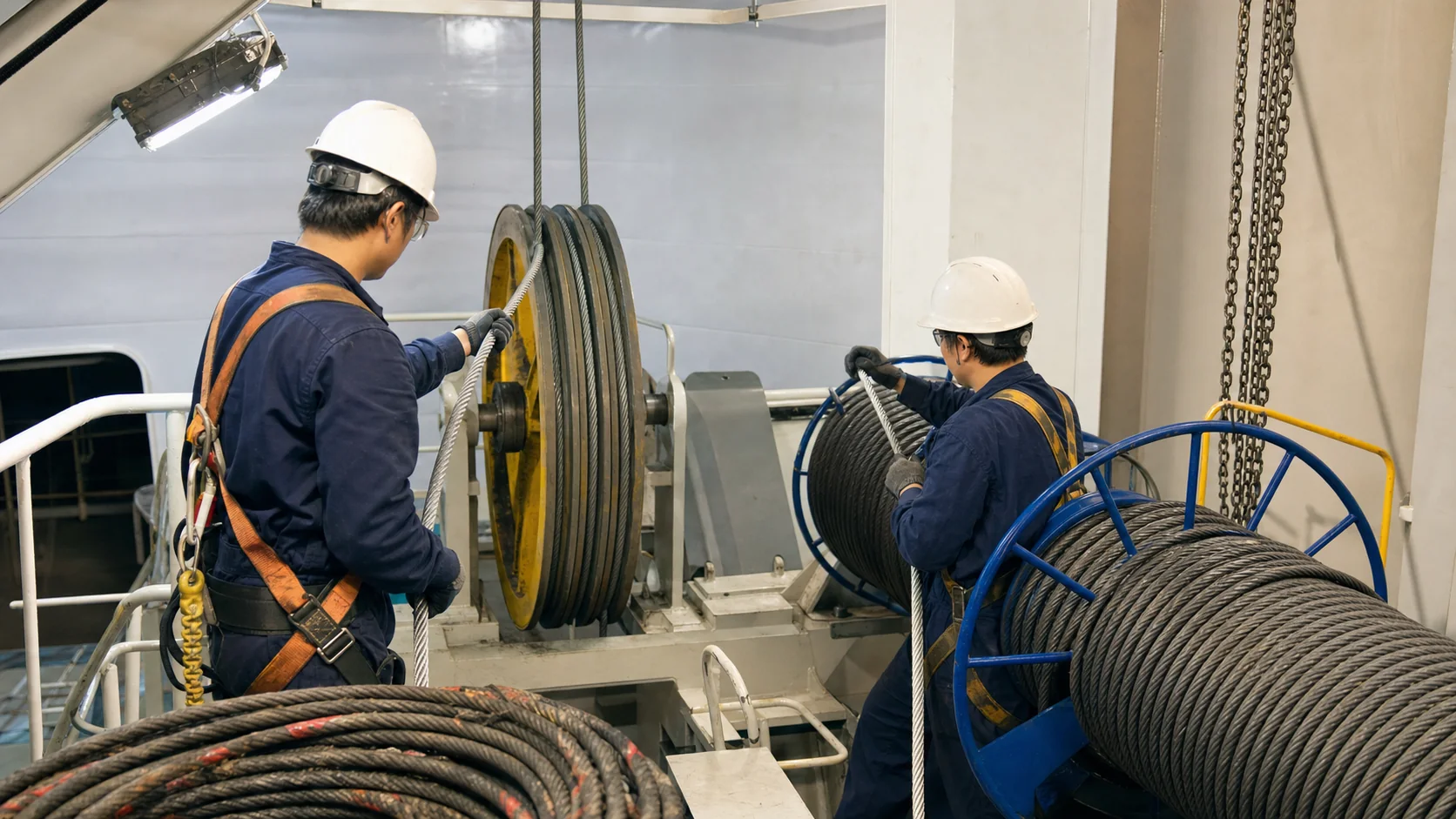
Suspension ropes, brakes, door interlocks and safety circuits affect equipment matching and protective functions. The technician should determine the action using manufacturer requirements, applicable criteria, inspection results and component compatibility. For example, ropes may need assessment for wear, broken wires, corrosion, diameter and tension; a single photograph is not enough to decide condemnation. If replacement is required, consider matched-set requirements, installation method, rope termination, tension equalisation and post-replacement checks. Brakes and safety circuits likewise require prescribed tests. Protective functions must never be bypassed to keep the elevator operating.
5. Planning onboard service during a port call
| Provide in advance | Why it matters | Preparation tip |
|---|---|---|
| Vessel name or identifier, flag, port and terminal | Confirms the service location and boarding requirements | Keep information consistent with the agent's submission |
| ETA, ETB, ETD and schedule updates | Defines the working window and technician mobilisation | Notify both provider and agent promptly when the schedule changes |
| Ship agent and operational contact | Coordinates entry, boarding and tool/parts clearance | Provide a reachable duty phone and email |
| Drawings, manuals, previous reports and service history | Supports diagnosis and compatible-spare preparation | Send clear, complete and current versions where available |
| Symptoms, alarms, photos or video | Helps plan diagnostic instruments and preliminary scope | Capture only from safe locations; do not dismantle or take live measurements |
Emergency repair and planned inspection have different planning priorities. For urgent work, report the symptoms, entrapment risk, out-of-service status and potential spare parts as early as possible. Annual inspection or planned maintenance places more emphasis on the technical file, service history, inspection scope and onboard assistance. In either case, vessel safety management and port boarding requirements govern the work.
6. What should the repair handover include?
A useful ship elevator repair report records the date and location, equipment identification, reported fault, inspection findings, work performed, replaced-part numbers, key test results, outstanding items and recommendations. Where limits, adjustments or safety-device tests are involved, record the conditions and results. A report should not present an unverified cause as certain, nor should a service report be treated as a statutory certificate required by a flag state, class society or competent authority.
Good marine elevator service handover means more than confirming that the lift runs again. The vessel should understand what was repaired, any remaining risk and the next action. If further inspection or parts are needed, state that clearly and coordinate a follow-up at the next port call or shipyard window.
Conclusion
Professional marine elevator troubleshooting and repair depend on reliable fault information, a suitable technical plan, careful port coordination and traceable return-to-service checks. Owners and managers can help by preparing drawings, service history, vessel schedule, flag, ship-agent contact and safe evidence of the fault. KERUI can assess marine elevator inspection, repair and overhaul requirements for vessels calling at China ports. The confirmed scope, boarding arrangements and response timing depend on technical review, vessel schedule and port clearance.