
Marine elevator overhaul should be planned with the vessel's shipyard schedule. Early surveys, component identification and parts procurement reduce idle time and protect the window required for modernization, load testing and joint acceptance.
01 / APPLICATION
Which shipyard projects are suitable for marine elevator overhaul?
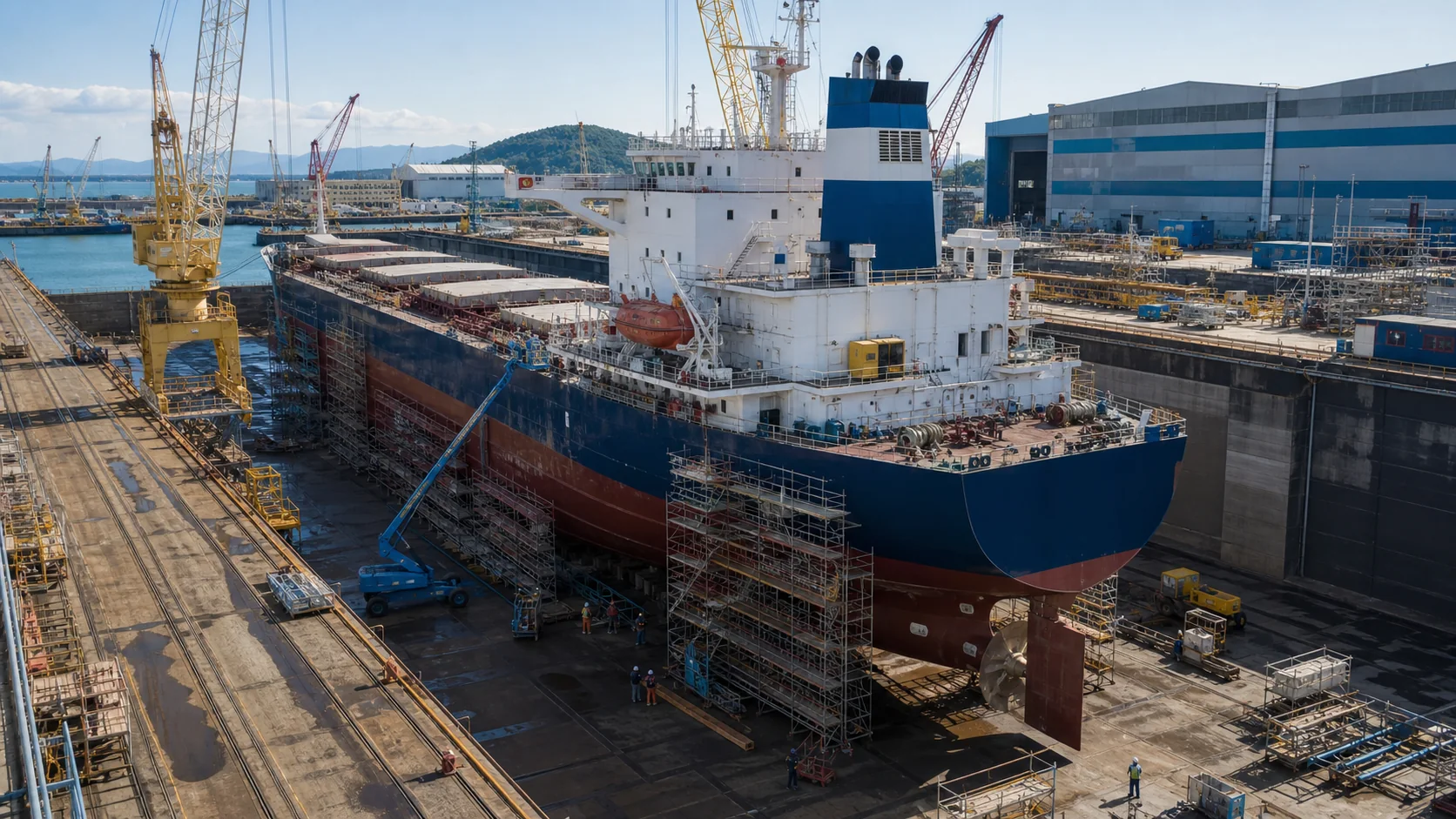
Dry docking, intermediate survey, special survey, 15-year major overhaul, retrofit and life-extension projects can provide the isolation, lifting, logistics and load-test conditions required for ship elevator work. Define the elevator scope when the docking plan is confirmed.
More than 15 years in service
Systematic strip-down, inspection and renewal of mechanical, electrical, safety and wear parts.
Long shutdown or recurring faults
Root-cause and condition assessment before defining the recovery scope.
Obsolete control system
Marine elevator modernization planning for the controller, drive, interface and communications.
Corrosion or safety risks
Rectification of corrosion, fasteners, locks, safety circuits, governor and safety gear.
02 / INFORMATION PACKAGE
What should the owner, manager or shipyard submit?
Complete records help distinguish marine elevator overhaul, repair and modernization requirements and allow early verification of ropes, controllers, door operators and safety components.
Vessel and shipyard schedule
Vessel name, IMO number, vessel type, shipyard, docking dates and available work windows.
Elevator parameters
Maker, model, quantity, capacity, speed, stops, service age and nameplate photographs.
Technical drawings
Electrical schematics, controller, shaft layout, door system, traction and wire-rope specifications.
Service history
Annual inspection, repair, maintenance, overhaul, replacement-part and fault records.
Current condition
Out-of-service state, fault codes, symptoms, corrosion and relevant photographs or video.
Project requirements
Whether it is a 15-year overhaul, class or shipyard requirements, modernization targets, acceptance and reporting needs.
Shipyard and docking dates, elevator nameplates, available drawings, rope specifications, fault history and recent inspection reports. If records are incomplete, start with an onsite survey.
03 / TEN-STEP WORKFLOW
From enquiry to completion: a ten-step overhaul process
The project plan should combine engineering, procurement, shipyard permits, safe execution, testing and documentation. This workflow applies to marine elevator overhaul Shenzhen and other China shipyard projects.
Confirm the overhaul requirement
The owner, manager or shipyard submits vessel data, elevator quantity, service age, faults, docking date and planned completion.
Site survey and technical assessment
Engineers inspect mechanical, electrical, door, safety, appearance and corrosion conditions and issue a technical assessment.
Engineering proposal and quotation
The proposal defines scope, replacement parts, schedule, duration, risk controls and acceptance criteria.
Contract and technical boundaries
Both parties confirm work scope, component requirements, technical standards, acceptance, duration and warranty terms.
Work planning and parts procurement
A project manager, engineers and safety personnel are assigned; ropes, locks, door operators, controllers and other critical parts are verified.
Shipyard mobilisation
Work follows shipyard safety management, permit-to-work, isolation and simultaneous-operation requirements.
Major overhaul or modernization
Mechanical repair, electrical renewal, safety-system restoration, corrosion treatment and necessary control or drive upgrades are completed.
Safety tests and load test
No-load, full-load, levelling, door interlock, governor, safety-gear, rescue and rated-load tests are performed.
Joint final acceptance
The owner, shipyard and project engineer jointly verify appearance, function, safety and technical records.
Completion documentation
KERUI submits the overhaul report, parts list, test and load-test records, commissioning record, acceptance file and recommendations.
04 / OVERHAUL SCOPE
What does a marine elevator overhaul and modernization include?
The final scope follows the onsite technical assessment. An overhaul may restore mechanical, electrical and safety systems, while modernization can upgrade obsolete or unsupported controls, drives and communications.
Repair and restoration
- Traction machine, brake, rails, counterweight and buffers;
- Locks, door operator, landing and car door systems;
- Controller, PLC, power supply, cables and control wiring;
- Governor, safety gear, rope gripper, final limits and rescue devices;
- Rust removal, corrosion protection, touch-up coating and fasteners.
15-year overhaul and modernization
- Strip-down inspection and remaining-life assessment;
- Renewal of ropes, locks, bearings, guide shoes, seals and other wear parts;
- Control, drive, interface and communication upgrades where required;
- Recovery of levelling, start/stop, door and ride performance;
- Updated parts lists, commissioning parameters and equipment records.
05 / WIRE-ROPE REPLACEMENT
Key controls for marine elevator wire-rope replacement
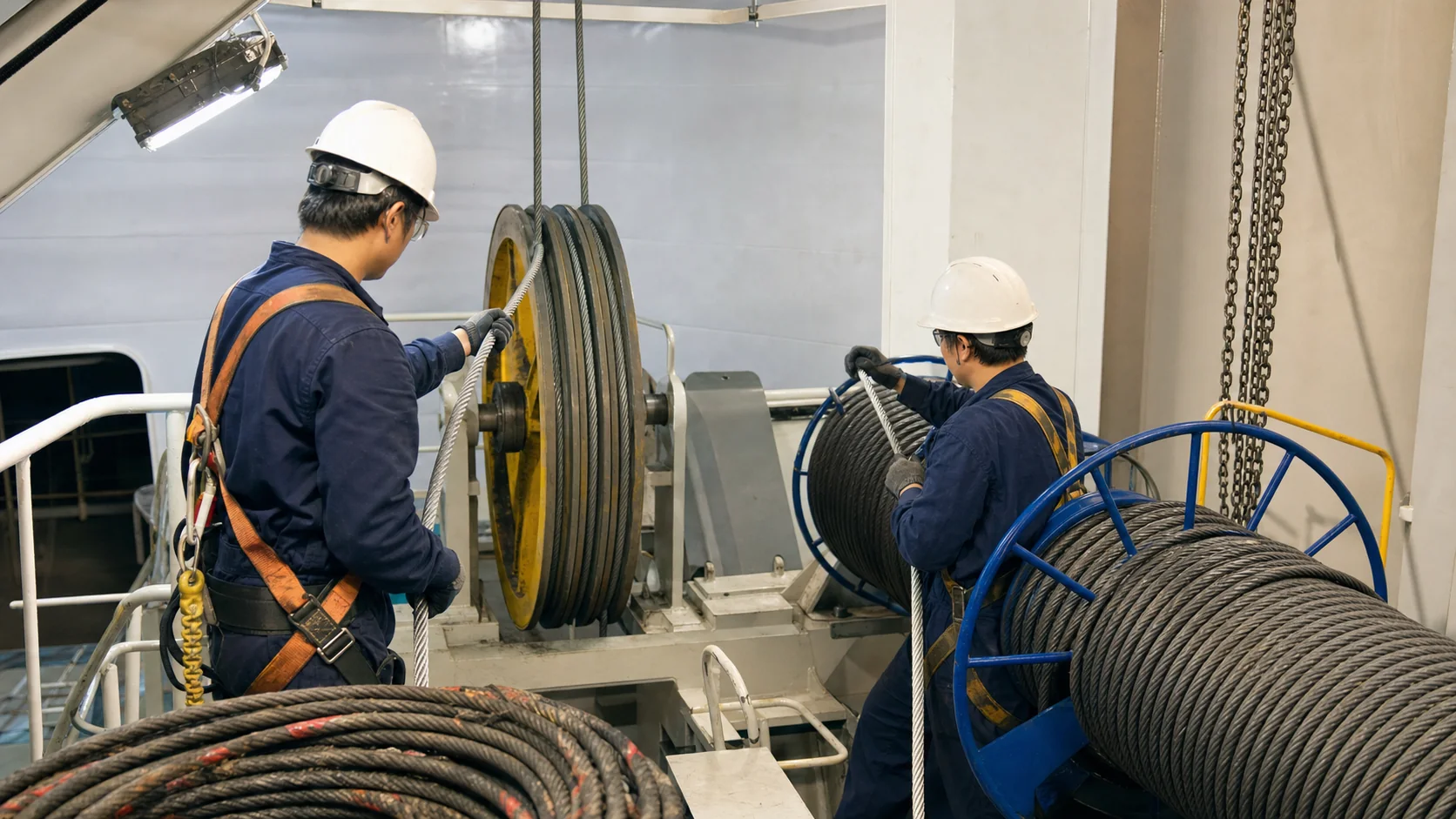
Wire-rope replacement is a critical mechanical task within ship elevator overhaul. Confirm the design specification, diameter, construction, quantity and termination method, and inspect traction sheaves, grooves, deflectors and fasteners. Equalise rope tension and complete braking, levelling and operational tests.
06 / TESTING & DOCUMENTS
Testing, load test, joint acceptance and completion records
Completion of repair work is not the end of the project. A marine elevator overhaul requires functional and safety verification, followed by confirmation of the scope, results and residual recommendations.
Operating performance
No-load, full-load, levelling, start/stop and door performance.
Safety functions
Door interlock, governor, safety gear, safety circuit and rescue tests.
Joint acceptance
Owner, shipyard and project engineer verify appearance, function, safety and records.
Completion file
Overhaul report, parts list, inspection, load-test, commissioning, acceptance and warranty records.
07 / SHIPYARD ATTENDANCE
Marine elevator overhaul Shenzhen and China shipyard attendance
For marine elevator overhaul Shenzhen and marine elevator repair Shenzhen projects, confirm the shipyard, docking date, duration and simultaneous-work conditions early. KERUI can also coordinate attendance at coastal China shipyards in Guangzhou, Shanghai, Zhoushan, Qingdao, Yantai, Dalian and Tianjin.
Before mobilisation
- Confirm shipyard induction, access documents and work permits;
- Define routes for materials, tools, lifting and transport;
- Reserve isolation and access windows for machine space, shaft and pit.
Vessel and shipyard support
- Assign a shipboard electrical or engineering technician;
- Coordinate simultaneous work, hot work, lifting and test conditions;
- Arrange owner and shipyard representatives for tests and final acceptance.
08 / FAQ
Frequently asked questions about overhaul and modernization
Must every marine elevator be fully replaced after 15 years?+
No. A site survey should assess the structure, traction, doors, controls and safety devices before deciding what to retain, repair, replace or modernize.
What is the difference between marine elevator overhaul and modernization?+
Overhaul restores safety, reliability and performance. Modernization normally upgrades controls, drives, interfaces, communications or system architecture. A project may include both.
How early should a marine elevator overhaul Shenzhen project start?+
Begin once the Shenzhen shipyard and docking window are known. Ropes, controllers, door operators and safety parts may require specification confirmation, procurement and transport.
What checks follow wire-rope replacement?+
Verify rope specification and terminations, inspect traction sheaves and grooves, equalise rope tension, and complete operational, levelling, braking and relevant load tests.
KERUI MARINE ELEVATOR OVERHAUL
Is the vessel entering a shipyard? Send the docking plan and elevator records early.
KERUI supports onsite surveys, marine elevator overhaul, modernization, rope and critical-part renewal, safety testing, load tests and completion documentation.
Source and scope note
This article is based on KERUI's marine elevator repair and 15-year overhaul process during ship dry docking. The actual scope follows the site survey, contract boundaries, equipment condition and applicable requirements.
The article images are original illustrations and do not depict a specific vessel, shipyard or project.