
A marine elevator annual safety inspection is a documented, systematic assessment of the machine, brake, ropes, doors, safety devices, controls and operating performance by competent technical personnel.
01 / DEFINITION
What is a marine elevator annual safety inspection?
A marine elevator, also called a ship elevator, is vertical-transport equipment installed on cargo vessels, container ships, workboats, offshore units and passenger ships. A ship elevator inspection is more than a single ride test: it combines record review, visual examination, measurements, safety-device tests and observation of actual operation.
The actual scope depends on elevator type, flag-administration requirements, classification rules, maker instructions, vessel certificates and the agreed service scope. Land-elevator practice should not be applied to shipboard equipment without verification.
02 / WHY ANNUALLY
Why is a ship elevator normally inspected every year?
Shipboard elevators operate amid vibration, humidity, salt spray, temperature change and vessel motion. Door-lock contacts can oxidise, brake clearances can change, ropes and grooves wear, and electrical terminations can loosen. Early deterioration may not stop the elevator immediately, but it can steadily reduce the safety margin.
Identify progressive deterioration
Find trends before a small defect becomes downtime or a safety failure.
Verify the safety chain
Confirm that doors, brakes, overspeed protection and electrical interlocks still work as designed.
Support repair decisions
Convert findings into immediate correction, planned marine elevator repair or overhaul.
Create traceable records
Provide condition evidence for owners, managers and future service teams.
03 / INSPECTION ITEMS
What are the main marine elevator annual inspection items?
The exact items vary with the equipment configuration. These eight groups cover common mechanical, electrical and operational checks on traction-type marine elevators and explain why access to the machine space, car top, hoistway points and pit may be required.
Traction machine and brake
Check mountings, abnormal noise and vibration, bearings and gearbox, sheave grooves, brake action and clearance.
Wire ropes and traction system
Examine wear, broken wires, corrosion, terminations, tension balance, traction sheaves and deflectors.
Car, car top, hoistway and pit
Inspect structures, guide shoes, lighting, inspection controls, final limits, buffers and safe access.
Landing doors, car doors and locks
Verify the door operator, lock engagement, electrical contacts, rollers, door vane and interlock logic.
Governor and safety protection
Check the governor, safety gear, linkage, emergency stops, terminal protection and applicable overspeed functions.
Controller and electrical system
Review contactors, relays, drive, PLC, power supply, grounding, wiring, safety circuits and fault history.
Alarm, communication and emergency lighting
Test the alarm, intercom or communication system, emergency lighting and applicable emergency power.
Operational and functional tests
Observe starting, acceleration, travel, deceleration, stopping, door operation, levelling, noise and vibration.
04 / FIVE-YEAR LOAD TEST
How does the five-year load test differ from annual inspection?
Annual inspection primarily verifies present condition, operation and safety protection. Many applicable regimes also require a load test every five years, using a prescribed test load to further verify drive, braking, traction, structural and relevant safety performance. A major modification or critical repair may also trigger applicable load or safety testing.
Annual safety inspection
- Focuses on condition and functional verification;
- Covers mechanical, electrical, door and safety systems;
- Records defects, risks and corrective actions;
- Does not replace routine maintenance.
Five-year load test
- Uses the prescribed test load under applicable requirements;
- Further verifies drive, braking and traction capability;
- May require an authorised witness or organisation;
- Produces test records or applicable certification.
05 / PRACTICAL VALUE
What is the practical value of annual safety inspection?
The value of a marine elevator annual inspection is not merely a report. It creates a loop of detection, risk assessment, marine elevator repair and re-testing. This helps owners plan parts and work windows, reduce unplanned downtime and decide whether marine elevator overhaul or modernization is needed.
A satisfactory result records compliance within the agreed scope on the inspection date. It is not a promise of fault-free operation for the following year. Continued maintenance, condition monitoring and timely repair remain essential.
06 / CHINA PORT PLANNING
Planning marine elevator inspection at Shenzhen and China ports
Foreign and foreign-flagged vessels can coordinate attendance around ETA, ETD and ship-agent arrangements. For marine elevator inspection Shenzhen and other China-port calls, send flag, equipment data, drawings, previous reports, maintenance and repair history, current condition and the available work window in advance.
KERUI can coordinate marine elevator service, annual inspection and repair at major China ports including Shenzhen, Guangzhou, Sanya, Shanghai, Ningbo, Zhoushan, Qingdao and Yantai, with global attendance subject to project conditions.
07 / FAQ
Marine elevator annual inspection FAQ
Is a marine elevator annual safety inspection the same as routine maintenance?+
No. Routine maintenance provides ongoing cleaning, adjustment, lubrication and care. An annual safety inspection is a periodic, systematic review of mechanical, electrical, safety-device and operational condition. Neither replaces the other.
Is the five-year load test the same as an annual inspection?+
No. Annual inspection focuses on current condition and safety functions. A five-year load test typically verifies drive, braking, traction and applicable safety performance under a prescribed test load. The exact interval, load, witness and certification requirements must follow the flag administration, classification society, maker documentation and vessel certificates.
What happens when the inspection identifies a defect?+
Record the location, symptom and safety effect, then classify the action as immediate rectification, planned marine elevator repair or further assessment. Relevant functions should be re-tested after safety-critical repair.
Does passing the inspection guarantee fault-free operation for the next year?+
No. It records condition within the agreed scope at the inspection date. Ongoing maintenance, condition monitoring, timely repair and complete records remain necessary.
KERUI MARINE ELEVATOR SERVICE
Planning a marine elevator inspection at the next China port?
Send the vessel flag, schedule, port, equipment data, drawings, previous inspection and maintenance records, and current operating condition for technical pre-review.
Source and scope note
This article is adapted from KERUI's technical paper on marine elevator annual inspection and field service experience. The applicable rules, equipment documentation and agreed scope govern the actual items, intervals, tests and certification.
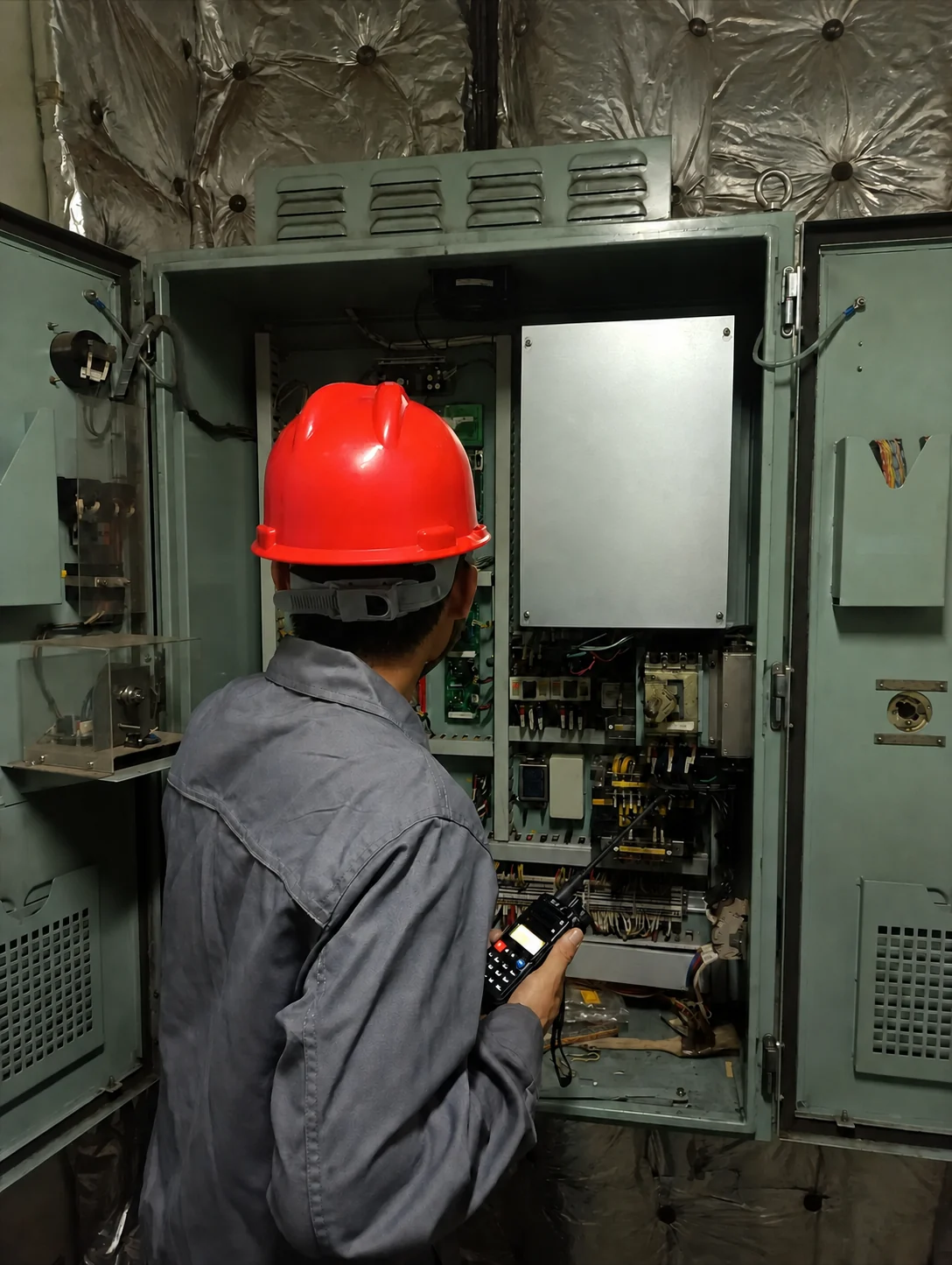
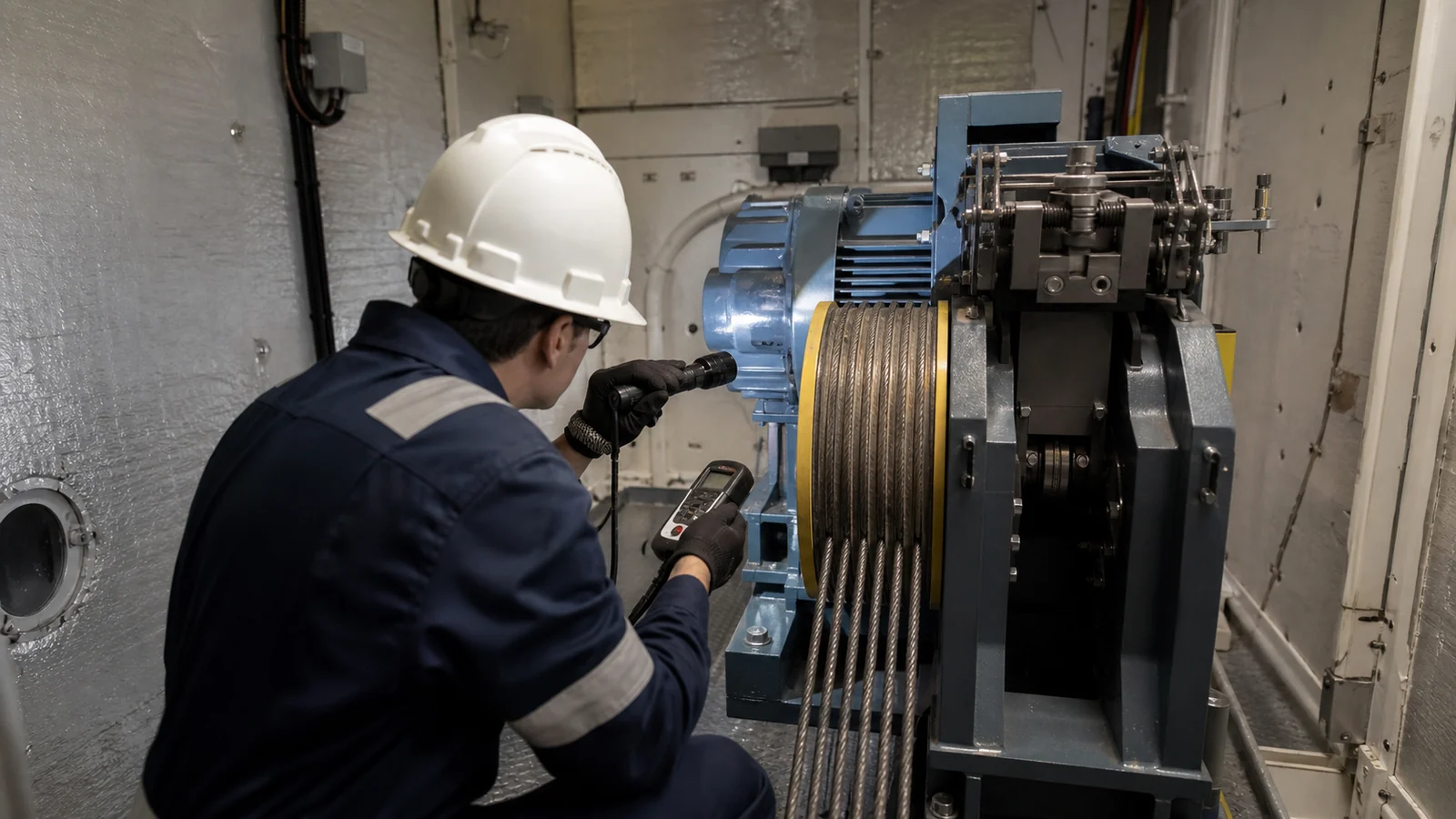
The first image is an anonymised field photograph. The second is an original illustrative scene and does not depict a specific vessel or project.