
Marine Elevator Repair in Shenzhen: Fault Assessment, Port Attendance and Return-to-Service Checks
Marine elevator repair involves more than identifying an equipment fault. Work must also fit the vessel’s port-call window, boarding authorization, terminal procedures and expected departure time. For shipowners and managers planning marine elevator repair in Shenzhen, preparing the technical file, fault symptoms and vessel schedule in advance helps the service team assess the request and plan personnel, tools and potential spare parts. This guide outlines the preparation and coordination process for owners, crew and local agents. The actual scope and attendance plan must be confirmed against the vessel, elevator model, equipment documents, flag-state and class requirements, and port rules.
1. Describe the fault before arranging ship elevator repair
A message such as “the elevator is not working” is rarely enough for a useful remote assessment. Where available, provide:
- Elevator make, model, rated load, served decks and equipment identification;
- When the fault began, how often it occurs, and the car’s location or operating condition at the time;
- Whether the lift is fully out of service or showing a specific symptom such as abnormal door operation, interrupted travel, levelling concerns or a fault code;
- Any recent power interruption, water ingress, unusual noise, component replacement or other service work;
- Steps currently taken onboard to restrict use, provide warnings or manage the area.
Photographs or video should only be taken by shipboard personnel from authorized and safe locations. Do not enter the shaft, open energized equipment or approach moving components to obtain images. Clear records help a marine elevator repair team assess whether special instruments, particular spares or further technical documents may be needed.
2. Documents and information to prepare
| Category | Useful information | Purpose |
|---|---|---|
| Technical file | Electrical drawings, system diagrams, operating and maintenance manual, nameplate details | Confirm configuration, interfaces and applicable service information |
| Service history | Previous inspection reports, repair records, maintenance logs and fault history | Understand equipment history and recurring issues |
| Fault evidence | Fault codes, occurrence times, written symptoms and safely captured photos or video | Support an initial scope assessment |
| Vessel and schedule | Vessel identification, flag, port, ETA / ETB / ETD and expected departure time | Assess the boarding and work window |
| Port coordination | Contact details for the Shenzhen port agent | Coordinate boarding applications and terminal arrangements |
| Shipboard support | Onboard contact, available technical crew and working language | Support clear communication during attendance |
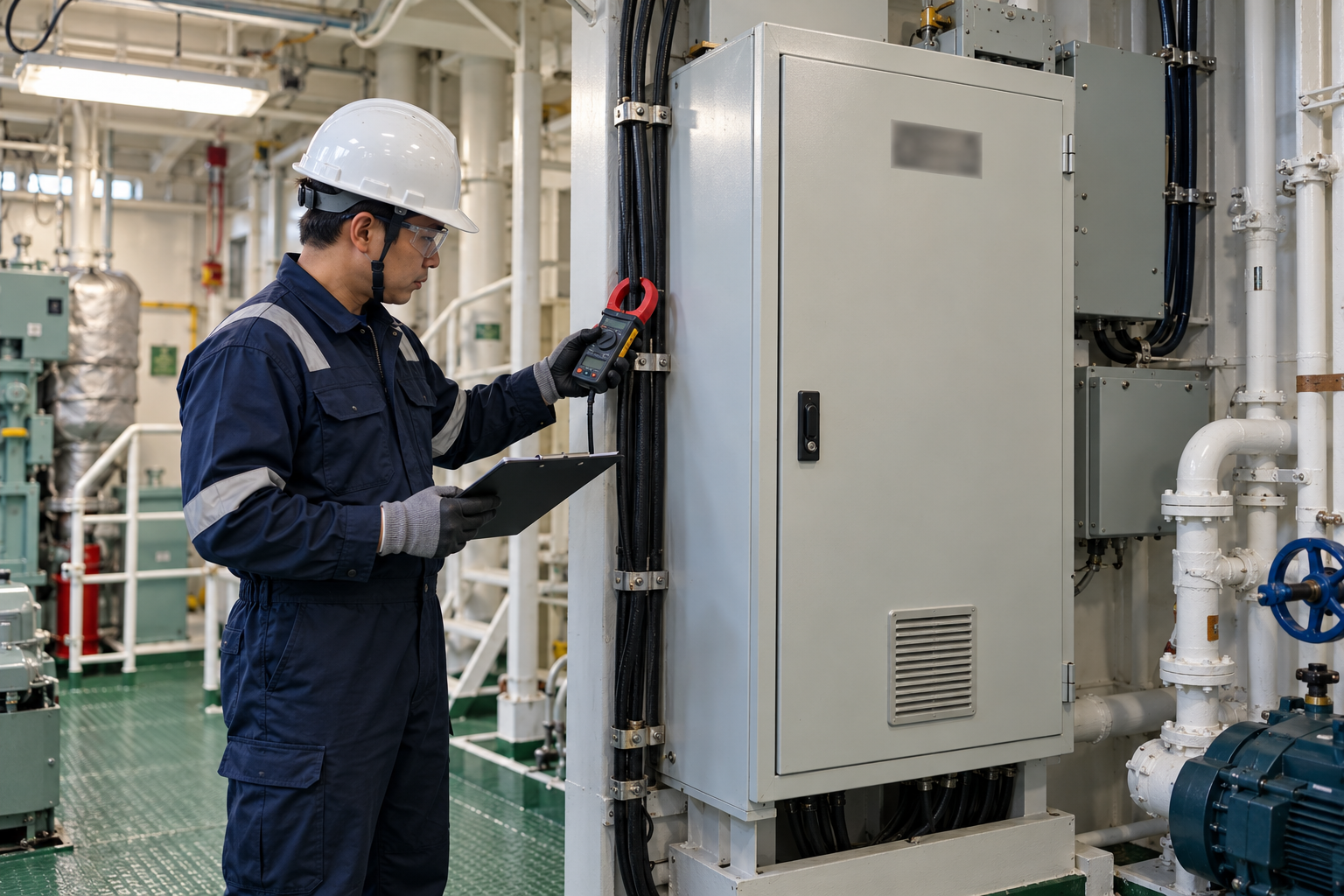
An initial discussion can start before every document is available, but the final service plan and quotation may need to wait until key equipment details are confirmed. For special spare parts, check references, availability, shipping time and filing requirements early.
3. Typical coordination sequence for marine elevator service in Shenzhen
Vessel information → Initial remote review → Scope and quotation → Owner confirmation and invitation/agent details → Boarding coordination → Onboard inspection and repair → Verification and service records
- Confirm the port-call window: Share ETA, ETB, ETD and expected departure time. Update the service provider if the schedule changes. A schedule supports planning but does not itself authorize boarding.
- Send equipment and fault information: The service team assesses scope, personnel, tools and possible spare-part needs.
- Agree on technical and commercial scope: Confirm the service items, quotation, onboard support and documentation.
- Coordinate invitation and agent filing: The vessel follows its applicable process for providing an invitation and agent contact. The service provider checks personnel details, tool lists and boarding requirements with the agent. Documents and approvals depend on vessel, terminal and authority requirements.
- Carry out the onboard work: The engineer follows the agreed scope and safety procedures. If additional issues are found, discuss options before proceeding beyond the original scope.
- Complete appropriate checks and records: Verify the work according to equipment documents and the agreed scope. If a safety issue remains unresolved, record restrictions clearly; completion of repair should not automatically be treated as authorization to return the lift to service.
4. Emergency response versus planned repair
| Topic | Emergency repair | Planned repair |
|---|---|---|
| Main objective | Quickly assess equipment status, risk and feasible action | Complete a defined inspection, repair or component replacement within an agreed window |
| Preparation priority | Fault symptoms, current status and vessel schedule | Drawings, service history, maintenance plan and available work window |
| Spare-part planning | Identify suspected parts early and check supply options | Compare references, quantities, shipping and boarding procedures in advance |
| Schedule impact | Shorter port windows and potentially more changes | Usually more time to prepare people, materials and scope |
An emergency does not remove the need for safety checks, authorization or sound technical judgment. If the schedule, fault details or parts availability changes, notify both the service provider and vessel agent promptly so the plan can be reassessed.
5. Safety and return-to-service boundaries
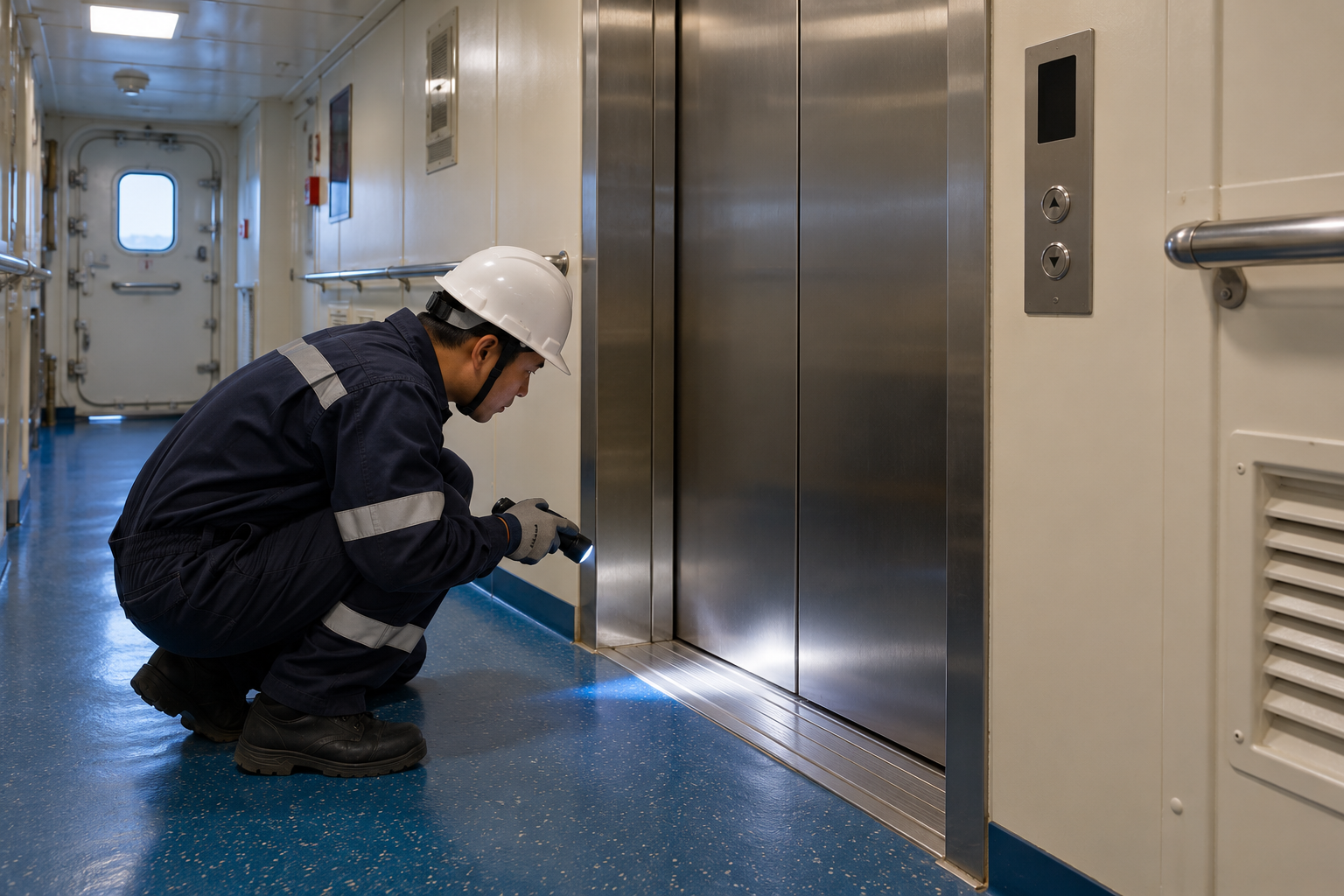
Marine elevator service requires coordination between the vessel and service personnel. Before work begins, confirm equipment status, work area, communications, out-of-service controls and measures to prevent unintended operation. Follow the vessel’s safety-management procedures, manufacturer documentation and applicable requirements. Work involving a shaft, car top, machinery-room electrical equipment or other restricted areas must be performed by competent personnel under the required procedures.
Whether an elevator may return to service after repair depends on actual findings, applicable rules and confirmation by responsible parties. Abnormalities involving safety circuits, interlocks, brakes or other important functions must be recorded with any restrictions clearly stated. Requirements vary among vessels and elevator systems, so general experience cannot replace manufacturer information or applicable vessel rules. China’s SAMR TSG T5002—2017 sets maintenance requirements for elevators within its scope; for shipboard equipment, verify the regulatory status and applicable flag-state, class and vessel-management requirements separately.
6. Preparing efficiently for marine elevator repair at Shenzhen ports
Four groups of information usually make coordination more efficient: equipment documents, fault evidence, an accurate vessel schedule and agent contact details. For a foreign-flag vessel, confirm invitation, personnel credentials, tools and spare-part filing requirements as early as possible.
KERUI can review vessel information and coordinate an initial technical discussion for ship elevator repair in Shenzhen and other China ports. Boarding, attendance timing, spare-part supply and final service scope must be confirmed for each call based on the schedule, terminal authorization, onboard arrangements and equipment condition.
Marine elevator service inquiries:
Phone: +86 189 2748 2192; WhatsApp: +86 17150859783
Email: hrx@keruief.com
Frequently asked questions
Are complete drawings required before a marine elevator repair quotation?
Not always, but drawings, nameplate details and service records improve the assessment. If some documents are unavailable, start with the model, fault description and vessel schedule; the technical team can identify what else is needed.
What should we do if the vessel schedule changes?
Send the revised ETA, ETB, ETD, expected departure time and agent contact as soon as possible. The service provider must reassess personnel, spare-part transport and boarding arrangements.
Can a fault be confirmed from photos alone?
Photos and video can support an initial review but usually cannot replace an onboard inspection. The repair scope, parts and return-to-service conditions should be confirmed by competent personnel based on equipment condition.
References and scope
- China SAMR: TSG T5002—2017, Elevator Maintenance Rules. Confirm first whether the equipment falls within its scope.
This article provides general technical and service-process information. It is not a repair instruction, inspection finding or guarantee of boarding permission for any particular vessel.