
Preparing a foreign-flag vessel for marine elevator repair in China is more than reporting a fault. The technical file, repair history, vessel and schedule, local agent, fault evidence, invitation letter and onboard work conditions should be coordinated as one package. Earlier and better information supports diagnosis, spares planning and efficient use of a short port call.
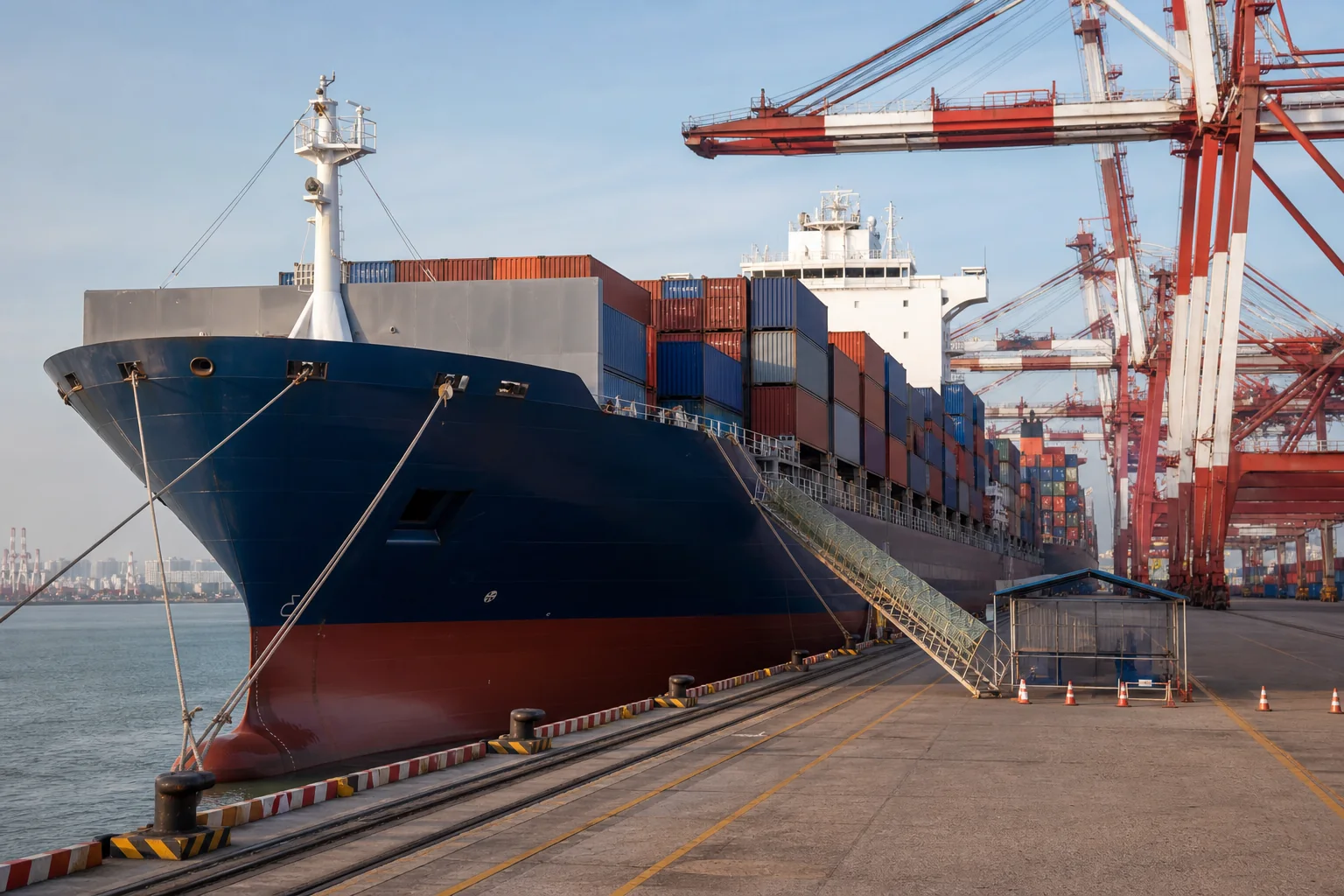
01 / ACCESS BEFORE ATTENDANCE
Why must boarding and port access be confirmed first?
Article 54 of China’s Exit and Entry Administration Law requires personnel boarding a foreign vessel for repair work to apply for the required boarding document. The National Immigration Administration service guide also identifies the parties that may submit the application information, including the individual, employer, vessel representative or entry/exit agent.
An invitation letter is not boarding permission, and a technical proposal does not replace port formalities. Requirements vary by port, terminal and call; follow the latest instructions from the ship agent and competent local authorities.
02 / SEVEN PREPARATION PACKS
Seven information packs to prepare before marine elevator repair
Complete elevator technical file
Provide the general arrangement, shaft and car drawings, electrical schematics, controller and door-system wiring, machine and safety-component information, parameter sheets, nameplate photographs, part numbers, and the operation and maintenance manual. Send the available revision first and identify any missing documents.
Inspection and repair history
Compile annual inspection or survey reports, routine maintenance logs, previous fault and repair reports, replaced-part records, controller backups and modernization records. A clear timeline of symptoms, action taken and parts changed improves remote diagnosis.
Vessel identity and port-call window
Send the vessel name, IMO or official number, flag, vessel type, call sign where applicable, expected China port, terminal and berth, plus ETA, expected berthing time and ETD. Update the service company immediately when the schedule changes.
Local ship-agent details
Provide the full company name, operations contact, phone, email and duty contact for the agent serving the China port. The agent is the key interface for terminal requirements, personnel and vehicle filing, boarding permission and port access.
Structured fault evidence
Record when the fault first occurred, alarm codes, the operating step at which the lift stops, any entrapment, whether the fault is repeatable and whether the elevator is isolated. Add clear photos of the nameplate, controller indications, door equipment, machine and affected parts, plus useful video of sound and movement.
Invitation letter and contact confirmation
The owner, manager or vessel issues an invitation letter as required, identifying the vessel, port, expected service date, purpose of attendance, invited company and personnel. Confirm engineer names, identity details and the required letter format with the repair company and ship agent before issue.
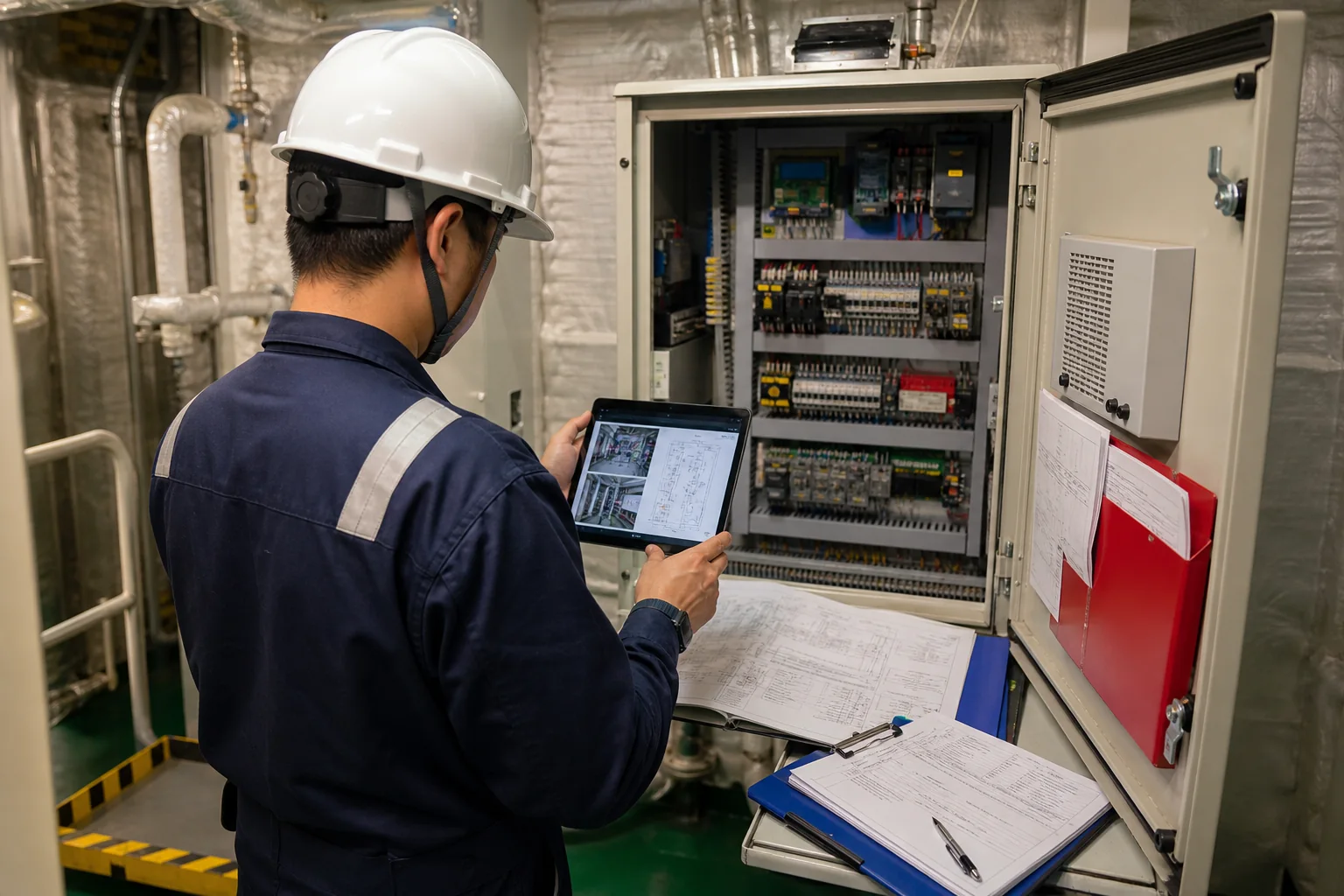
Onboard assistance and work conditions
Assign at least one technical crew member familiar with the equipment and vessel safety system. Confirm safe access to the machinery space, shaft, car top and pit; arrange induction, lighting, isolation and lockout/tagout, and clarify port rules for tools, instruments and spare parts.
03 / COORDINATION WORKFLOW
A practical workflow from first contact to onboard repair
Start early
Send the vessel, elevator, fault and preliminary schedule package. Do not wait until berthing to begin diagnosis.
Scope and quotation
The service company reviews the file and proposes the inspection or repair scope, engineers, tools, likely spares and quotation.
Approval and invitation
After accepting the plan, the vessel issues the invitation letter and sends the required engineer information to the ship agent.
Port entry and boarding
The agent handles or supports local terminal and immigration formalities. Engineers board after access clearance and safety induction.
Repair and handover
Engineers troubleshoot, repair and test with vessel support, then prepare service records, test results and follow-up recommendations.
Marine elevator repair at Shenzhen, Guangzhou, Shanghai, Ningbo, Qingdao and other China ports should be planned around the actual berth window. The agent should confirm local lead time and the required personnel, vehicle, tool and spare-parts lists; a single fixed timeline should not be assumed for every port.
04 / PRE-SUBMISSION CHECK
Quick check before sending the package
Which vessel and flag? Which port area, terminal and berth? When will it arrive and depart? Which elevator is affected? What exactly is the fault? Which drawings and historical records are available? Which ship agent will coordinate boarding?
Name files by vessel, elevator, date and document type. Keep original sound in videos and provide both overview and detail photographs. For crew identity documents and commercial records, send only what is necessary and use an agreed secure transfer method.
05 / FAQ
Frequently asked questions
Why are drawings needed before attendance?+
Marine elevators vary widely in make, age and modification history. Drawings help engineers identify circuits, component specifications and test points instead of starting from zero during a short port call.
Can service be arranged without a complete history?+
An initial assessment can begin, but missing records should be declared and supplemented with a fault timeline, nameplate, current-condition photos and video. Gaps may affect quotation accuracy, parts matching and the chance of completing the job in one attendance.
Is the invitation letter the same as boarding permission?+
No. It documents the service relationship and purpose of attendance. Personnel boarding a foreign vessel must still obtain the permission required by immigration inspection and the local port or terminal.
What if the schedule is uncertain?+
Send the best available ETA, berthing window and ETD, then nominate vessel and agent contacts who can issue live updates. Engineer travel, access filing and spares planning should be reconfirmed as the schedule changes.
OFFICIAL REFERENCES / 参考依据
Official basis and scope note
- National Immigration Administration: Exit and Entry Administration Law of the PRC
- National Immigration Administration: Service guide for permission to board foreign vessels
This general preparation guide does not replace flag-state, class, port, terminal, immigration, customs, maritime or company requirements. The vessel, agent and service company should verify the documents, permits and work conditions for each call.