
Marine Elevator Car Emergency Call System: Daily Checks for Ship Crews
If a marine elevator stops or shipboard power is interrupted, passengers in the car need a reliable way to contact the bridge, a duty officer or another designated response point. The marine elevator car emergency call system—which may be an emergency telephone, intercom or two-way communication device—is a critical link between people in the car and the crew on duty. This guide explains routine functional checks, how to respond to a failure and which tasks must be left to qualified service personnel.
1. What makes up the car emergency communication system?
A typical ship elevator emergency communication arrangement may include a call button or handset in the car, a microphone and speaker, an external call indicator, a receiving terminal on the bridge or at a designated duty station, and—depending on the design—backup power or line monitoring. Configurations differ by vessel and elevator model, so the wiring diagrams, operating manual and onboard emergency procedure govern.
The question is not simply whether a button lights up. The complete path matters: can a call be initiated, does the duty station receive and identify it, is speech clear in both directions, and does a responsible person respond according to procedure? Any independent telephone or redundant communication method should also be included in the vessel's emergency arrangements.
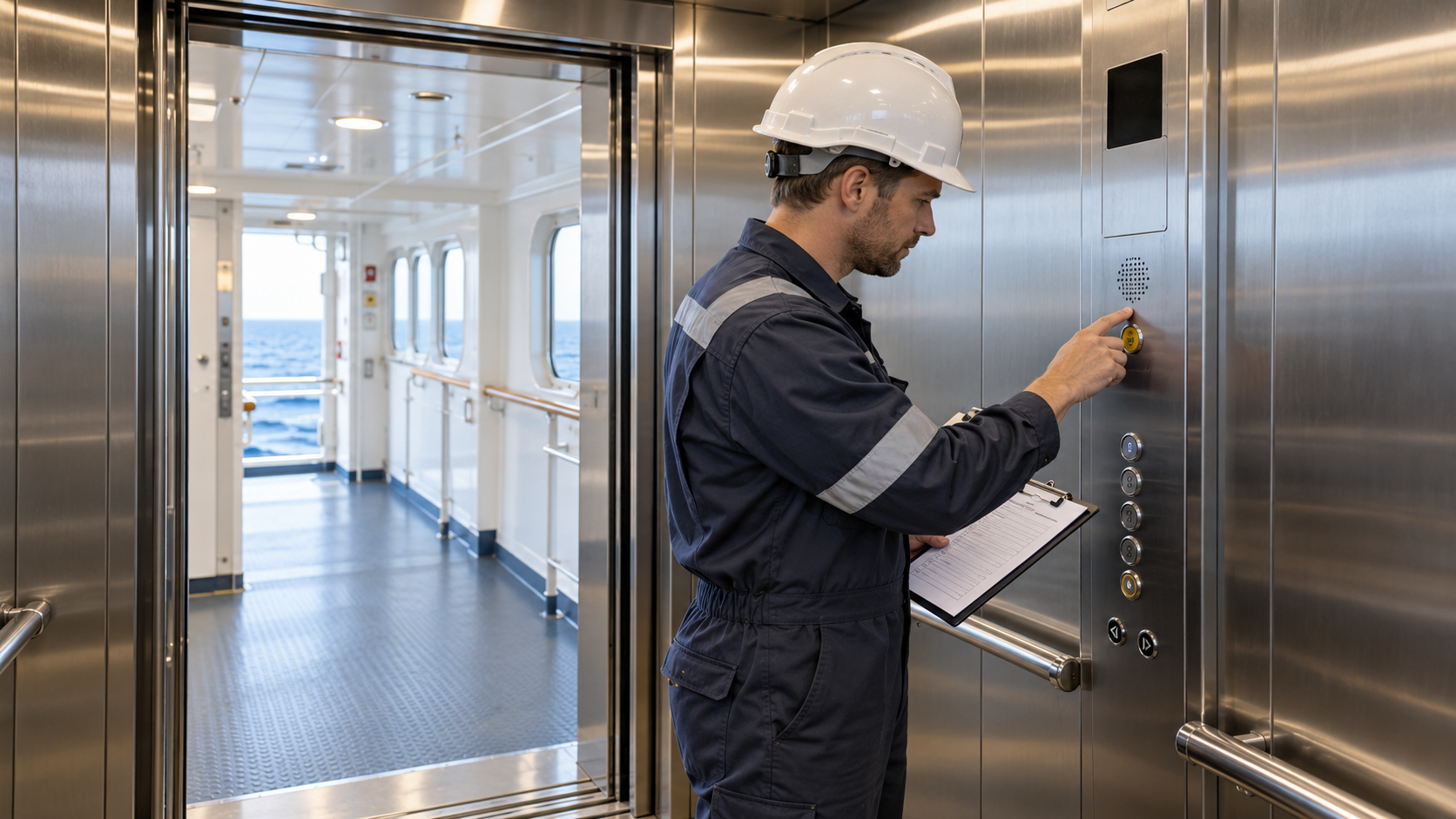
2. Daily check: verify the whole call-and-response path
Under the vessel's approved test procedure, and only when the elevator is in the required condition with a person ready to respond, the crew can confirm that the call function works. Do not stop at the indicator light: verify the complete sequence from the car to the receiving station and back.
| Check stage | What to confirm | Examples of a fault |
|---|---|---|
| Car call device | Button or handset is intact, identifiable and gives the expected feedback | Loose, stuck or damaged button; no feedback |
| Call transmission | Call reaches the designated receiving terminal, which can identify the elevator or location | No call received, location unclear or abnormal indication |
| Two-way speech | Both parties can hear clearly at a usable level without persistent dropouts or severe feedback | One-way audio, heavy noise, intermittent speech or no confirmation |
| Duty response | A person at the designated station answers and follows the vessel's response procedure | No answer, unclear responsibility or no defined response |
| Emergency supply and indication | Relevant indications, backup-power status and service records are checked within the approved scope | Fault indicator, abnormal backup status or missing records |
Where the approved method allows, one person should operate the car device while another confirms and answers at the receiving station. Both should repeat the elevator identity or location and the test result. Follow any specific method in the manufacturer's manual. Do not initiate a call and walk away, and do not use the alarm or emergency call device for non-test purposes.
3. What should the crew do if the system fails?
- Report immediately: tell the bridge or designated officer which elevator and device are affected and describe the exact symptom.
- Protect passengers: if reliable car communication is unavailable, assess suspension or restriction of use under the vessel's procedure and establish an interim means of contact.
- Record evidence: note the date, time, test stations, call connection, audio direction, fault indicators and alarms; photograph from a safe position.
- Contact a qualified marine elevator repair provider: share the model, fault description, photos or video, recent service records, port call and vessel schedule.
- Do not reset or rewire without authorisation: repeated restarts, opening terminals, adjusting wiring or bypassing safety devices may worsen or conceal the fault.
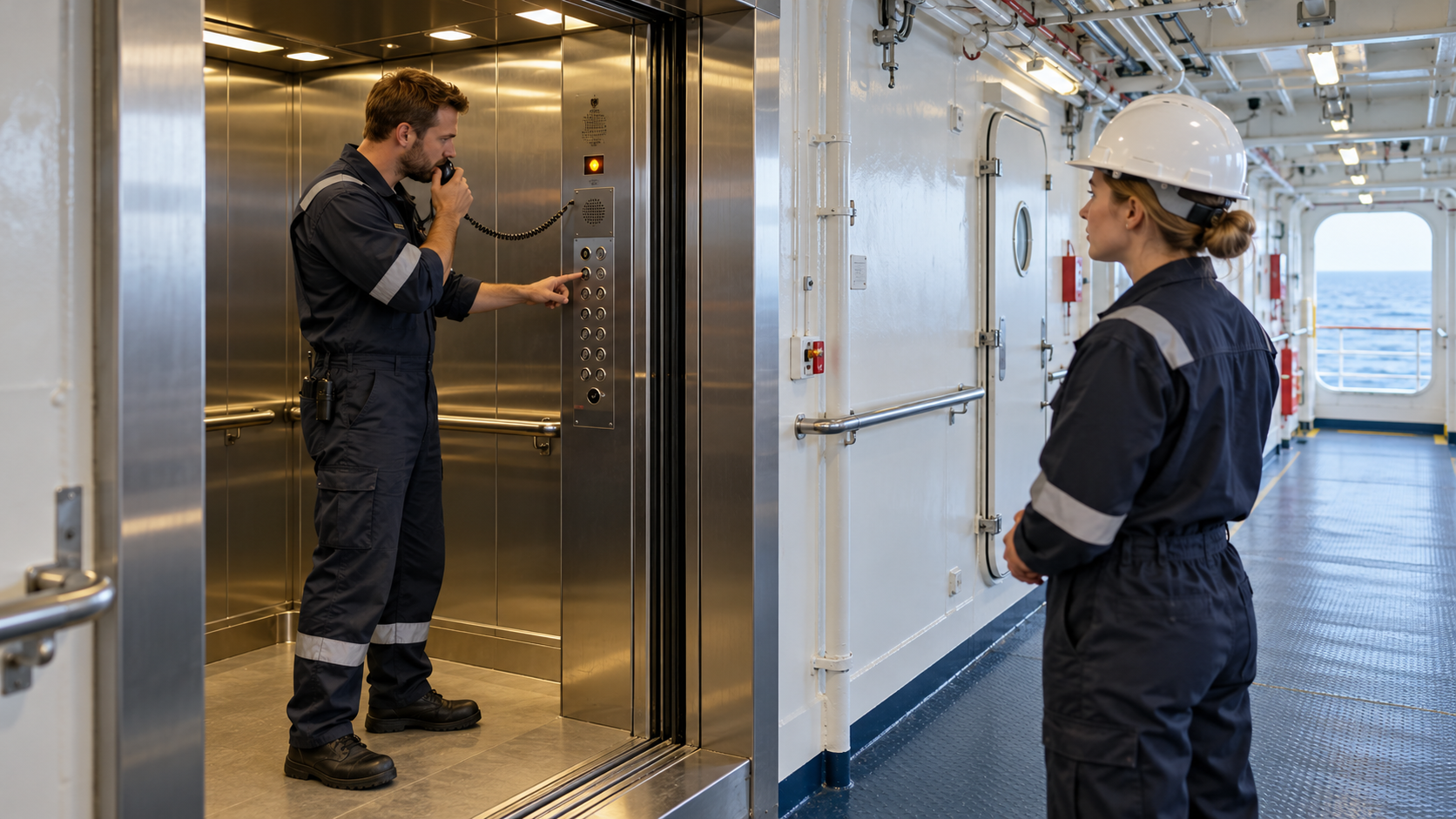
4. Include backup power and communication circuits in professional maintenance
Depending on the design, a marine elevator car emergency call system may use elevator control power, the vessel's emergency supply or a dedicated backup source. The way it operates—and how long it remains available after a power loss—varies. A successful routine call does not by itself prove that the system will operate during a blackout. Backup batteries, charging circuits, communication wiring, terminals and audio quality should be checked by qualified personnel against the drawings, manual and approved test plan.
Simulated power-loss tests, emergency-supply changeovers and electrical measurements should be carried out only by authorised personnel after risk assessment and isolation controls are in place, with the bridge and duty station informed. Crew should not pull fuses, disconnect batteries or create a power fault to test the equipment.
5. Keep a traceable routine test log
Add the car emergency call function to the vessel's marine elevator daily inspection checklist. Record at least the elevator identity, date and time, car-side tester, receiving station, whether the call connected, speech clarity in both directions, response, backup-power indication if within the approved check, abnormal symptoms and follow-up action. If a test fails, record the equipment status and any use restriction or interim communication measure until a technician confirms restoration.
| Log field | What to record |
|---|---|
| Elevator identity | Ship equipment number, served deck or location |
| Test participants | Car-side tester and bridge/designated receiving station |
| Result | Call connection, two-way speech, location identification and duty response |
| Fault and action | Symptom, person notified, restriction, service reference and retest result |
6. A crew check is not marine elevator repair or annual inspection
A routine marine elevator daily safety check confirms basic function and helps spot change early. Professional marine elevator repair involves fault diagnosis, circuit and component checks, corrective work and return-to-service verification. A marine elevator annual inspection or other periodic survey follows requirements applicable to the vessel, which may include flag-state, classification, manufacturer and management-system provisions. Daily checks support—but do not replace—professional inspection, maintenance or required tests.
When arranging marine elevator service at a China port, provide the vessel particulars, equipment drawings, previous fault and service records, current call-system symptoms, port-call timing and local agent details. This helps the service provider assess the technical scope, spares and boarding arrangements.
Conclusion: make sure the call is heard and answered
A dependable car emergency communication system relies on functioning controls, wiring, audio equipment and power—as well as a clearly assigned duty station and response procedure. Include “Can the passenger call? Can both sides hear? Who answers? What happens next?” in the marine elevator daily check and keep the records. This helps crews identify communication faults early and supports communication and professional rescue planning if a passenger becomes trapped.