
Elevator Leveling Problems: Causes, Checks and Maintenance
An elevator has a leveling problem when the car stops above or below the landing floor, leaving a height difference at the doorway. It is more than a comfort issue. A noticeable step can create a trip hazard and make it harder for wheelchair users, carts and luggage to cross the threshold. If the condition repeats, it may also indicate that position sensing, drive control, braking or installation and maintenance conditions need attention.
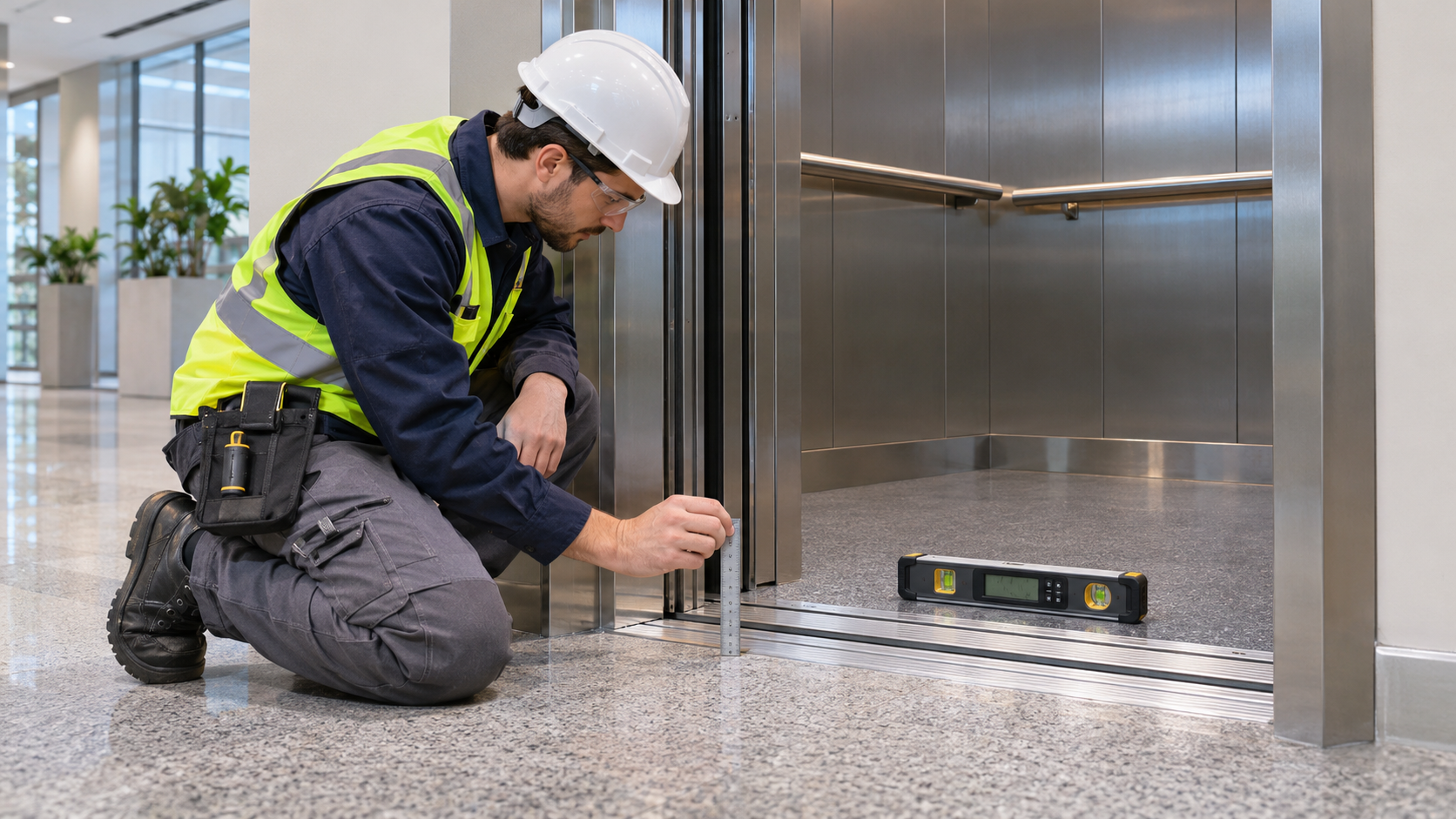
What does a leveling fault look like?
- The car floor stops higher or lower than the landing;
- the stopping height differs depending on whether the car arrives travelling up or down;
- the issue occurs at only one or a few floors, or becomes more noticeable under certain load conditions;
- deceleration, final approach or stopping feels unusually abrupt; or
- the car shifts slightly after it has stopped.
A passenger’s observation is useful, but it does not identify the failed component by itself. A service technician should record the measured difference, floor, direction, load condition and repeatability, then compare the result with the equipment design and the relevant requirements.
Common causes of elevator leveling inaccuracy
| Possible cause | Typical clues | Professional checks |
|---|---|---|
| Position feedback fault | Intermittent error or a problem limited to certain floors or directions | Encoder and leveling sensor condition, target alignment, wiring and signal stability |
| Deceleration and motion settings | The stopping difference is linked to travel direction or approach profile | Controller and drive parameters, slowdown point, final approach and change history |
| Brake condition | Repeated error in one direction or slight movement after stopping | Brake clearances, consistent operation and related control signals, checked to manufacturer procedures |
| Installation or mechanical changes | The issue appears after repairs, component replacement or gradual wear | Guide rail and mechanical condition, traction and suspension components, and adjustment records |
| Load and equipment characteristics | Car stopping differs between empty and loaded conditions | Controlled tests under specified conditions to assess drive compensation, braking and load effects |
These are diagnostic leads, not conclusions based on symptoms alone. Leveling logic varies by manufacturer and controller. Before replacing a sensor or changing parameters or brake settings, the technician should establish how the installed system is designed to work.
How is a leveling fault diagnosed?
- Capture the symptom: note the floor, direction, time, car load, frequency, unusual sounds and any fault codes.
- Measure and reproduce: under site controls and the correct procedure, verify the stopping height; compare directions and specified load conditions when needed.
- Check position feedback: inspect the encoder, leveling sensors, targets, wiring and controller inputs for loose mounting, contamination, obstruction or signal loss.
- Review drive and brake behavior: use motion data, drive alarms, deceleration, brake action and any post-stop movement to guide diagnosis; do not substitute blind parameter changes for troubleshooting.
- Verify and document: after repair, test multiple floors and directions as required, and record before-and-after measurements and parameter versions.
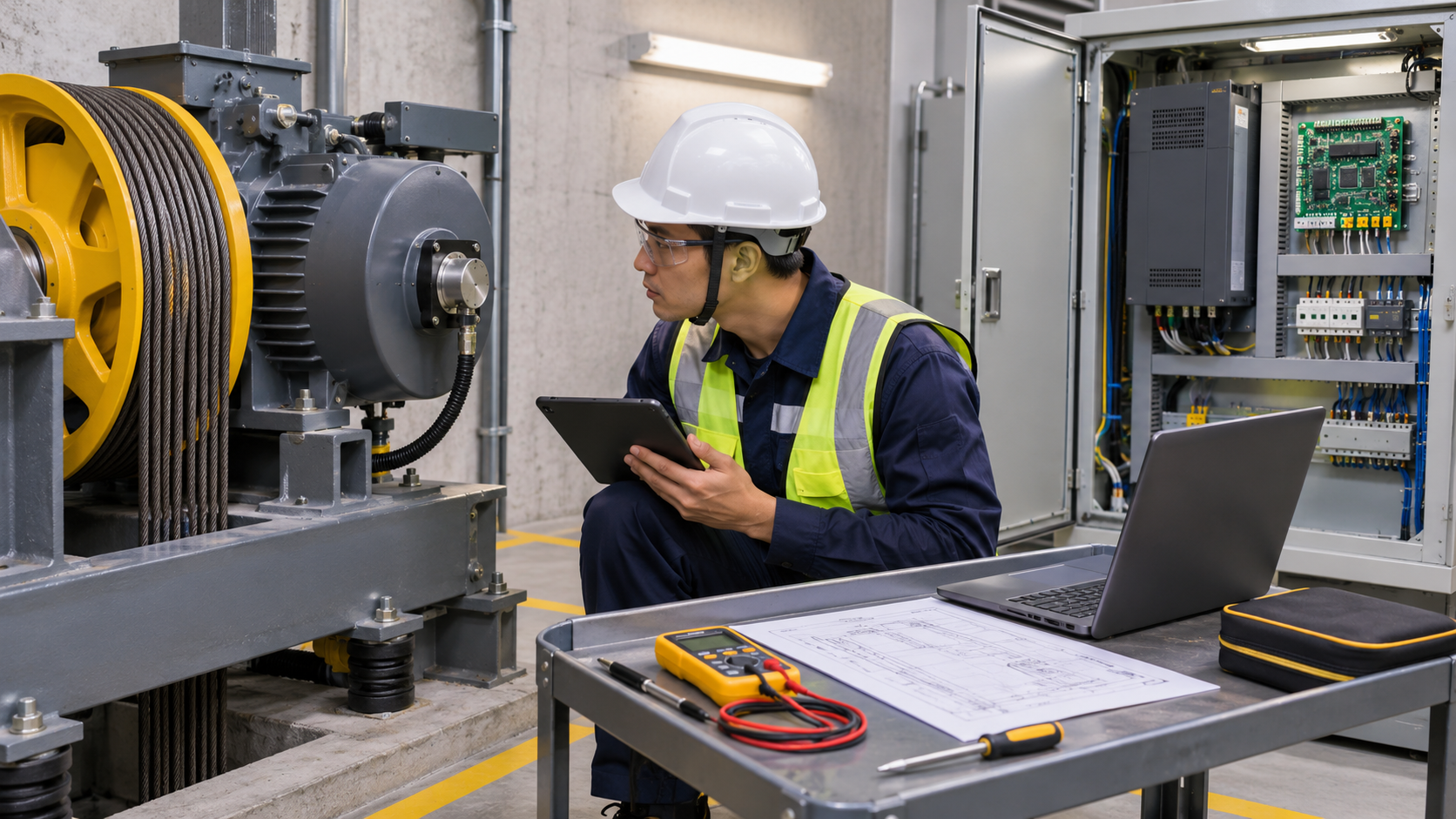
What can building owners and facility teams do?
- Report the exact floor, travel direction, car load and how often the issue occurs;
- if the step is significant or presents a safety concern, warn users and contact the elevator contractor; follow professional advice on whether the elevator should be taken out of service;
- do not enter the machine room or shaft, or adjust a leveling device, VFD parameter or brake;
- ask for a service record that states the suspected cause, checks performed, corrective action, retest result and follow-up recommendation; and
- share previous service records if the fault returns, so the technician can determine whether the same cause is recurring.
How can recurring leveling issues be reduced?
Consistent elevator leveling depends on design, installation accuracy, commissioning and ongoing maintenance. During installation, guide rails, position-sensing devices and landing references should be checked against the manufacturer’s instructions. Motion profiles and leveling should then be commissioned and verified. During service, technicians should review sensor mounting and cleanliness, wiring reliability, brake condition, drive alarms and control of parameter changes.
After a major overhaul, controller update or replacement of key components, confirming that the elevator “runs” is not enough. The service provider should systematically recheck stops at each landing, door-zone signals and travel in both directions. Measurements, parameter versions, replaced parts and retest results should be retained for future comparison.
Conclusion: diagnose the cause before making adjustments
Elevator leveling inaccuracy can arise from position feedback, motion control, braking, installation or load-related factors. Good building elevator maintenance is not simply adjusting a parameter until the car appears level. It means collecting evidence safely, identifying the cause, repairing to the equipment design and verifying performance under the appropriate conditions. Clear elevator service records also help teams recognize recurring faults and improve passenger safety and ride quality.
KERUI can help assess building elevator faults, repair requirements and maintenance needs based on equipment records and site conditions. The specific inspection and service plan should be determined by qualified technicians for the elevator model, control system and applicable local requirements.
This article is general technical information, not a work instruction for adjusting or repairing a specific elevator. Inspection, commissioning and repair must be carried out by competent professionals in accordance with manufacturer documentation, risk assessment and applicable requirements.