
Elevator Guide Rail Alignment and Ride Comfort: T-Rails vs. Hollow Rails
The elevator car travels along its guide rails every day. Rail plumb, the relative position of the two rail lines, joint smoothness and bracket rigidity all influence the car's guided path and the contact between rails and guide shoes or rollers. Correct elevator guide rail installation is therefore an important contributor to ride stability and passenger comfort.
For elevator export and overseas procurement, comparing brand, capacity, speed and price is only part of the decision. Buyers should also check whether the elevator rail configuration suits the project, whether installation tolerances can be achieved on site, and whether the supplier provides installation guidance and after-sales support.
1. Why does rail plumb affect ride comfort?
Guide rails direct both the car and the counterweight. Installation checks typically cover vertical deviation over the shaft height, rail gauge, relative alignment of the two rails, joint steps, bracket spacing and fixing condition. Permissible values must come from the specific lift design, manufacturer instructions, applicable installation standards and local regulations; one generic tolerance should not be applied to every project.
A locally misaligned rail, uneven joint or insufficiently rigid fixing can change guiding forces as the car passes that point. Passengers may notice a slight sway, bump, vibration or noise. Guide-shoe clearance, roller condition, car-frame alignment and drive settings also affect the ride, so a comfort complaint should be diagnosed as a complete system issue rather than automatically attributed to the rails alone.
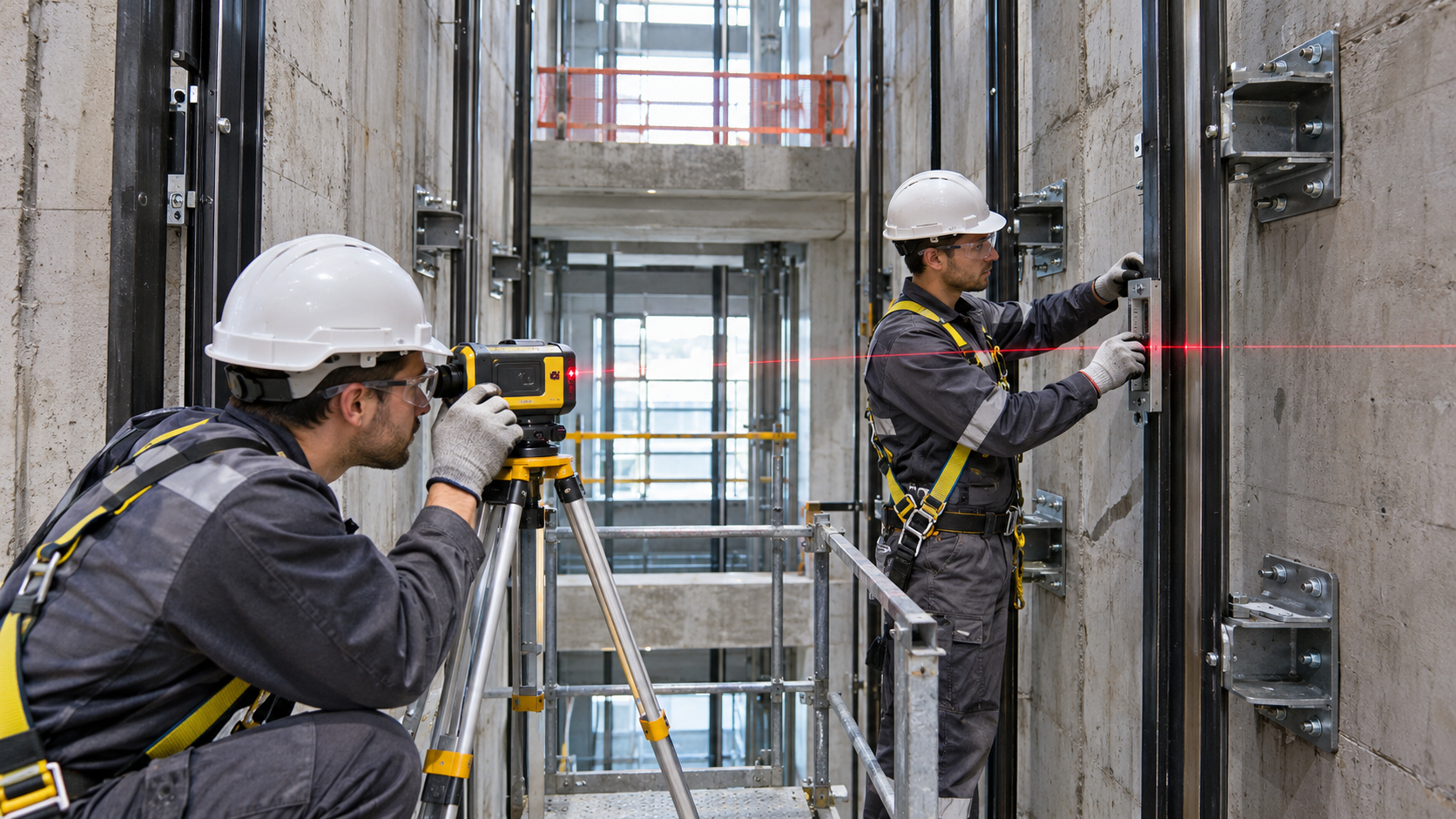
2. What is checked during guide rail installation?
| Inspection item | What to verify | Possible operating effect |
|---|---|---|
| Rail plumb and straightness | Measure by shaft sections to identify overall drift and local bends | Car sway, vibration or uneven guiding contact |
| Rail gauge and relative position | Check spacing, parallel relationship and working-face alignment | Uneven guide-shoe loading, drag or abnormal wear |
| Rail joints | Review gaps, steps, fishplate connection and fastening; finish as specified | Impact, noise or periodic vibration at a joint |
| Brackets and anchors | Confirm location, tightening and suitability for the shaft structure | Local movement, rattling or reduced long-term stability |
Measurements and adjustments must be performed by competent personnel under safe installation conditions and recorded. Rail alignment is one part of the complete installation; guide shoes or rollers, car frame, rope tension, traction system and controller settings should also be reviewed.
3. How do solid T-section rails differ from hollow rails?
“T-section” describes the rail profile. Solid T-section elevator rails are generally machined steel profiles with a substantial section and defined guiding faces. Hollow rails are commonly formed from lighter-gauge sections, which can reduce weight and make handling easier. Products vary widely in material, dimensions, joints and performance, so the name alone does not establish quality or suitability.
| Comparison | Solid T-section rail | Hollow rail |
|---|---|---|
| Typical characteristics | Often offers higher section stiffness and mass; capacity depends on the selected model | Lower weight and convenient handling; stiffness and connection performance vary by series |
| Typical selection approach | Commonly used for car rails and may also be used for counterweight guidance, subject to design | Often selected for counterweight guidance or compatible light-duty designs; car-side use requires manufacturer approval |
| Comfort is determined by | Not the profile name alone: rail stiffness, alignment, joints, brackets, guide-device matching and installation quality work together | |
Selection should follow rated load and speed, car/counterweight arrangement, safety-gear type, rail-deflection calculations, bracket and connection design, and the manufacturer-approved configuration. Do not substitute an unverified rail to reduce the quotation, and do not assume that a heavier or solid profile automatically guarantees a smoother ride.
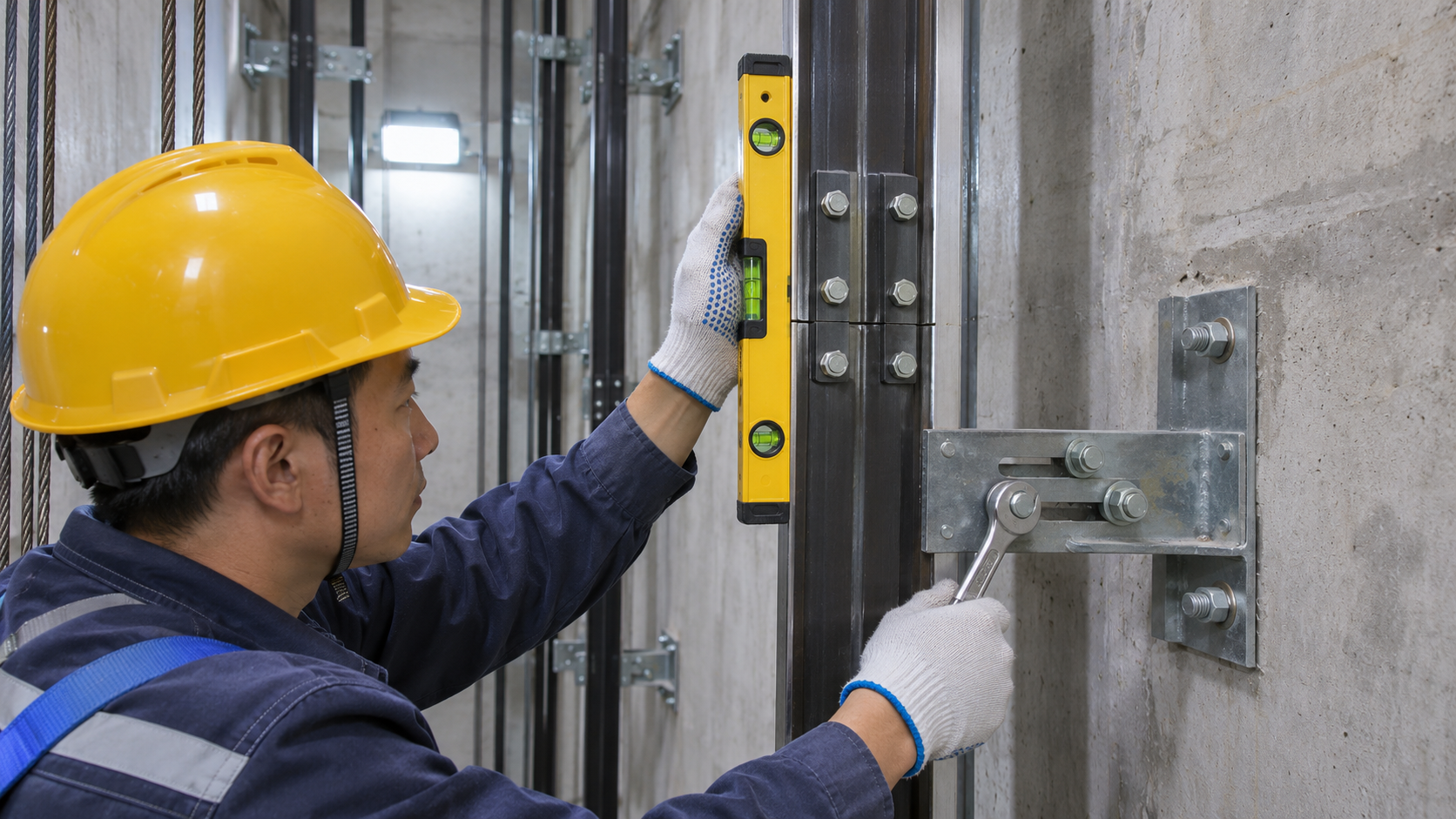
4. Export elevator procurement: look beyond the equipment price
An elevator is a mechatronic system assembled, measured, adjusted and commissioned on site. For elevator sales and export elevator projects, procurement teams should compare more than the initial equipment quotation:
- Rail configuration: Are the rail model, material, connectors, brackets and safety gear compatible, with a clear design basis?
- Technical documents: Are shaft layout drawings, rail reactions or bracket requirements, installation instructions and inspection records supplied?
- Installation precision service: Can the supplier provide remote or on-site guidance, measurement training and critical-stage checks?
- Lifecycle support: Are spare-part availability, fault response, maintenance training and local installer support defined?
- Destination conditions: Are local codes, site workmanship, shaft deviation, power quality, transport and spare-parts lead time included?
A low-priced package without a suitable configuration, installation guidance or service plan can shift cost into rework, commissioning delays, downtime and maintenance. A sound elevator export solution evaluates the product, configuration, installation precision and lifecycle support together.
Conclusion
Guide rail plumb and installation quality influence how the car is guided and form an important foundation for ride comfort and long-term operation, but they are not the only factors. Solid T-section and hollow rails serve different design needs and must be selected against load, speed, structural calculations, standards and manufacturer requirements. In elevator sales, overseas procurement and elevator export, a suitable configuration, controlled installation and dependable service are often more valuable than the lowest initial price.