
Building Elevator Door Systems: How They Work, Common Faults and Maintenance
The elevator door system is the part passengers interact with every day and one of the most frequent sources of service calls. A single opening and closing cycle depends on the coordinated operation of car doors, landing doors, the door operator, interlocks and protective devices. Understanding the basics of a building elevator door system helps facility teams recognize symptoms, reduce avoidable downtime and give maintenance technicians useful information for diagnosis. This guide explains the main components, common symptoms, safe observations and procurement considerations. It is not a do-it-yourself repair or safety-circuit procedure.
1. What makes up an elevator door system?
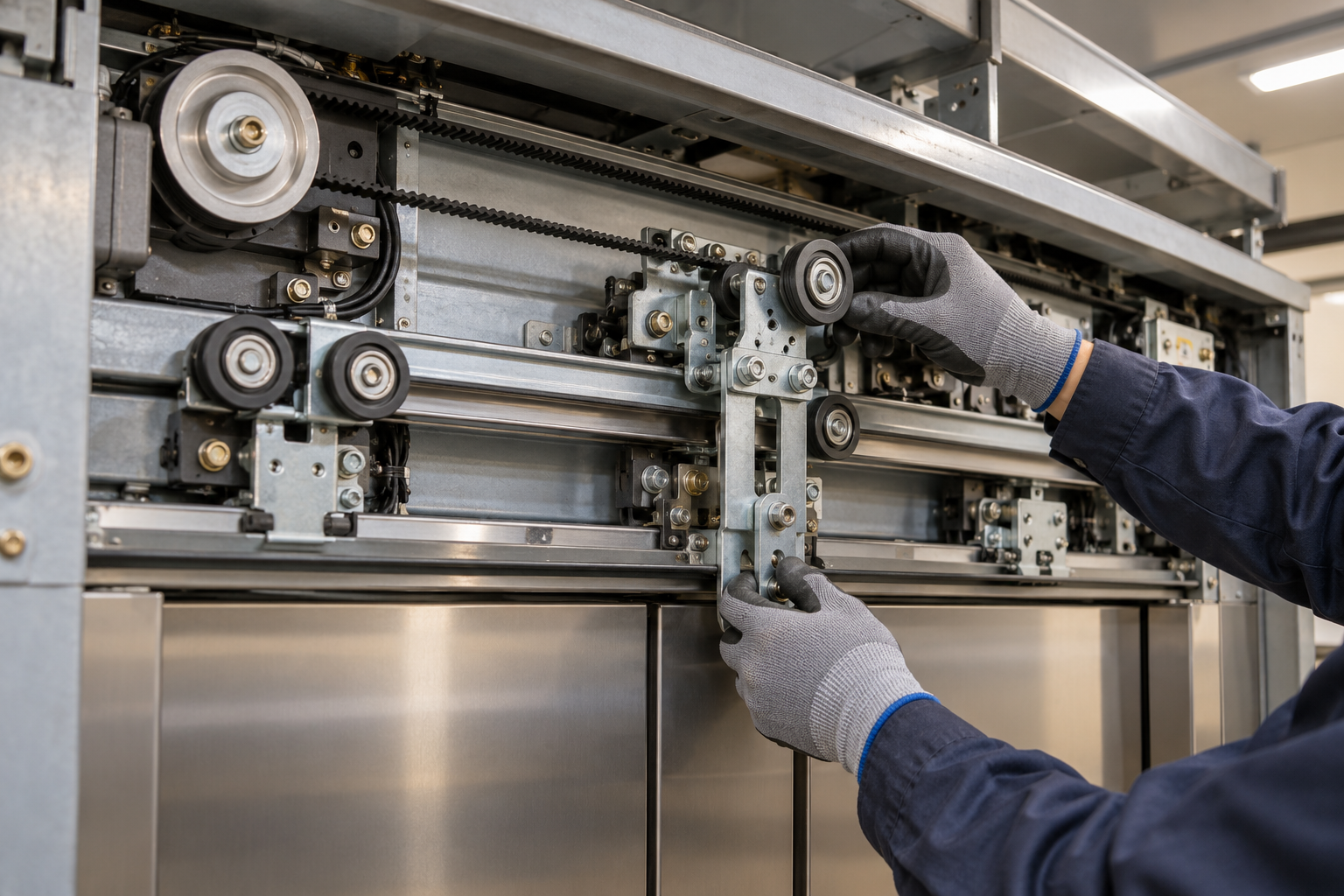
A typical passenger elevator door system has a car-side assembly and landing-door assemblies at each served floor. The car-door operator provides motion and controls opening and closing speed and sequence. Hangers, rollers and guides support and move the panels. When the car is at a landing, a vane or coupling mechanism engages the landing doors, depending on the design. Door interlocks and their electrical contacts confirm the required closed-and-locked condition before the lift is permitted to operate. A light curtain or another protective device detects obstructions at the entrance; the specific arrangement depends on the elevator design.
- Door operator and controller: provide drive and manage speed, acceleration and dwell time.
- Panels, hangers and rollers: support the panels and guide their movement.
- Sills and tracks: guide the lower part of the doors and can collect dust or debris.
- Vane, interlock and contacts: coordinate car and landing doors and confirm the required locked state.
- Light curtain or protective device: detects an obstruction and may initiate reopening as designed.
2. What symptoms may point to a door-system problem?
| Observed symptom | Possible areas to investigate | Recommended response |
|---|---|---|
| Slow movement, hesitation or repeated reopening | Sill debris, panel resistance, protective device, operator settings or related signals | Record the floor, time and frequency and contact the maintenance provider; do not adjust parameters yourself. |
| Rubbing, impact noise or noticeable vibration | Door guides, rollers, hangers, connections or installation condition | Report promptly and limit access to a visibly unsafe entrance. A professional should determine whether the lift must be taken out of service. |
| A landing door does not close or lock normally | Interlock, coupling, panel alignment or sill area | Contact a qualified elevator technician immediately. Never press a contact, jumper wires or otherwise defeat an interlock to keep the lift running. |
| Unreliable response from the protective device | Contamination or obstruction at a light curtain, power supply or signal path | Keep the entrance clear and report it. Do not block, remove or disable a protective device or rely on it as a substitute for safe passenger behavior. |
One symptom can have several possible causes. “The door will not open” or “the door will not close” is not, by itself, proof that the operator needs replacement. Diagnosis may require fault history, floor-by-floor patterns, operator status, interlock signals and equipment records.
3. Routine observation versus professional elevator repair
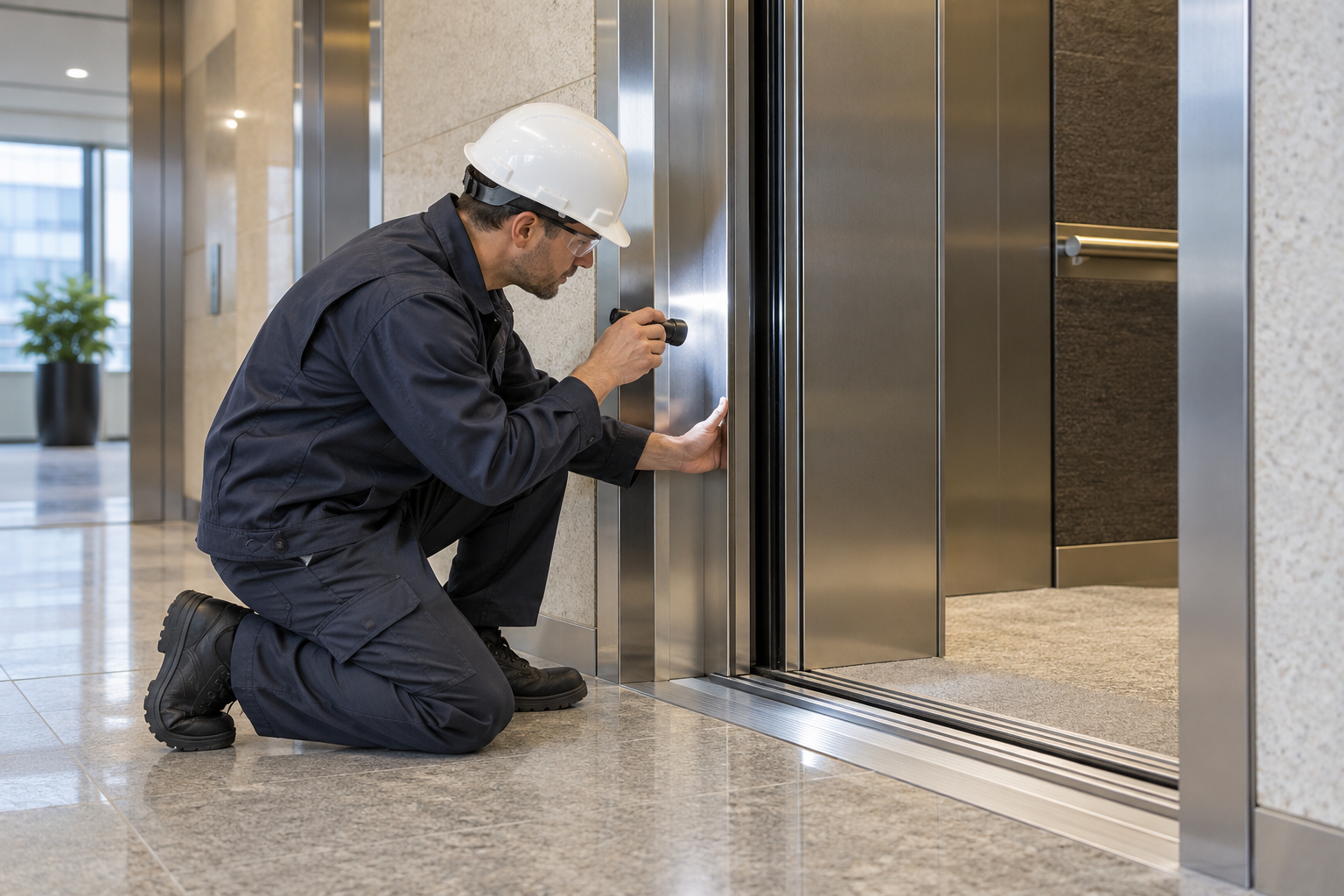
Without removing covers or entering a shaft, facility staff can keep visible sill areas clean, observe whether doors move smoothly, note unusual sounds or obvious panel misalignment, and log the floor and time of a fault. When an abnormal condition appears, provide appropriate site warnings and contact the contracted maintenance provider. Passengers should never force doors open or place hands, feet or objects in the doorway to hold the panels apart.
Inspection and adjustment of interlocks, couplings, clearances, operator parameters, protective devices and safety circuits are professional tasks. The applicable maintenance scope, intervals and acceptance criteria depend on local law, safety codes and the manufacturer's installation, operation and maintenance instructions. In mainland China, TSG T5002—2017 requires maintenance providers to plan work in accordance with applicable safety requirements and product instructions, including relevant cleaning, lubrication, inspection, adjustment and replacement of worn parts. Always verify current requirements for the project location.
4. How can owners reduce elevator door faults and unplanned downtime?
- Keep public entrances clean: remove loose dust or debris from visible sill areas under the facility's cleaning procedure. Do not pour water, cleaning agents or lubricant into the track.
- Record evidence, not guesses: include the lift ID, floor, time, frequency, observed behavior and any displayed fault code to help technicians prepare the right tools and parts.
- Look for recurring patterns: repeated faults at one landing, problems on several floors or frequent reopening may indicate a wider cause that deserves investigation.
- Maintain to the equipment requirements: use compatible operator and interlock parts, and retain records of inspection, adjustment, replacement and verification.
- Verify after service: a qualified technician should check door operation, locking status and associated protective functions using the applicable procedure, then explain findings and follow-up actions.
5. Door-system planning for elevator procurement and export
During new-lift selection, elevator sales and elevator export projects, door equipment should match building use and traffic intensity. Confirm clear opening width and height, door arrangement, panel material, number of entrances, peak passenger flow, accessibility needs, electrical supply and local regulations. Also verify the door operator and interlock suppliers, spare-part references, interface documentation and local technical support. Hotels, hospitals, factories and residential buildings have different duty cycles and environments; appearance or a single price figure is not enough to define a suitable configuration. Overseas projects should also clarify installation and commissioning responsibilities, spare-part lead times and maintenance training.
An elevator door system may look like a simple opening-and-closing mechanism, but it affects passenger access, permission to run and equipment availability. Cleaning, timely records, competent maintenance and compatible parts are generally more manageable than waiting for repeated outages before replacing components. Repairs and adjustments must follow applicable safety requirements and manufacturer information.
References and scope
- SAMR (China): TSG T5002—2017, Elevator Maintenance Rules.
- SAMR (China): TSG T7001—2023, Elevator Supervision Inspection and Periodic Inspection Rules. Confirm the equipment type, scope and local requirements for each project.
This article is general technical education, not a substitute for an on-site inspection, statutory examination or manufacturer documentation. If an interlock, safety contact, protective device or door structure appears abnormal, contact a qualified elevator professional for the project jurisdiction.