
Guide Rail Inspection and Packing Before Elevator Export: From Factory Checks to Overseas Delivery
Elevator guide rails are key parts of the car and counterweight guidance system. For an elevator export project, correct identification before dispatch and proper protection in transit affect site receiving, inventory control and the later elevator installation. This practical guide covers pre-shipment rail checks, accessory reconciliation, packing and container loading so procurement and project teams can identify delivery risks early.
For elevator export to Africa or the Middle East, long transit times and multiple handling stages can expose cargo to impact, moisture and storage conditions that differ from the factory. Pre-shipment checks help reduce mix-ups, shortages, corrosion and deformation. They do not replace destination-site receiving checks or the installation inspection of the completed elevator.
1. Confirm rail model, quantity and package compatibility first
Use the signed technical schedule, approved elevator configuration, rail layout and manufacturer's packing list as the references. Rail type and accessories can vary with lift design, rated load, speed and shaft arrangement. Do not identify stock only by appearance or informal shorthand.
| Check item | Pre-shipment review | Record to retain |
|---|---|---|
| Rail identity | Confirm model, section, length and batch/marking against the approved configuration | Photos of markings and signed checklist |
| Quantity and allocation | Group car-side and counterweight-side rails by shaft layout; reconcile pieces and lengths | Bundle and package allocation sheet |
| Connectors and supports | Reconcile fishplates/joint plates, bolts and brackets with the design bill of materials | Accessory list per crate and count record |
| Document traceability | Match crate number, project, building and lift number to drawings and packing documents | Crate-marking photos and final packing list |
2. Guide rail inspection: surfaces, joints and geometry
Inspect rails against the manufacturer's documents and project acceptance requirements. Before dispatch, review guiding faces for dents, corrosion, scratches or contamination; check rail ends, joint preparation and connection holes for completeness; and look for burrs, visible bending or handling damage. If dimensional, straightness or other geometry checks are required, use suitable calibrated instruments and record the method, measurement locations and applicable acceptance limits. Do not replace product-specific requirements with a generic tolerance.
Rail surface condition matters for installation and guiding contact, but site ride performance also depends on shaft conditions, bracket installation, rail alignment, joint finishing, guide-shoe selection and elevator commissioning. Factory sampling or pre-shipment inspection only covers the stated inspection scope; it is not a substitute for elevator installation, adjustment and acceptance at the destination.
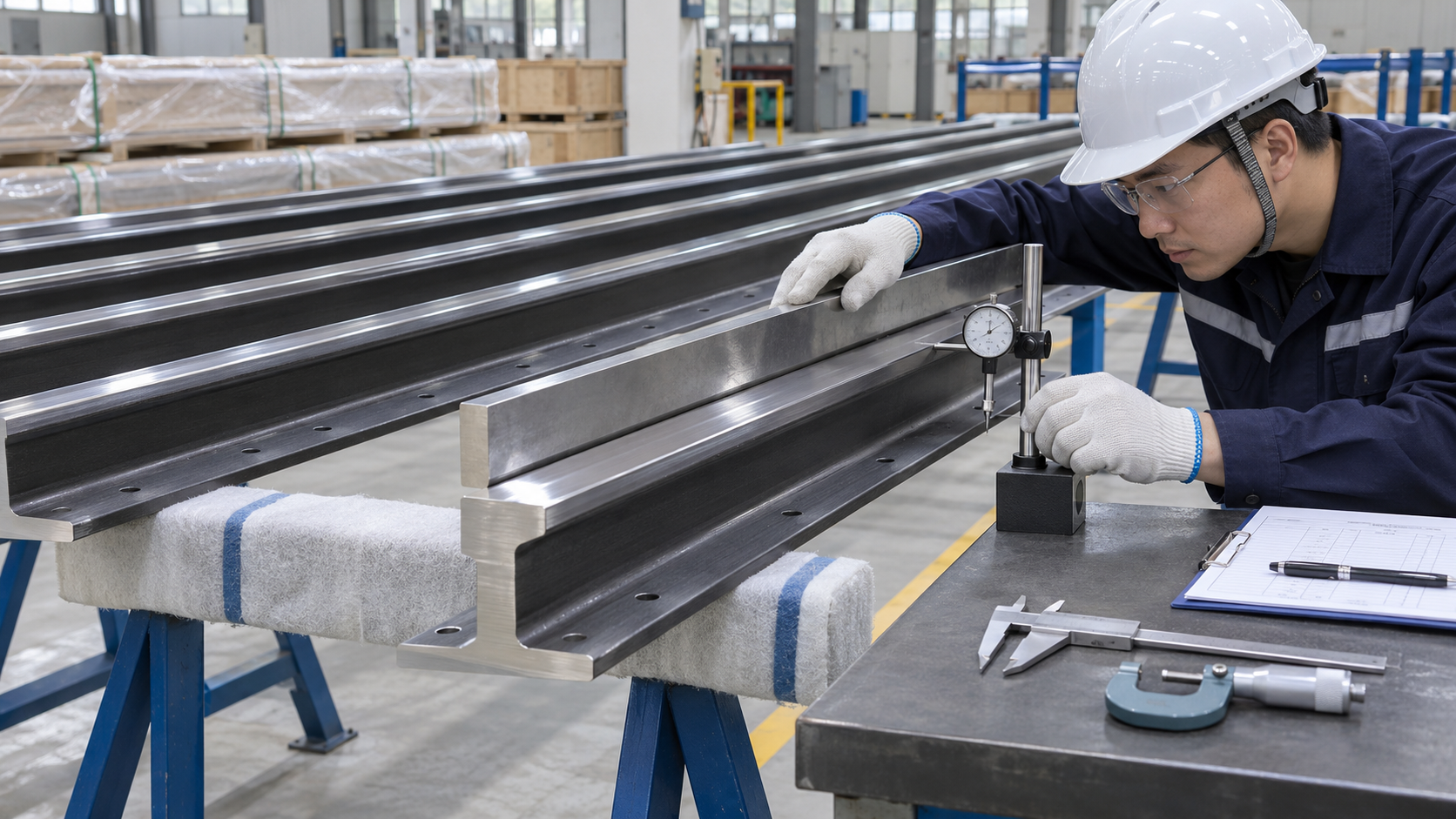
3. Packing guide rails to reduce transport damage
- Protect working faces and ends: Use caps, corner guards or separators as recommended by the manufacturer to prevent metal-to-metal rubbing, impact and scratches from fasteners.
- Support long components properly: Position spacers and support points to limit sagging, twisting and concentrated pressure during lifting, forklift handling and transit.
- Separate and secure bundles: Identify different models and lift numbers separately. Strapping should restrain movement without damaging the guiding faces; blocking should not transfer cargo loads onto machined surfaces.
- Plan moisture and corrosion protection: Select dry, clean packing and moisture protection for the expected transit time and destination climate, following the product surface-treatment requirements.
- Show handling information: Mark crate number, gross/net weight, dimensions, lifting or forklift positions and orientation; secure cargo against shifting based on the actual crate and container plan.
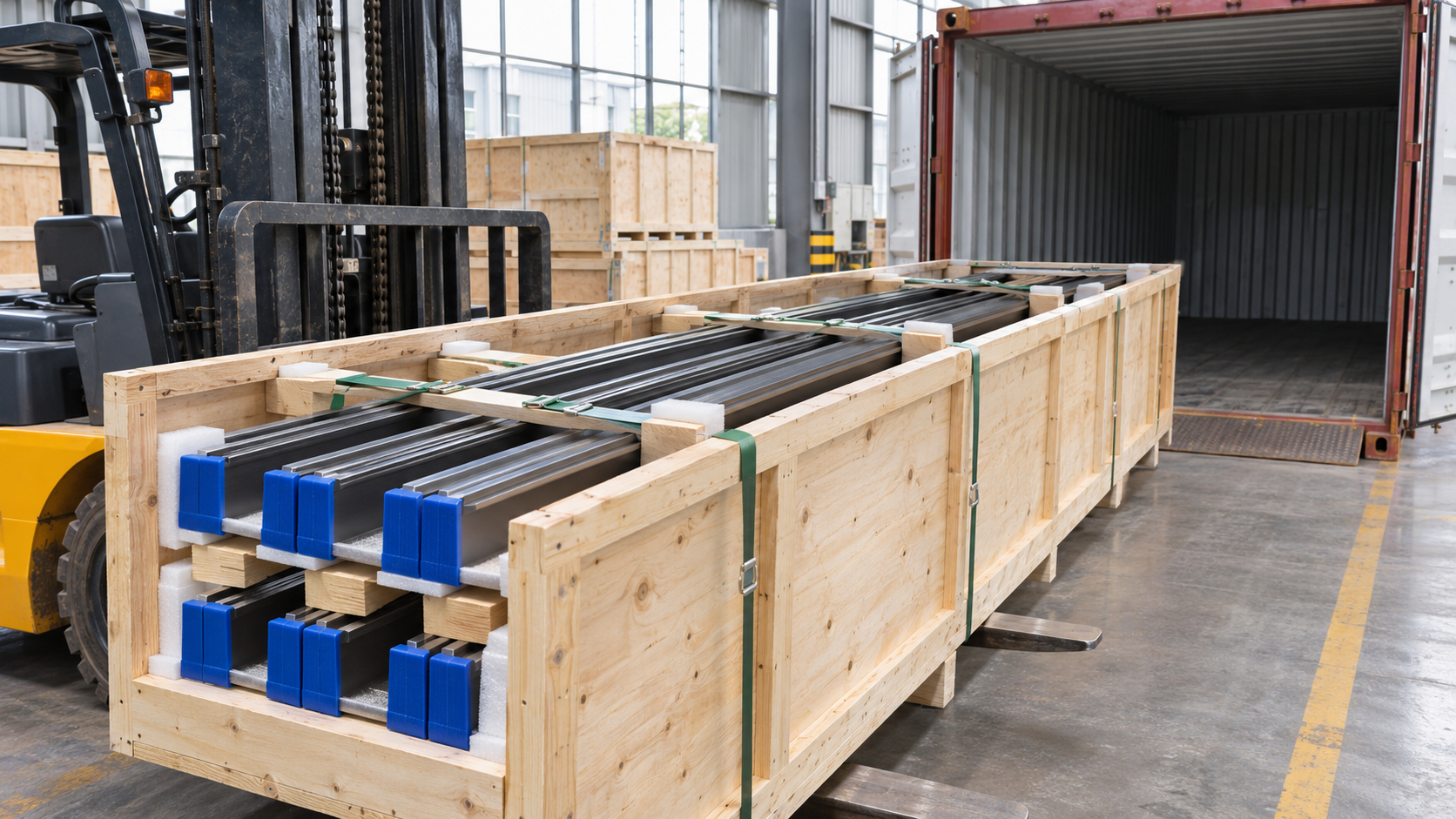
4. Export crates and destination-country rules: confirm before booking
If solid-wood packaging is used, confirm phytosanitary and marking requirements with the freight forwarder and importer before shipment booking. The International Plant Protection Convention's ISPM 15 standard describes phytosanitary measures for raw-wood packaging material moving in international trade. Scope, accepted marks and import-country implementation should be checked against current destination-authority rules. Processed wood such as plywood may be treated differently, so do not assume that every crate is subject to identical requirements. See the official IPPC ISPM 15 description and confirm the destination rules with the shipper and importer.
For elevator export to Africa and the Middle East, also confirm crate dimensions against the container loading plan, port handling conditions, rain and moisture protection, crate-marking language and the unloading equipment available at destination. If cargo may be transshipped or stored outdoors for an extended period, include those risks in the packing and transport plan.
5. Packing list and handover documents
Create a traceable list for each crate and connect it to the project, building, lift number and rail use. Keep the guide-rail inspection record, accessory count, crate dimensions and gross/net weight, crate-marking photos, packing photos, final packing list and shipping documents together. For elevator installation in Africa, components can also be grouped by the intended site sequence or installation crew to reduce rehandling and mixed accessories after unpacking.
When purchasing elevator export services, assess equipment configuration, rail verification, packing and logistics, installation support and spare-parts service—not just the complete elevator price. Clear delivery boundaries and records help overseas installers identify packages, plan site entry and report shortages or transit damage promptly.
Conclusion: connect transport protection with site installation
Before elevator export, guide rail checks should confirm identity and quantity, surface condition, joint details and accessory completeness. Packing must protect rails from damage and moisture while supporting safe handling and destination-country compliance. For elevator export to Africa, elevator installation in Africa and elevator export to the Middle East, connecting factory inspection records, packing lists and installation plans helps equipment move more smoothly from dispatch to site work.
Related guides
Elevator export shipping and packaging: crates, container loading and moisture protection · Elevator installation in East Africa: practical site guide · Guide rail alignment and elevator ride comfort