
Start by confirming the destination market and routing requirements, then specify crates, pallets, container stowage and moisture controls. ISPM 15 is an important international benchmark, but each shipment still needs a check against current destination-country rules.
01 / EXPORT FIELD GUIDE
1. Design packaging around the equipment
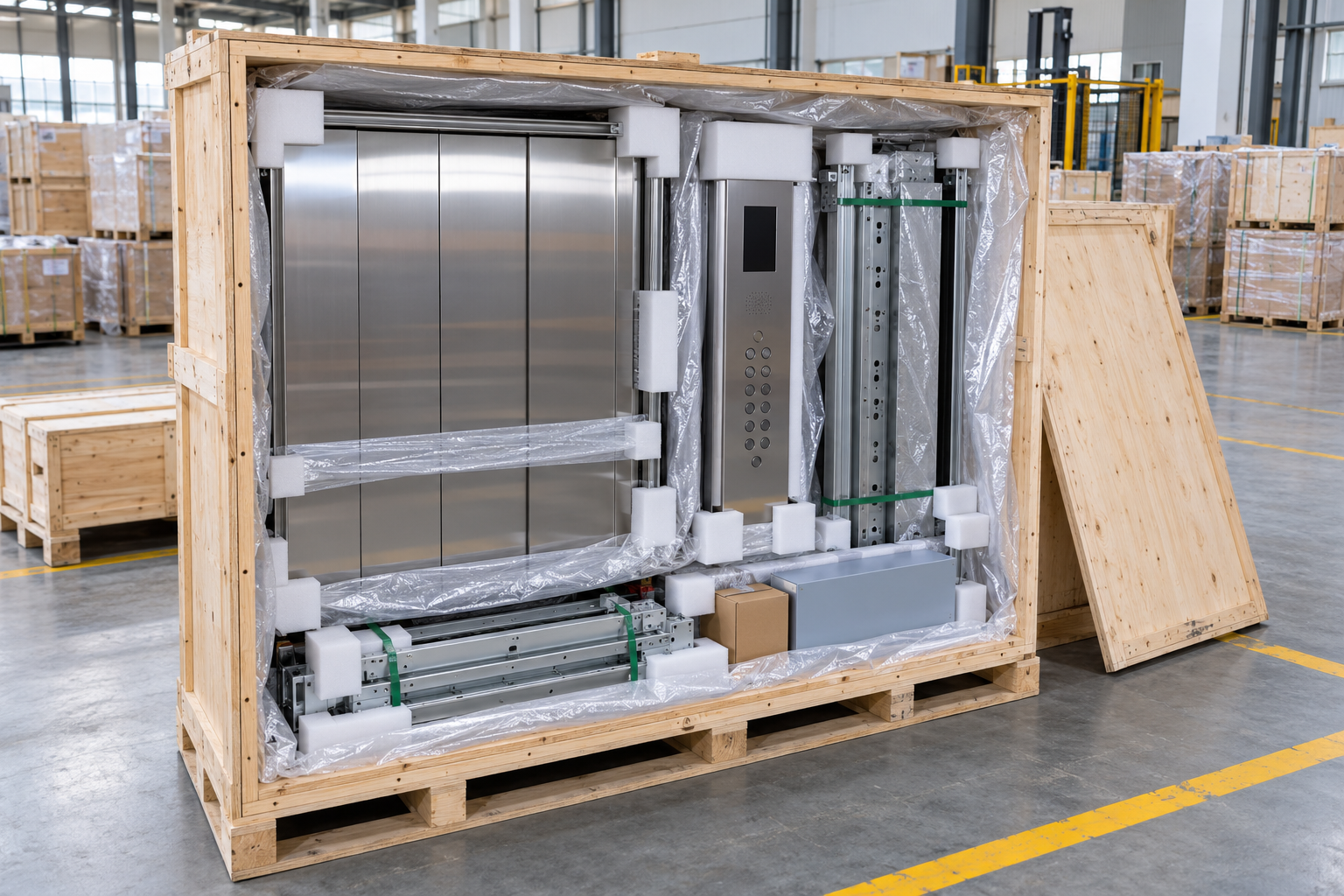
Elevator shipments may include traction machines, controllers, door systems, guide rails, car components and sensitive electrical parts. Elevator export packaging should reflect each item’s weight, dimensions, centre of gravity, fragility and transport route—not simply whether it fits inside a crate.
- Heavy components: define lifting points, forklift pockets, centre of gravity and base capacity; attach restraints to structural members.
- Sensitive electrical equipment: protect against impact, dust, moisture and electrostatic discharge; secure loose parts and cover terminals.
- Long rails and profiles: prevent bending and movement with adequate supports and clearly marked handling points.
- Complete projects: pack by building, elevator ID, floor and installation sequence. Match crate numbers to the packing list and equipment schedule.
Professional export packaging should also support receiving, inventory checks and installation at site. Keep crate marks, serial numbers, packing lists, commercial invoices and shipping documents consistent.
02 / EXPORT FIELD GUIDE
2. Wood packaging and pest controls: check ISPM 15
Many countries regulate solid-wood packaging used in international trade to reduce the risk of spreading quarantine pests. The International Plant Protection Convention’s ISPM 15 standard addresses raw-wood packaging such as crates, pallets, dunnage and blocking.
Where the destination applies the standard, wood packaging generally needs an approved treatment and a legible, valid IPPC mark. Common treatment codes include HT for heat treatment; the precise treatment, marking and enforcement rules must be confirmed with the authorized treatment provider and destination market. ISPM 15 also addresses debarked wood. Processed wood such as plywood or particleboard may fall outside the standard’s scope, but material classification and local rules still need verification.
For time-critical projects, complex destinations or multi-country transit, have the freight forwarder, export phytosanitary provider and importer confirm the packing plan before materials are procured. Plywood crates, steel frames or other alternatives may be considered, subject to strength, weight, cost and destination acceptance.
03 / EXPORT FIELD GUIDE
3. Container loading, securing and moisture protection
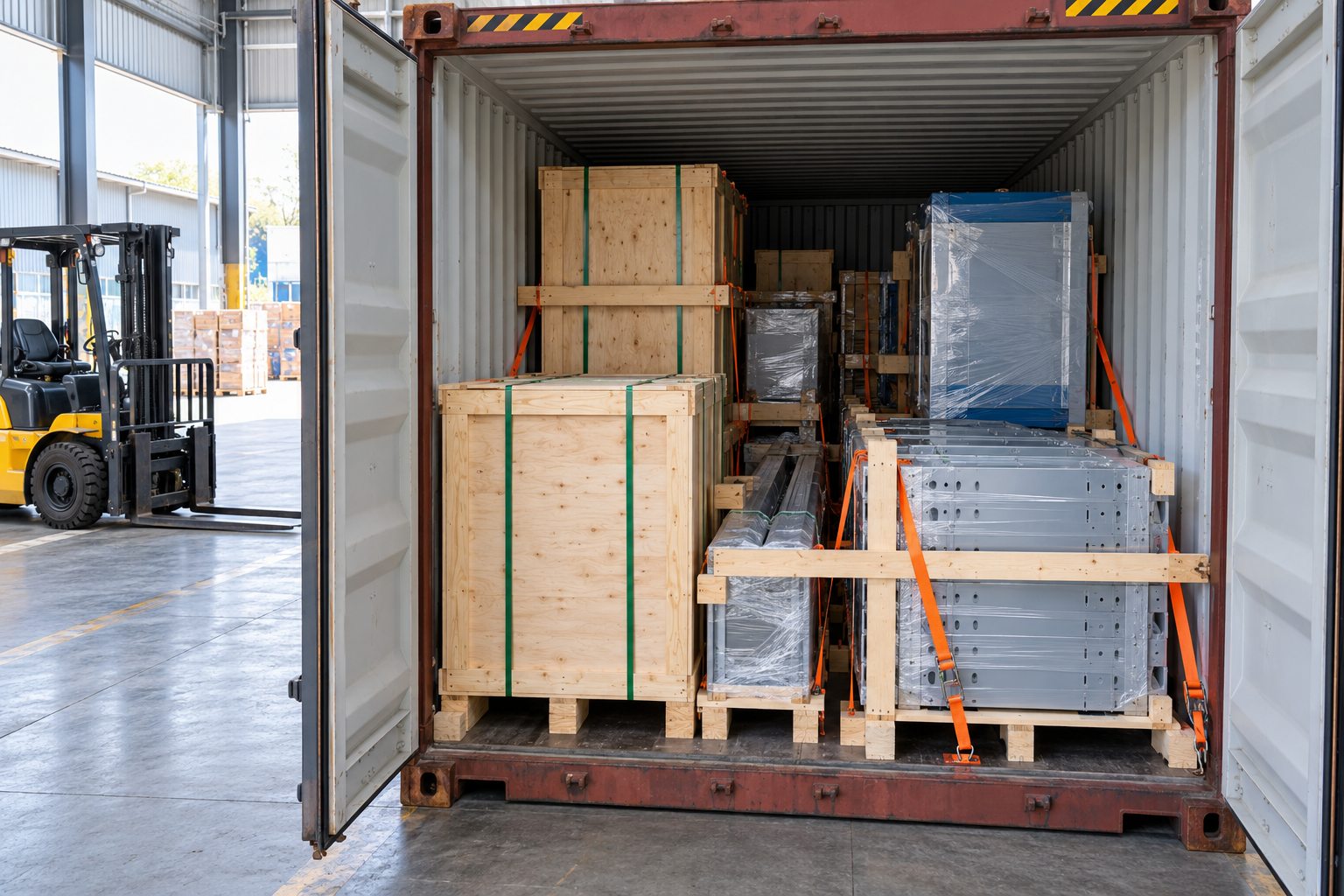
Before loading, check that the container is dry, sound and suitable for the cargo, with appropriate floor and lashing points. Distribute elevator equipment by weight and centre of gravity, keeping heavy items low and balanced. Use suitable blocking, bracing or lashing to prevent crates from shifting, tipping or colliding during ocean transport.
- Verify container type, usable dimensions, door opening, payload and cargo centre of gravity.
- Design crate bases for forklift handling and establish a clear restraint plan for heavy items.
- Make sure desiccants, moisture barriers and corrosion inhibitors are compatible with the equipment and voyage.
- Keep moisture-sensitive cargo away from surfaces prone to condensation; consider sealed liners and humidity indicators.
- Photograph the container number, each package, securing points and the final load before sealing; retain a loading record.
04 / EXPORT FIELD GUIDE
4. Documents, marks and delivery coordination
Elevator exports require aligned technical, commercial and delivery records. Check product descriptions, models, quantities, net and gross weights, package dimensions, origin and shipping marks before dispatch. Crate labels should also support safe lifting and handling, including centre-of-gravity, moisture and orientation marks where appropriate.
Packing and loading
Packing plan, packing list, crate/elevator mapping, dimensions, weights and loading photos
Commercial and transport
Commercial invoice, packing list, transport document and export declaration data, checked with the forwarder against the trade terms
Phytosanitary compliance
Wood material, treatment, IPPC marks and any destination-specific requirements
Site receipt
Unloading equipment, forklift/lifting capacity, storage conditions, unpacking sequence and packaging disposal
The elevator sales contract and technical agreement should define packaging standards, transport responsibilities, insurance scope, destination-port charges, importer of record, unloading responsibilities and cargo-damage procedures. For overseas installation, link crate IDs to the installation schedule and receiving checklist to reduce missing-item and site-delay risks.
05 / EXPORT FIELD GUIDE
5. Pre-shipment checklist
- Confirm destination country, final port, transshipment points and expected shipping season.
- Ask the importer or local customs/phytosanitary representative to verify current wood-packaging rules.
- Complete crate allocation, equipment mapping, centre-of-gravity and lifting marks.
- Check treatment and IPPC marks; do not dispatch non-compliant or illegibly marked wood packaging.
- Verify moisture, static, impact and corrosion protection for long sea transit.
- Review the container loading plan, securing method, gross mass and declaration data.
- Photograph loading and sealing; retain shipping, treatment and handover records.
- Plan destination clearance, unloading equipment, temporary storage and site receiving staff.
Phytosanitary rules can change. Do not rely solely on customary practice: confirm requirements with the destination authorities or importer for each elevator export shipment.
IN SUMMARY
Build packaging compliance into the export plan
Export packaging is part of elevator sales and overseas project delivery. Planning wood compliance, equipment protection, container securing, document checks and destination receiving in advance helps reduce customs holds, cargo damage and site delays.
ISPM 15 overview: International Plant Protection Convention (IPPC). Confirm current shipment requirements with the destination authorities.
OVERSEAS PROJECT SUPPORT
Plan elevator exports and overseas delivery
Share the project country, equipment schedule, shipping mode and destination port to review packaging and delivery arrangements.