
Exporting Building Elevators from China: From Specification to Overseas Delivery
An elevator export from China is not complete when the equipment is packed into a container and reaches the destination port. A building elevator is an engineered system that must fit the building, power supply, local requirements and installation conditions. The quality of the project brief, clarity of the supply scope, protection in transit, overseas installation and after-sales arrangements all affect whether the elevator can be commissioned and kept in service. This guide follows the project sequence and highlights what buyers should confirm before placing an export order.
1. Assemble the project inputs before requesting a quotation
One frequent source of delay on overseas elevator projects is repeated change to the specification after civil works have started. A project data sheet helps the purchaser, elevator supplier, architect, MEP consultant and installation team confirm the same assumptions.
| Information group | Useful project inputs | Why it matters |
|---|---|---|
| Project basics | Country, city, building use, project stage and contacts | Frames delivery, site conditions and coordination |
| Elevator requirement | Passenger or freight use, quantity, load, speed, floors, stops and door type | Forms the basis of elevator selection and configuration |
| Building interface | Shaft width and depth, overhead, pit, machine-room or MRL arrangement, entrance openings | Determines layout, civil-work coordination and installability |
| Electrical conditions | Voltage, frequency, phase, earthing, outages and backup supply | Affects the drive, controls and emergency options |
| Delivery and service | Target arrival, agreed trade term, destination port, unloading and installation responsibility | Clarifies export logistics, field work and cost boundaries |
2. Select the elevator for the building and its use
Building elevator selection should not be reduced to comparing rated load, speed or one-unit price. Hotels may prioritise peak traffic, waiting experience, finishes and accessibility. Residential buildings need to consider traffic peaks, maintainability and lifecycle cost. Factories, warehouses and back-of-house areas should carefully check goods dimensions, loading methods, clear door width, sill capacity and frequency of heavy use.
- Define the use and traffic: distinguish passenger, service and freight duties, relevant fire-service interfaces and operating hours.
- Confirm core parameters: load, speed, floors, stops, travel, clear door width, car size and control arrangement.
- Account for local operation: assess voltage variation, outages, heat, dust, humidity and local service resources before deciding on stabilisation, backup power or recommended spares.
- Plan for support: consider local technician capability, parts availability, diagnostic access and the practicality of remote technical assistance.
Destination-specific mandatory standards, certification, registration, inspection and import requirements should be checked by a competent local consultant, authority or client-appointed body. Supplier documentation must be matched against the rules applicable to the project; a configuration accepted in one country should not be assumed to apply automatically in another.
3. Define the technical and commercial supply boundary
A clear elevator export contract states who is responsible for each deliverable. Typical boundaries include the elevator package, packing, export clearance, international freight, insurance, destination customs, inland transport, unloading, storage, installation, commissioning, inspection support, operator training and maintenance. The parties should agree the trade term, cost allocation and transfer of risk to suit the project.
The technical schedule should confirm equipment parameters, car and door finishes, control functions, electrical requirements, civil-interface drawings, manuals, recommended spares, warranty start conditions, delivery milestones, variation procedure and field-support method. For a China elevator procurement project, attach the mutually approved specification, layout drawings and interface list to the order to avoid construction and purchasing errors caused by conflicting revisions.
4. Coordinate production, packing and export shipping
Before production is released, confirm that civil-interface information has been reviewed, major options are frozen and destination documentation has been listed. Agree any pre-shipment document review or inspection point, then verify equipment identification, packing numbers, packing lists, manuals and spare-part references. The receiving site should also plan container unloading, lifting equipment, temporary storage, moisture protection and security.
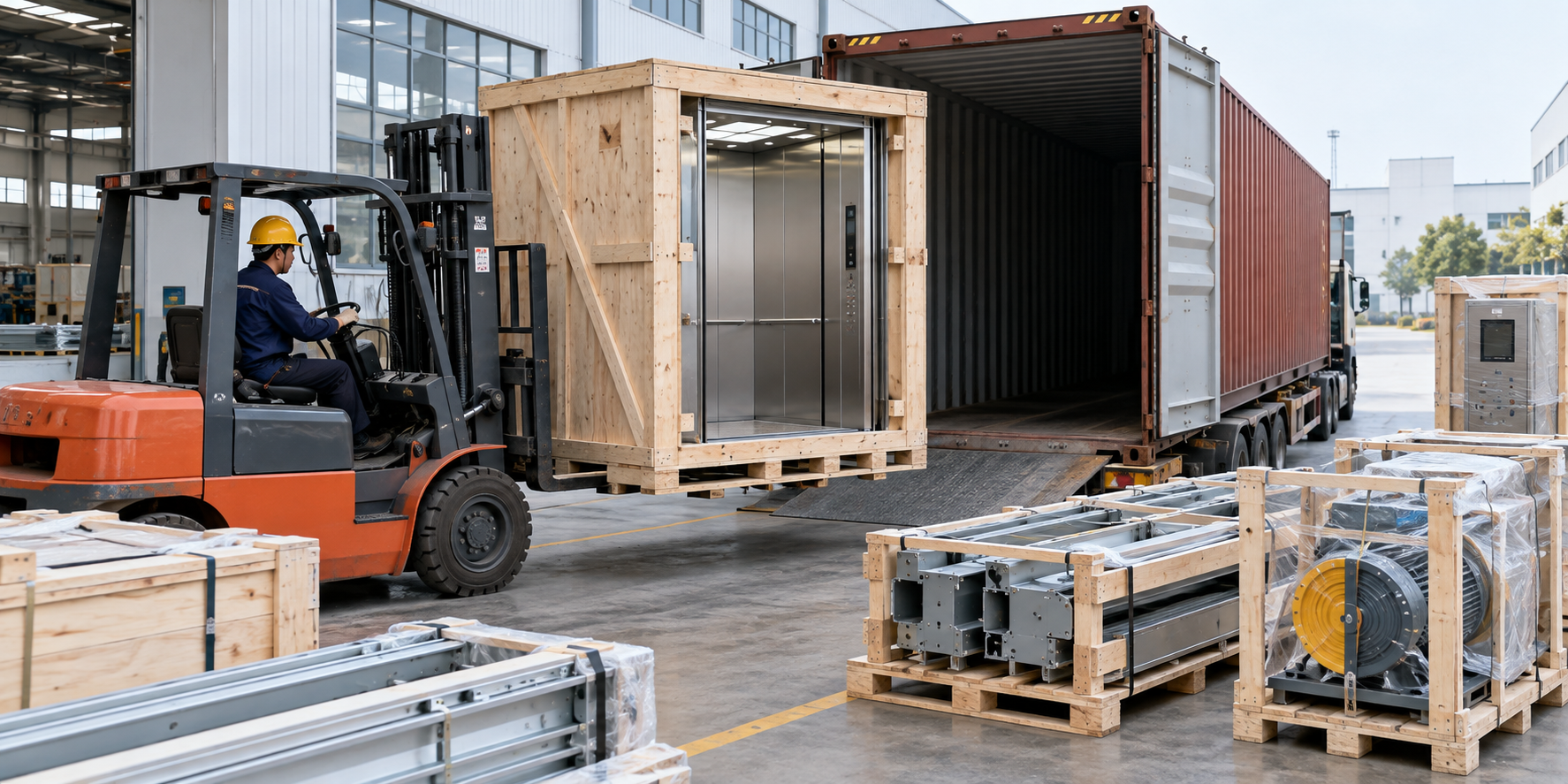
For wooden packaging, verify the destination's current quarantine treatment, marking and document rules for the goods concerned; requirements for wood packaging, treatment evidence or alternative packaging vary by destination. Protect the equipment against moisture, corrosion and impact, and secure the load for its centre of gravity. At arrival, record packaging condition, seals, quantities, moisture and visible damage before unpacking.
5. Plan overseas installation and commissioning before shipment
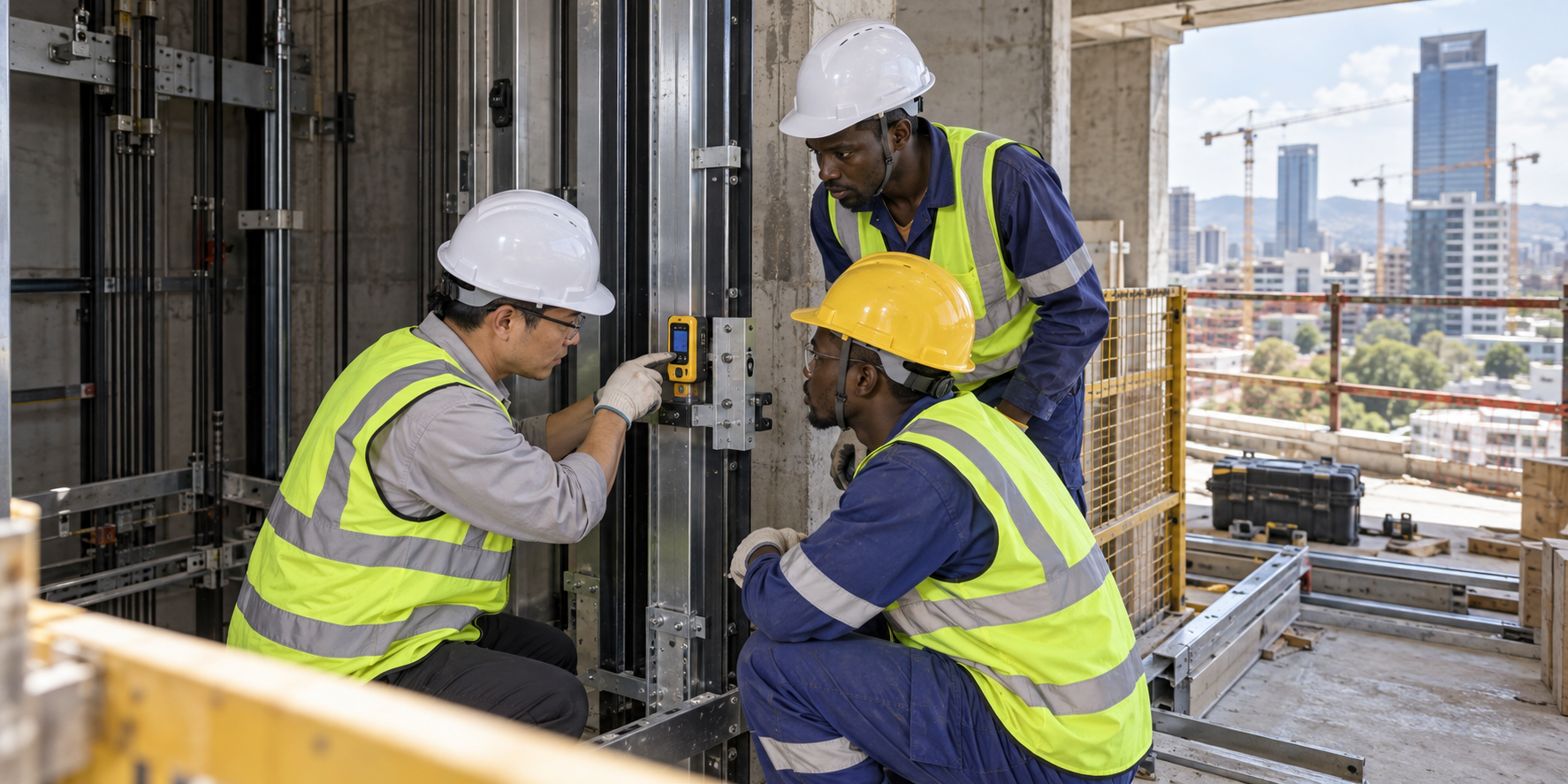
Finding an installation team only after the elevator arrives can turn a completed shipment into a waiting project. Before dispatch, agree who will install the equipment, whether Chinese field engineers will provide on-site guidance, how travel permissions and insurance will be handled, who supplies lifting gear, temporary power and site protection, and who signs installation inspections and commissioning records.
At overseas construction sites, actual shaft dimensions, plumb, openings, landing entrances, machine-space conditions and power quality may differ from design assumptions. Recheck the site and create a discrepancy list before starting. If deviations are found, obtain an approved correction or engineering disposition from the responsible design and construction parties before proceeding with affected work. After installation, complete commissioning, functional verification, inspections and acceptance support in accordance with applicable project requirements.
6. Extend delivery into training, spares and maintenance
In-service performance depends on the equipment, installation quality and support system together. The handover package should include clear operating and maintenance documents, a fault-reporting channel, warranty contact, key component list and recommended spare-parts schedule. Provide the owner or local maintenance team with the necessary operating and routine-check training.
Where local service resources are limited, discuss planned remote technical support, field-service windows, replenishment of consumable parts, fault-photo collection and escalation routes. Overseas elevator installation support and elevator after-sales service should be part of the export project plan, not improvised after a breakdown.
Quick checklist for China elevator procurement and export
- Are building conditions and elevator requirements documented and confirmed?
- Have the local responsible parties verified applicable standards, certification, import and acceptance requirements?
- Does the contract assign equipment, shipping, customs, installation, commissioning and inspection responsibilities?
- Are packing, wood-material compliance, documents, container loading and site receiving planned?
- Are the overseas installation team, technical guidance, permissions, insurance and site safety arrangements ready?
- Are training, spares, warranty contacts and long-term maintenance included in the handover plan?
Conclusion: turn equipment export into a working project
A reliable building elevator export begins with complete project inputs and suitable selection, continues through clear contractual interfaces, production checks and protected shipping, and extends to overseas site verification, installation, commissioning, training and maintenance. For owners and channel partners looking for an elevator supplier in China or planning an overseas elevator project, including these workstreams early helps control changes, reduce waiting after arrival and improve confidence that the elevator can be put into service.