
Exporting Elevators to Ethiopia: Why Equipment Delivery Is Only the Beginning
An elevator export to Ethiopia or another East African market is not complete when the containers leave China. A lift becomes usable only when the equipment is matched to the building, installed to the required tolerances, commissioned correctly and supported after handover.
This is why elevators for East Africa should be treated as an engineering delivery rather than a hardware transaction. Without a verified shaft, capable installers, commissioning support and a maintenance plan, a buyer may receive a complete packing list but still be left with equipment that cannot enter service.
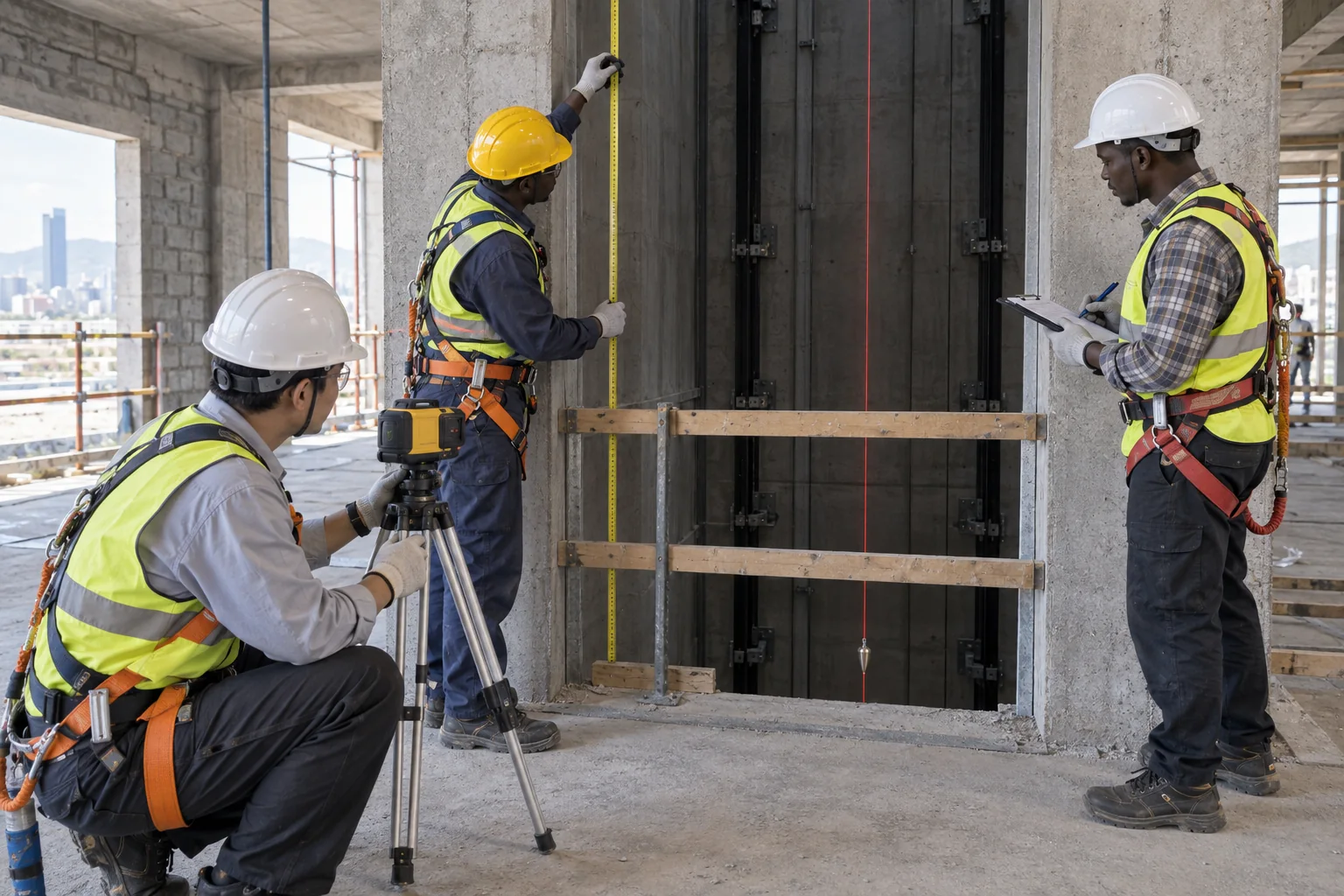
1. Start with the real building, not only the tender drawing
Elevator components are designed around tight dimensional relationships, while the construction tolerance found on an overseas project can differ significantly from the original drawing. In some site surveys, a shaft about 30 metres high may show a top-to-bottom deviation greater than 150 mm. This is not a general statistic for African buildings and must not be used as an acceptance benchmark. It is a practical warning: every project needs its own as-built survey.
A large shaft deviation can affect guide-rail brackets, car size, counterweight clearance, landing doors and required safety spaces. Reducing the car dimensions is not always a sufficient remedy. A competent elevator selection process must compare the actual shaft with the manufacturer layout before production is released.
| Site information | Why it matters | Required action |
|---|---|---|
| Clear shaft dimensions at every floor | Determines car, counterweight and guide-rail arrangement | Prepare a signed as-built measurement schedule |
| Landing openings and finished-floor levels | Affects entrance alignment, sill height and finishing | Confirm centre lines and finished levels |
| Pit, headroom and support structure | Affects buffers, overhead safety space and machine loads | Coordinate elevator, structural and architectural designs |
| Voltage, frequency, earthing and power quality | Affects controller and drive compatibility | Obtain confirmed electrical data before ordering |
2. What if the elevator shaft is not finished?
On some East African projects, the building has only landing openings or slab openings when the elevator package arrives. The continuous shaft enclosure is then completed later, sometimes using a combination of reinforced concrete and structural steel.
A standard layout drawing alone cannot resolve this condition. The architect, structural engineer, local authority or inspection body, and elevator technical team need to coordinate load points, fire separation, waterproofing, ventilation, entrance interfaces and construction sequence. Any hybrid concrete-and-steel shaft must be designed and approved by qualified structural professionals; it should never be improvised by the installation crew.
- Confirm which parts of the shaft and machine space are complete before manufacturing.
- Survey every level and reconcile actual dimensions with the elevator layout.
- Complete and approve civil-work corrections before installing rails and entrances.
- Protect equipment from weather, dust and prolonged storage while site work continues.
3. Installation capability turns components into a working lift
Installation capability varies between countries, cities and contractors. Some locations have experienced lift companies; other projects may struggle to find technicians who can manage the full process from rail alignment and door adjustment to controller setup and final testing.
A locally assembled elevator may still fail commissioning if rope tension, brake adjustment, encoder alignment, door locks or drive parameters are incorrect. For a first project with a local team, a practical model is to combine local labour with experienced installation supervision. A Chinese elevator engineer can brief the crew, inspect hold points, lead commissioning and train local technicians instead of replacing them.
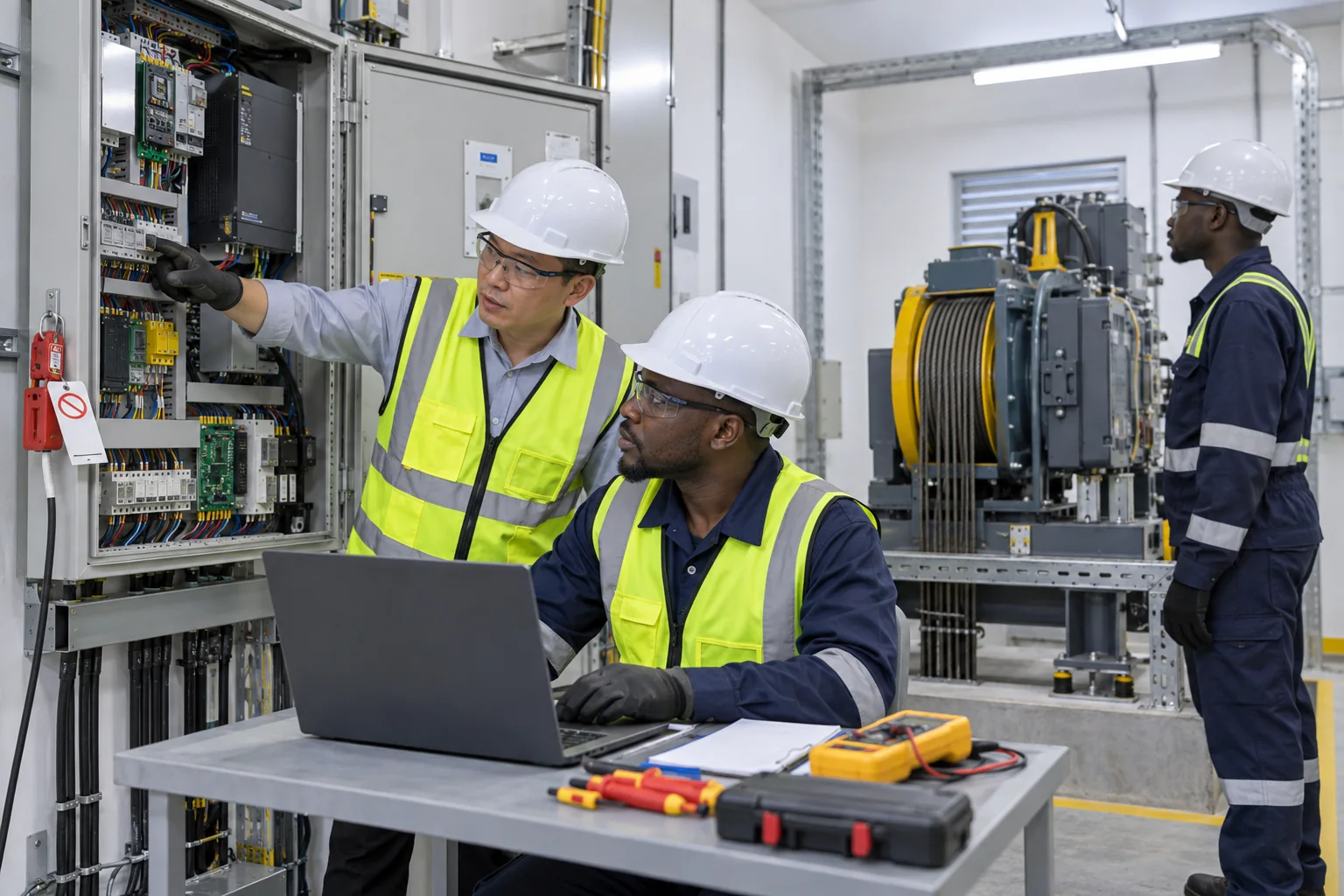
4. The cost of removing installation support
Owners sometimes view an overseas engineer as an optional expense. In reality, professional elevator installation support can prevent repeated rework, damaged parts, schedule delays and failed acceptance tests. The right commercial discussion is not simply the engineer's travel cost; it is the total project cost of achieving a safe, operable lift.
The contract should define which work is completed by the local installer, which hold points require supplier approval, who performs commissioning, what tests are recorded, and how travel or remote support is charged. Clear responsibility is especially important for a China elevator supplier working across borders.
5. Maintenance must be designed before handover
An elevator can remain out of service for months after a minor fault if the project has no maintenance provider, spare-parts plan or access to technical support. A sustainable elevator maintenance plan in Africa should identify trained personnel, service intervals, common spare parts, escalation contacts and the information required for remote diagnosis.
Controller backups, parameter files, wiring diagrams, commissioning records and operation and maintenance manuals must be handed over in an accessible language. Local technicians also need practical training in routine inspection, safe rescue procedures and fault reporting.
6. What a complete East Africa elevator delivery should include
| Stage | Technical scope | Deliverable |
|---|---|---|
| Elevator selection | Use, traffic, load, speed, stops, power and local requirements | Specification, configuration and layout |
| Shaft preparation | Survey, deviation review and structural coordination | Measurement record and approved correction plan |
| Export logistics | Destination documents, packing, spares and shipment planning | Packing list, technical file and shipping documents |
| Installation and commissioning | Supervision, hold-point inspection, parameter setting and tests | Installation records, commissioning data and acceptance file |
| Operation and maintenance | Training, preventive service, remote support and parts supply | Maintenance plan, fault log and spare-parts list |
7. KERUI's role in Ethiopia and East Africa projects
KERUI supports owners and contractors with early shaft coordination, site measurement and correction planning, elevator selection, China procurement and export coordination, elevator installation guidance, commissioning, technician training, customized maintenance planning and remote technical service.
The objective is not merely to ship elevator equipment. It is to connect the building, product, installation team and long-term service plan so the lift can be accepted and kept in operation. Structural work, installation and statutory acceptance must always comply with applicable local regulations, approved designs and manufacturer instructions.
Conclusion: measure success by operation, not shipment
A successful lift installation in Ethiopia is one that fits the real building, passes commissioning, can be maintained locally and has a clear technical escalation route. When evaluating an elevator export to East Africa, buyers should compare lifecycle delivery—not only equipment price.