
Marine elevator service at Taicang Port is both an engineering task and a port-call coordination exercise on the Yangtze. Confirm the actual terminal, berth and agent before mobilizing people, tools, spares and test plans. The agent's current instructions for that specific call take precedence.
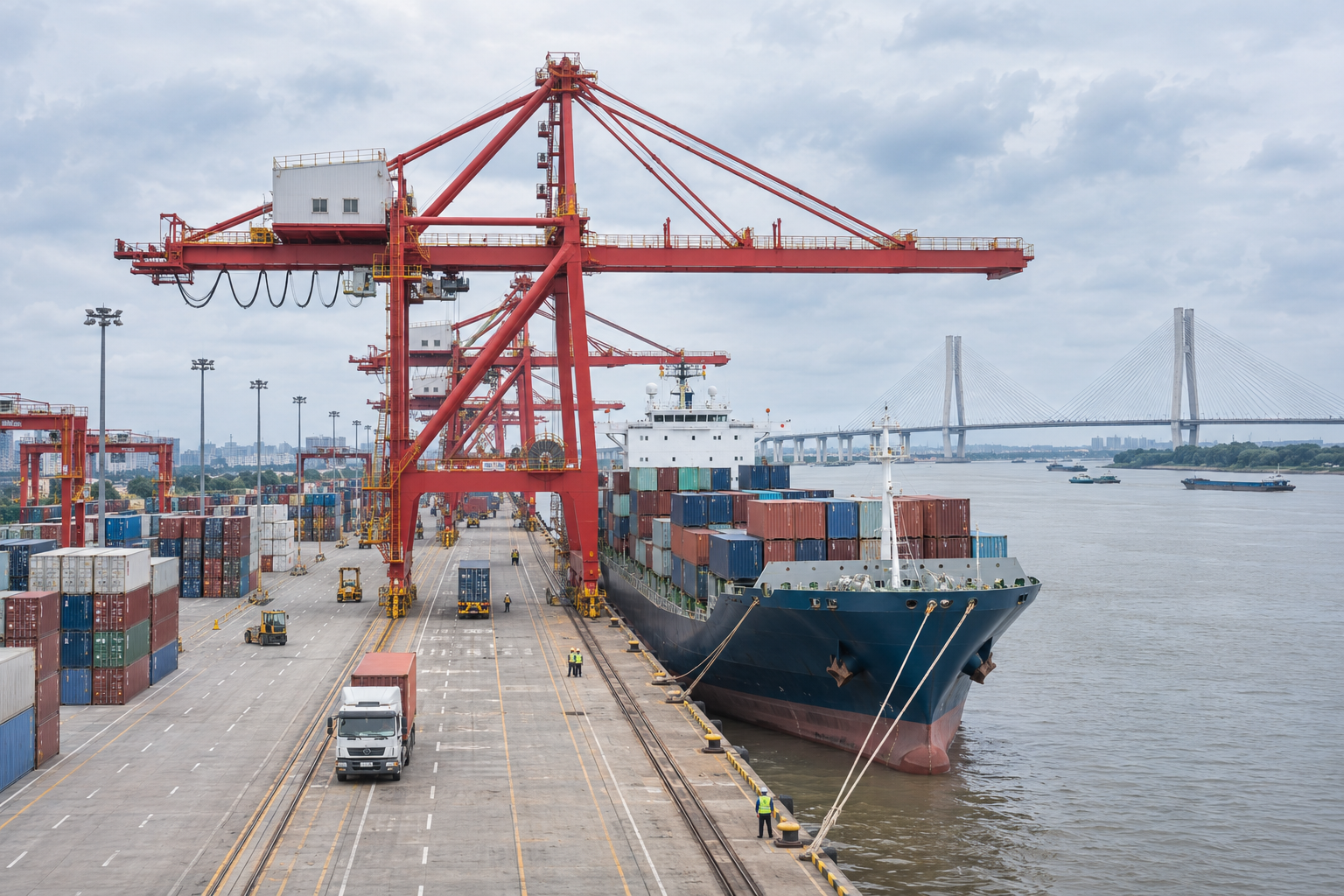
01 / PORT CALL & TERMINAL
Taicang is a port area, not one single worksite
Taicang Port sits on the south bank of the Yangtze estuary and forms a major part of Suzhou Port. Its operating landscape includes container, general cargo, dry-bulk and liquid-chemical facilities. Taicang International Container Terminal is one of the area's established public terminals, while newer automated container facilities and other specialized operations also form part of the port. For marine elevator repair, the place name ‘Taicang Port’ alone is not enough to plan attendance.
02 / ETA · ETB · ETD
Provide a schedule that can be turned into a workable service window
Keep arrival, berthing and departure estimates in one schedule sheet and update it whenever the call changes. ETA, ETB and ETD are operational inputs—not paperwork—because the service team needs a realistic window for boarding, diagnosis, repair, proof testing and disembarkation.
| Field | What to provide |
|---|---|
| ETA | Estimated arrival. State whether this means anchorage or port limits, and include the time zone and update time. |
| ETB | Estimated berthing. Provide the terminal, berth number, expected all-fast time and a realistic boarding window. |
| ETD | Estimated departure. Work backwards to reserve time for diagnosis, repair, testing, close-out, disembarkation and materials reconciliation. |
03 / SERVICE WORKFLOW
A practical workflow for marine elevator repair or inspection at Taicang
- 01
Share vessel identity, flag, port-call schedule, local agent and the confirmed terminal and berth.
- 02
Send elevator records and fault evidence. The service team completes remote triage and defines scope, personnel, instruments, candidate spares and quotation.
- 03
The vessel provides an invitation and service confirmation as requested by the agent. The agent checks immigration, terminal gate, vehicle, tool and material-filing requirements. An invitation is not an access permit.
- 04
Before boarding, the vessel confirms safe-work conditions, an onboard crew escort familiar with the equipment, isolation arrangements and test conditions.
- 05
Engineers perform the agreed repair or inspection and record defects, measurements, corrective work and functional test results.
- 06
Reconcile people, tools, removed parts and unused spares, complete exit formalities, and issue the agreed service record or report.
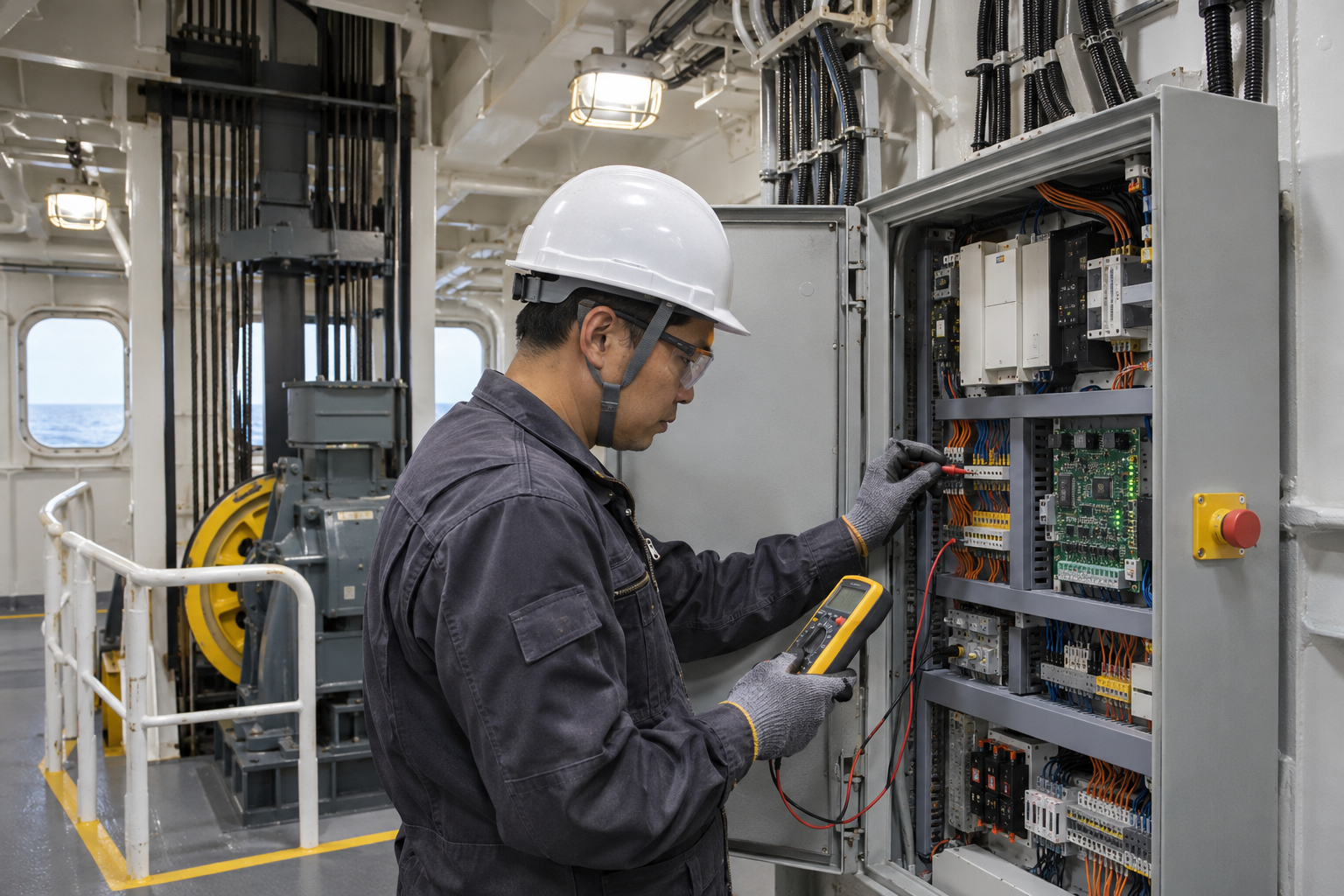
04 / PRE-ATTENDANCE CHECKLIST
What to send the service team before mobilization
| Category | Recommended preparation |
|---|---|
| Vessel and port call | Vessel name, IMO number, flag, vessel type, confirmed terminal and berth, local ship-agent contact, gate-entry and boarding window. |
| Schedule | ETA, ETB and ETD in China Standard Time (UTC+8), 24-hour format, with an update timestamp and a clear berth-confirmation status. |
| Elevator records | Make and model, rated load and speed, stops, controller details, drawings, manuals, previous inspection reports and maintenance history. |
| Fault evidence | Fault codes, when the fault occurs, car position, unusual sound or smell, and clear photos or video. A one-line ‘the elevator is down’ is not enough for triage. |
| People and materials | Proposed boarding personnel, technical certificates and translations, insurance details, plus separate lists for tools, instruments, battery-powered devices and ship-bound spares. |
For urgent ship elevator repair, send symptoms, alarm codes, photos or video and recent changes so likely parts and labor can be assessed. For a planned annual inspection, prepare drawings, manuals, previous inspection and maintenance records, and assign a crew member who knows the equipment. If a load test or third-party witness is required, agree the equipment setup, qualifications and applicable rules in advance.
05 / FAQ
Frequently asked questions
Is Taicang Port one container terminal?+
No. The port area includes different operating sectors and multiple terminals, including container, general cargo, dry bulk and liquid-chemical operations. Do not assume one terminal's security or boarding procedure applies across the port; ask the local agent to confirm the operator, terminal and berth for the specific call.
Does a master's invitation letter guarantee access?+
No. It is one supporting document. The ship agent must confirm and process the applicable access requirements for personnel, vehicles, tools, instruments and spare parts with the relevant terminal and port authorities.
Can tools and repair spares be listed together?+
Keep them distinguishable. Tools, test instruments, battery-powered devices and parts intended to remain onboard have different purposes and movements. Submit itemized lists and follow the route confirmed by the agent.
Can repair be added to an annual inspection during one call?+
It can be assessed, but execution depends on findings, owner authorization, port time, parts and test conditions. If safe completion before departure is not possible, document the limitation and next steps—do not skip verification to meet the sailing time.
What if the port schedule changes?+
Notify the service team 48 hours ahead where possible. For a late change, immediately update ETA, ETB, ETD, terminal, berth, agent and boarding window, then revalidate personnel and material filings.
KERUI MARINE SERVICE
Calling at Taicang? Start with the schedule and elevator records.
KERUI can assess marine elevator inspection, fault repair, testing and spare requirements against the vessel's port call. Attendance depends on technical records, the available schedule window and agent and terminal clearance.
References and scope
Port background: Taicang International Container Terminal;Jiangsu MSA: Taicang Yangtze special supervision area port-entry guide。
This is a port-call preparation guide, not a substitute for current instructions from Taicang MSA, immigration, customs, the terminal, ship agent or vessel. Terminal, berth, permits and document requirements can vary by call and operation; confirm each item with the appointed agent.
Marine elevator repair and annual inspection at Guangzhou Nansha Port · Marine elevator repair and annual inspection at Shenzhen Yantian Port