
Marine Elevator Levels but the Doors Stay Closed: A Repair Case from Door-Operator Signal to Stuck Close Button
A ship elevator reaches its destination and levels, yet the car doors do not open. This symptom calls for a structured marine elevator repair diagnosis. Possible causes include the controller's door-open output, the car-door operator, door-zone or lock status, wiring and input signals—or a small button contact that remains stuck. This case follows the checks from the machine room to the car top and car operating panel.
This article is a troubleshooting reference, not an instruction for unqualified personnel. Marine elevator inspection and repair must be performed by competent technicians familiar with the specific controller, following the manufacturer's manual, vessel safety procedures and applicable requirements. Never jumper a door lock or safety circuit or bypass a protective device.
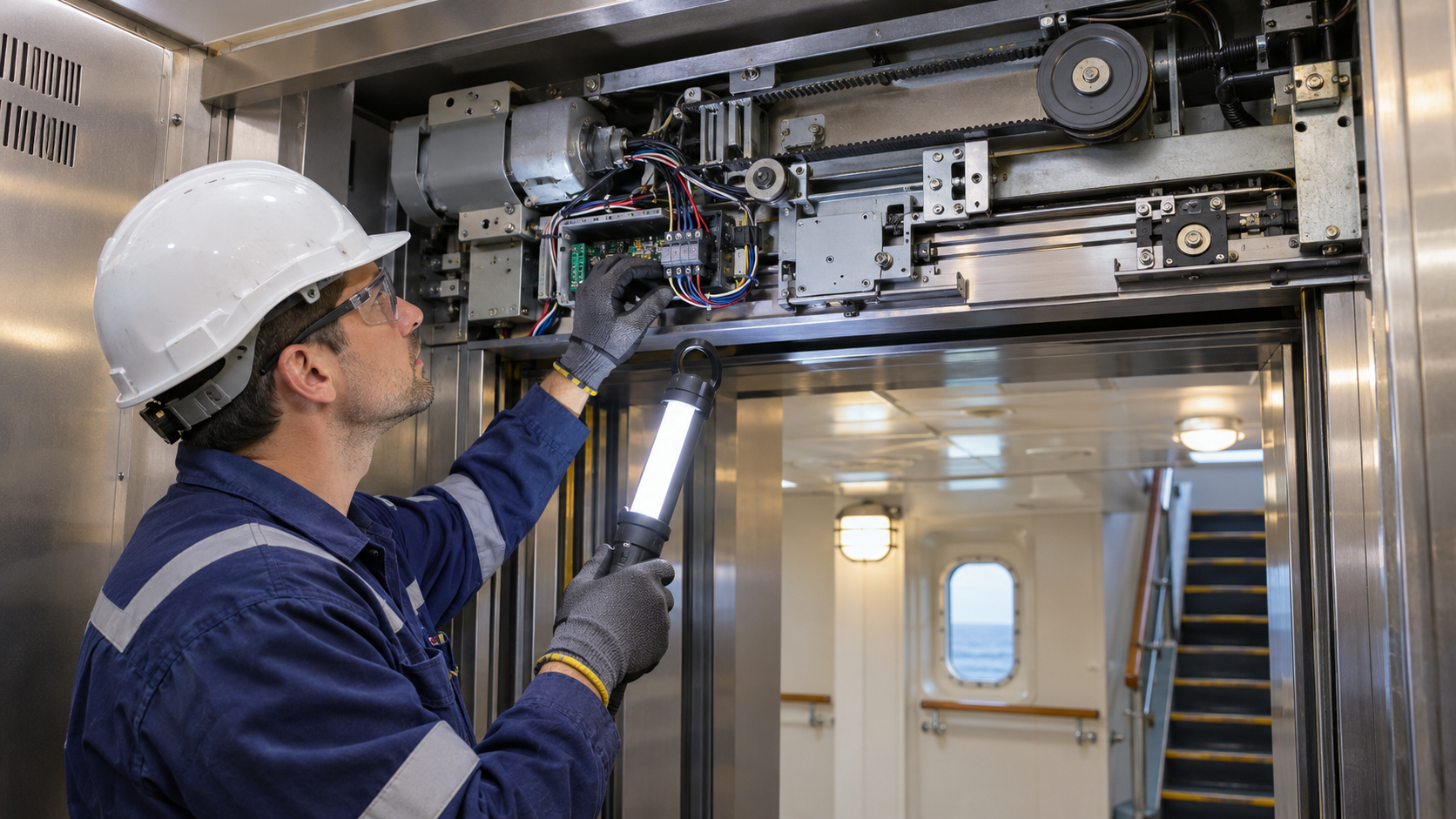
Symptom: the car levels, but the doors do not open
The first step is to confirm what the elevator is actually doing, rather than immediately replacing a door operator or controller board. In this case, the car travelled to and stopped at the selected floor; the reported fault was that the doors remained closed after arrival. The technician reviewed the controller manual and event history, then checked leveling, door-zone status, operating state, lock feedback and whether an opening command was being issued.
Step 1: verify the controller's door-open command in the machine room
At the machine room or control cabinet, the technician checked the post-arrival open command, door contactor or controller output, and compared the door-operator supply with its status feedback using the equipment wiring diagram. If no opening command is issued, diagnosis should continue through the operating state, door-zone signal, lock feedback, control inputs and event log. If the output is present, the focus can move toward the operator and field inputs, subject to confirmation of the specific controller design.
- Confirm that the controller recognizes the car as level and within the door zone.
- Read event history and live input/output states to see whether an open command is issued and for how long.
- Check contactors, terminals, supply and feedback against the wiring diagram; do not rely on one indicator lamp alone.
Step 2: inspect the car-top door operator under safe conditions
In this case, the machine-room indications showed that the door-operator conditions were valid, but the doors still did not move. Under the vessel's work authorization and the manufacturer's inspection procedure, the technician moved to the car top in the proper inspection mode. The checks covered whether the operator received a valid opening command, whether its drive responded, and whether panels, hangers, rollers, belt or linkage, sill and door zone showed obstruction, damage or binding.
If the operator works as intended in the authorized inspection mode and no mechanical obstruction is found, continue by checking car buttons and controller inputs. If it does not respond, follow the manual to test supply, controller, drive, encoder or limit feedback, wiring and mechanical load. Each step should be supported by the model-specific diagram and recorded status—not by guesswork or indiscriminate parts replacement.
Step 3: check the close button and persistent input
Further checks found that the car's door-close button was sticking and the close input remained active. Under this elevator's control logic, the persistent close command affected the opening action after arrival. Once the button was freed and the input returned to normal, the doors resumed the expected operation. The lesson: a fault that appears to involve the door operator or controller may ultimately come from a small button contact or abnormal input.
Command priority differs among manufacturers, models and software versions. A stuck close button should not be treated as a universal explanation for a marine elevator that will not open. Read the live inputs, observe command changes and verify behavior against the specific manual.
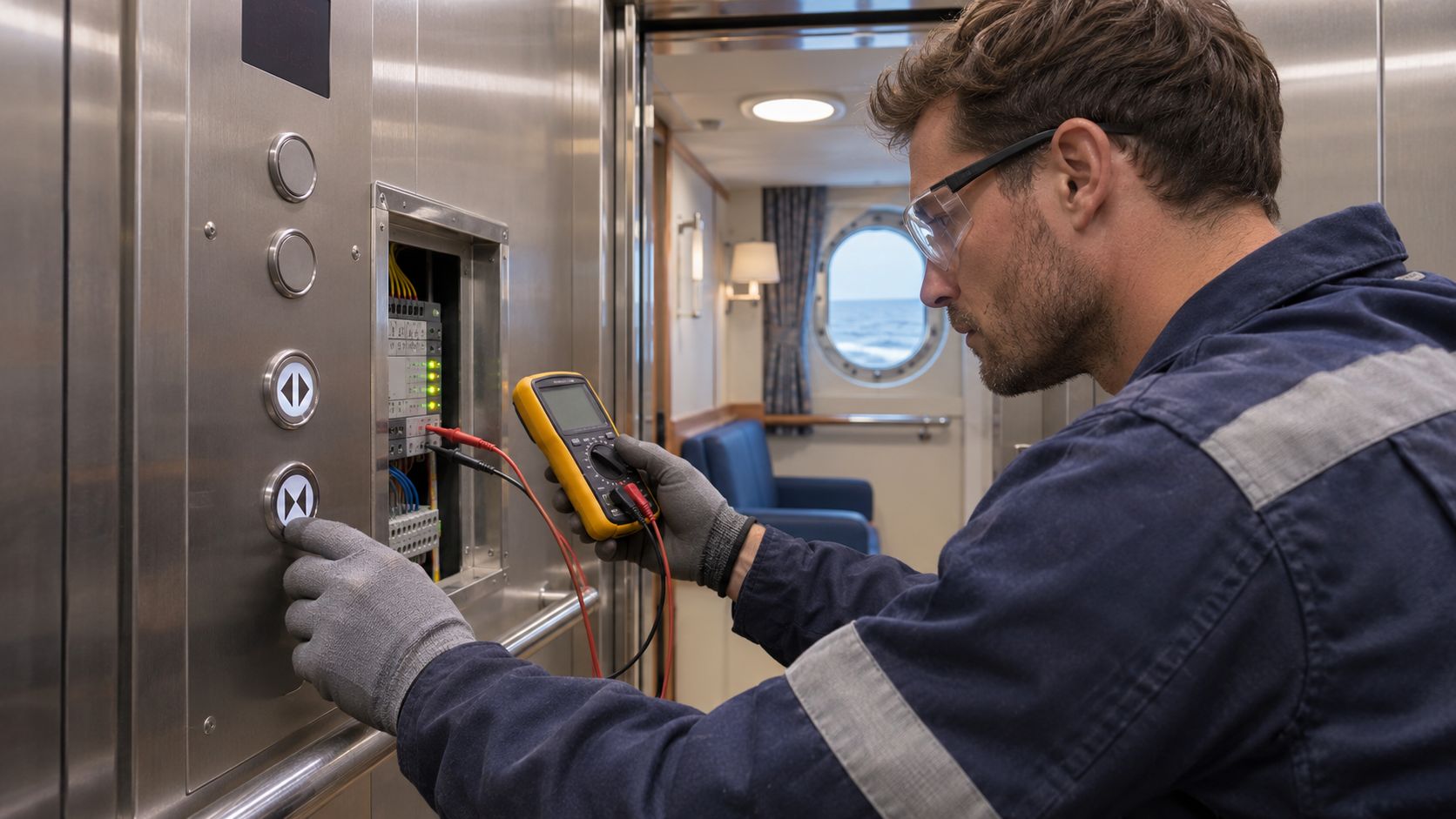
After the repair: verify operation and prevent recurrence
Clearing the fault is not the end of the repair. Before returning the elevator to service, confirm that the button releases, controller inputs return to normal, the operator moves correctly and lock feedback is reliable. Complete door-cycle and arrival checks at multiple floors under authorized inspection and operating conditions. Tests involving door locks or safety circuits must use approved methods by competent personnel; never bypass protection for a test.
| Service report item | Why it matters |
|---|---|
| Conditions, floor and symptom | Helps identify links to a floor, operation or intermittent input |
| Controller events and input/output states | Preserves the diagnostic trail for future review |
| Parts inspected, adjusted or replaced | Defines the repair scope and any outstanding item |
| Post-repair tests and results | Documents door movement and operating status after repair |
| Preventive checks for the owner | Adds button return, panel cleanliness, moisture and fault logging to routine checks |
A useful report for the shipowner or vessel manager records the diagnostic process, confirmed cause, corrective work, test results and preventive actions. For recurring button sticking, routine crew rounds may note whether buttons return freely, whether the panel shows moisture or corrosion, and the floor and operating conditions when the issue occurs. The maintenance plan should set the appropriate inspection interval and scope.
What this case teaches about marine elevator repair
Following the manual step by step is fundamental to marine elevator repair. Connecting the observed symptom with signal states and possible influencing factors—and eliminating them in a logical sequence—also requires system knowledge and field experience. The root cause may be minor, but good service means more than restoring operation: it includes a complete repair report and a practical preventive inspection plan.
KERUI can coordinate marine elevator repair China port services around vessel schedules and port-call windows, including boarding technical support in Guangdong. Actual attendance depends on vessel location, agent filing, equipment documentation and personnel access clearance.
Related China port service guides
Marine elevator repair and annual inspection at Guangzhou Nansha Port · Ship elevator repair Shenzhen: Shekou Port boarding guide