
Autumn and Winter Elevator Maintenance: Lubrication, Ropes and Moving-Part Checks
As temperatures fall, changing ambient conditions can reveal issues in lubrication, rope geometry, electrical components and rotating parts. A useful elevator winter maintenance checklist is more than an extra cleaning visit: it is a documented seasonal review of the equipment and its operating environment. This guide is intended to help building owners, facility managers and qualified service teams plan seasonal elevator maintenance.
1. Check oil cups, lubricant condition and wicks
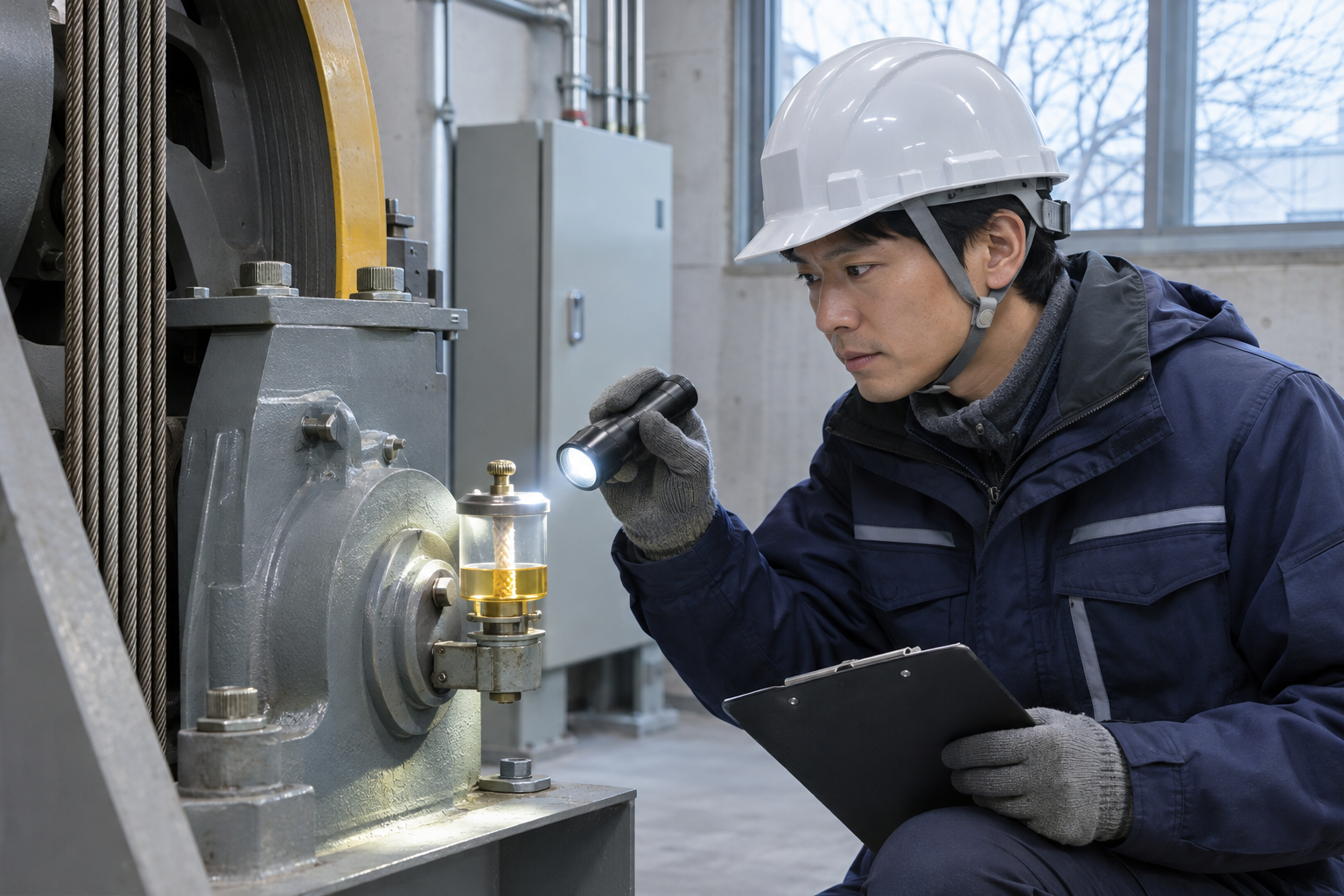
Lower temperatures can change how lubricants flow. A restricted oil cup, degraded lubricant or wick that has hardened, become wet or frozen may prevent the intended supply to a guide or rotating component. A seasonal elevator lubrication system inspection should verify the oil level and appearance, the feed path, and whether each wick remains correctly seated and able to deliver lubricant.
- Confirm the lubricant grade and temperature range in the equipment documentation; do not mix or substitute unidentified products.
- Check for low level, leakage, a blocked feed path, a dry or frozen wick, contamination or displacement.
- If lubricant appears congealed or feed is abnormal, find the cause and follow the manufacturer’s procedure. Do not conceal the problem with improvised heating or extra oil.
- Record the product, observations and any approved cleaning or replacement so the next visit can compare conditions.
2. Recheck ropes and the counterweight return-sheave switch clearance
Temperature changes may affect rope length, tension and the geometry of the rope system. Winter service should therefore include a measured review of the ropes and associated safety or position switches. Check whether the counterweight return-sheave switch clearance has changed from the service record and remains within the limit specified for that elevator. If the gap has narrowed or is approaching the maker’s limit, a qualified technician should investigate and adjust it only as directed by the technical documentation.
A visual “looks about right” check is not enough. Record the measurement location and method, actual reading, equipment condition and difference from previous records. Also inspect rope grooves, terminations, tension balance and signs of wear or abnormal contact. Any adjustment must be made with the elevator isolated and safe; verify switch operation and protective functions before returning the equipment to service. Do not apply a clearance value from another brand or model.
3. Review contactors, switches and indicator lamps in the controller
As part of building elevator maintenance, confirm that basic contactors, switches and indicator lamps operate reliably. Look for unstable operation, loose connections, unusual noise, odor, overheating or visible damage. If the machine room is cold or exposed to moisture or condensation, check that environmental conditions—and any heater or ventilation equipment provided—meet the manufacturer’s requirements.
- Observe whether contactors pick up and release consistently, without chatter or signs of sticking.
- Confirm that switch operation and indicator status agree with the actual equipment state; look for evidence of loose terminals.
- Check for condensation, dust or foreign matter in the cabinet. Electrical inspection and cleaning must follow the applicable safe-work procedure.
- Recurring faults, abnormal indicators, heat or odor require professional assessment; repeated resets are not a substitute for diagnosis.
4. Inspect the traction sheave, car-top return sheaves and pit wheels
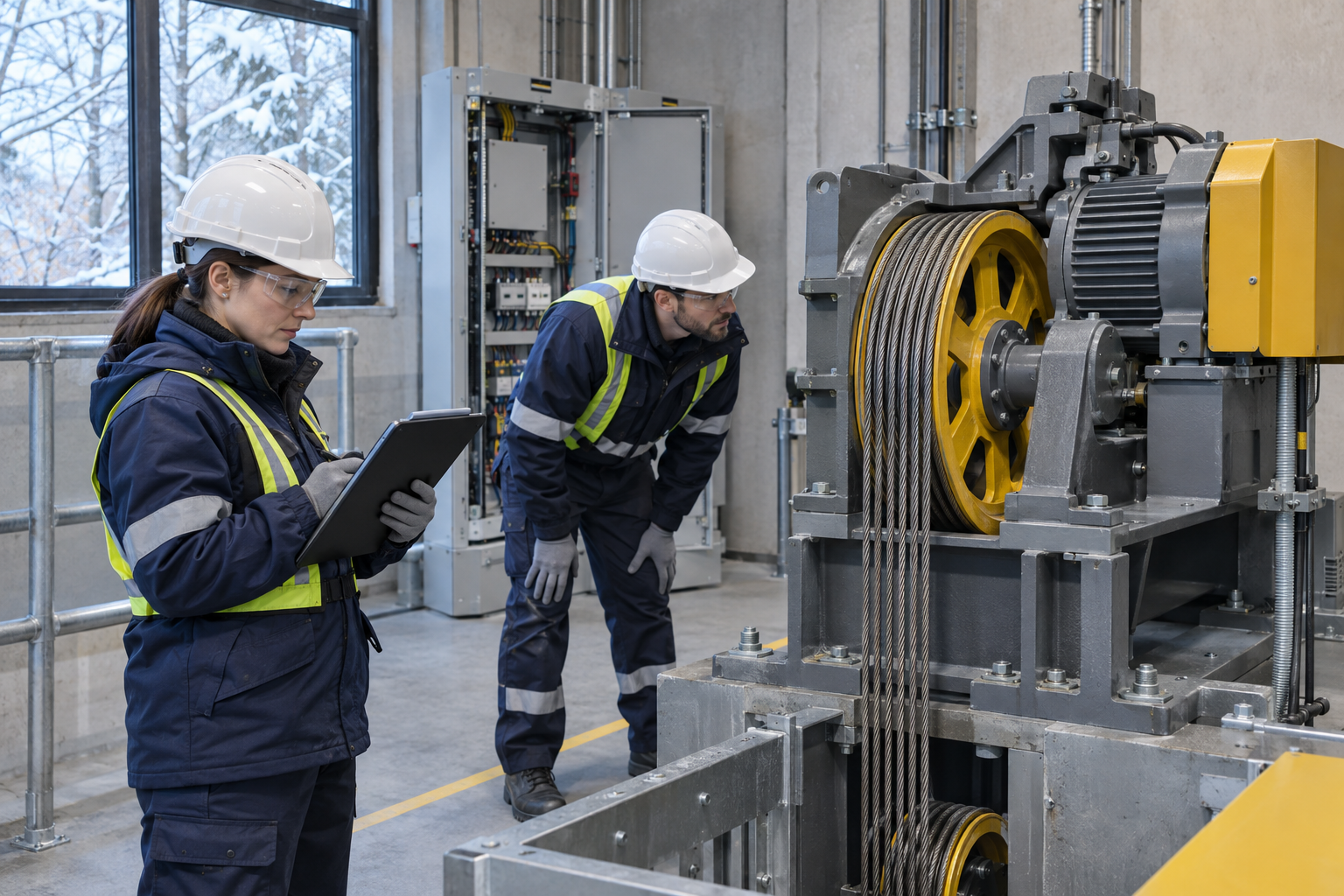
During the seasonal visit, include the elevator traction sheave inspection, car-top return sheaves and pit wheels. Look for oily sludge, mixed dust and oil, foreign material, unusual wear marks, noise or restricted movement. If sludge is present, identify its source—it may relate to lubrication, sealing, contamination or component wear. Before cleaning, make sure contaminants will not be transferred to rope grooves, brake surfaces or other critical areas.
More cleaning is not automatically better. Ropes, traction grooves and brake surfaces must be treated only by methods permitted by the manufacturer. Avoid cleaners or lubricants that could change friction, damage materials or leave residue. The inspection should also note bearing noise, leakage, abnormal vibration and fastener condition for professional diagnosis.
5. A traceable seasonal elevator maintenance checklist
| Equipment | What to review | Response to an abnormal finding |
|---|---|---|
| Oil cups and wicks | Level, lubricant condition, feed, freezing/hardening, contamination or leakage | Confirm product and temperature requirements; diagnose the feed issue and document the action |
| Ropes and counterweight switch | Rope condition, tension/termination; measured clearance compared with prior records | Measure against model-specific limits; qualified staff investigate, adjust under isolation and verify |
| Controller components | Contactors, switches and lamps; noise, odor, heat or condensation | Test under electrical safety procedures; recurring abnormalities require shutdown assessment |
| Sheaves and pit wheels | Sludge, debris, wear, leakage, noise, vibration and rotation | Identify contamination source; clean only with an approved method and recheck critical surfaces |
For every autumn and winter elevator maintenance visit, record the date, environment, equipment model, measured values, photos, findings, actions and verification results. Trend changes should trigger follow-up rather than waiting for an unplanned shutdown.
6. Why winter service depends on professional competence
A capable elevator maintenance company does more than tick boxes. It understands differences between manufacturers, lubrication schemes and rope arrangements, and can compare site evidence with history, maker instructions and control logic. Work involving switch clearances, ropes or a controller requires the right technical documents and tools, plus a complete process of risk assessment, isolation, adjustment, reinspection and handover.
A full-service elevator engineering company should be able to coordinate seasonal inspections, fault diagnosis, approved cleaning or adjustment, spare-parts recommendations, return-to-service testing, maintenance reports and a preventive follow-up plan. Building owners can define the service scope, response time, parts channel, record format and escalation procedure in their maintenance agreement—rather than accepting “inspected” as the only deliverable.
Conclusion
Winter elevator maintenance is about identifying issues in lubrication, ropes, electrical components and moving parts before they become disruptions, then documenting the work so it can be verified and compared. Building staff should not adjust elevator switches, ropes or controllers themselves; maintenance must follow the equipment documentation and be carried out by qualified professionals.
KERUI provides building-elevator product, project support and technical-service consultations. Sharing the make and model, operating environment, recent faults and maintenance history helps engineers prepare equipment-specific recommendations.
Related reading
- Building Elevator Door System Maintenance Guide
- How Installation Quality Affects Elevator Operation
- Elevator Energy Efficiency and Management
References
- Schindler: How to prepare your elevators and escalators for winter. Seasonal environment and maintenance guidance; confirm applicability for the specific model.
- Otis: Preventive measures to avoid corrective maintenance. Manufacturer guidance on rope and pulley warning signs and preventive inspection.
This article is general educational information and does not replace the manufacturer’s maintenance manual, statutory inspection or a site-specific risk assessment. Cleaning, measuring, adjustment, testing and reset work must be performed by qualified personnel under safe isolation procedures.