
How AI and Robotics Are Changing Elevators and Elevator Installation
Artificial intelligence (AI) and robotics are entering elevator design, manufacturing, installation and maintenance. Their impact is not simply a “driverless elevator” or a smart display. Connected data can help teams identify patterns, while purpose-built robots can take on selected repetitive or higher-risk tasks under controlled site conditions.
It is important to separate proven applications from future expectations. Today, robotic elevator installation focuses on specific standardized tasks; AI-enabled maintenance relies on sensors, useful historical data, communications and qualified human review. Neither replaces site measurement, installation quality control, commissioning tests or professional judgment required by local rules.
1. AI-assisted elevator maintenance: from reactive repair to data-informed service
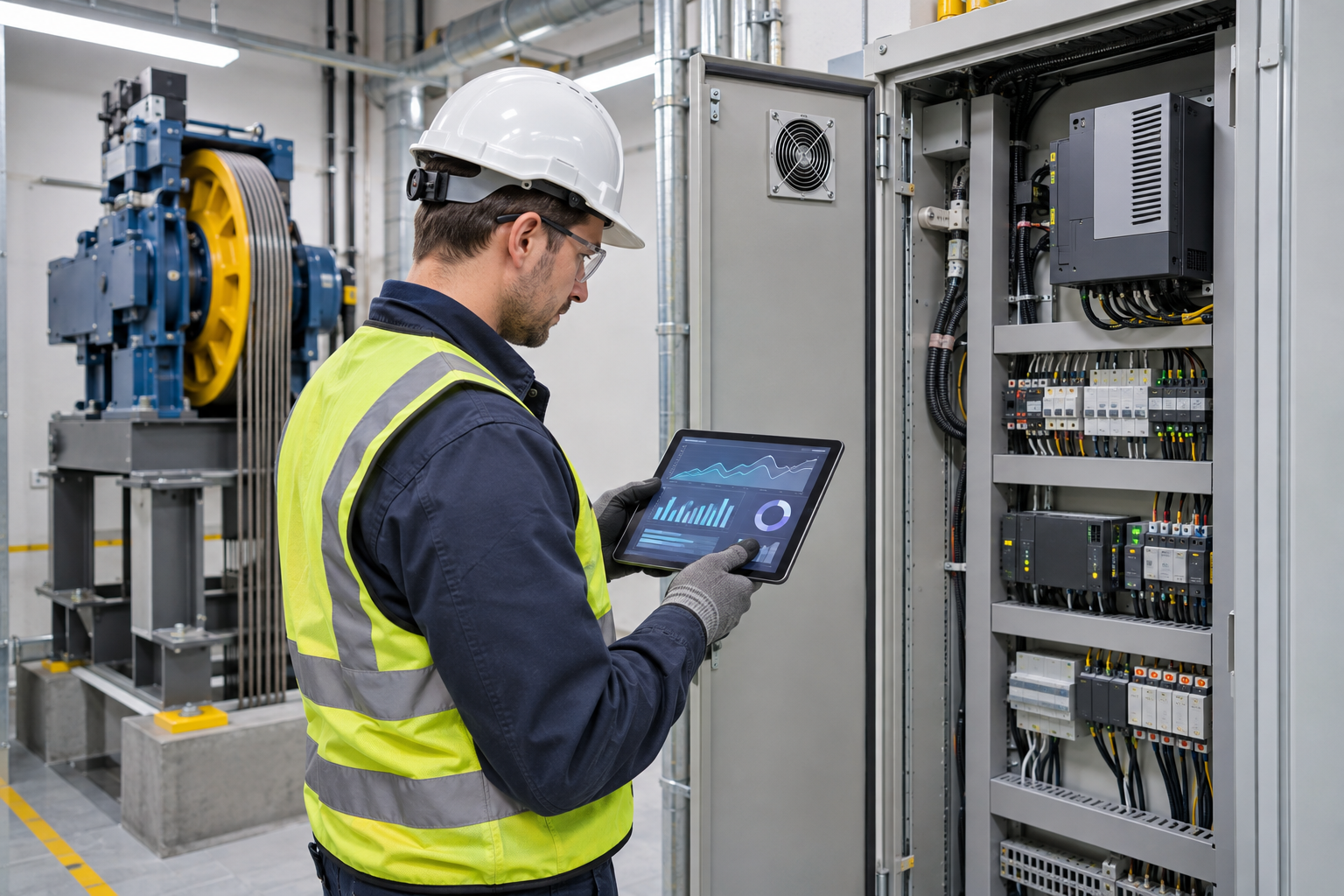
Connected elevators may provide data such as trip counts, door operations, fault codes, shutdown records and drive status. Elevator predictive maintenance analyzes these signals to identify changes from normal patterns and help service teams decide when to inspect, what evidence to review and which tools or parts might be needed. Compared with waiting for a complete shutdown, this information can give technicians a better starting point.
- Early indicators: repeated alarms, abnormal door cycles or changes in operating patterns can become leads for inspection.
- Remote pre-diagnosis: service teams can review fault history before dispatch, narrowing the likely scope and preparing documentation or spares.
- Maintenance planning: where supported by the manufacturer, service contract and local rules, equipment condition can inform visit timing alongside scheduled maintenance.
- Traffic and energy analysis: trip frequency, idle time and floor-use patterns can support dispatch or energy-efficiency reviews.
These capabilities do not mean that AI repairs an elevator by itself. Sensor faults, lost communications, incomplete labels or false positives can lead to misleading alerts. Technicians still need to compare the data with the actual symptoms, drawings, maker instructions and test results. Safety circuits, brakes, door locks, governors and other safety devices should never be adjusted or cleared solely on a model's recommendation or remote reset.
2. Robots in the shaft: starting with repetitive, standardized work
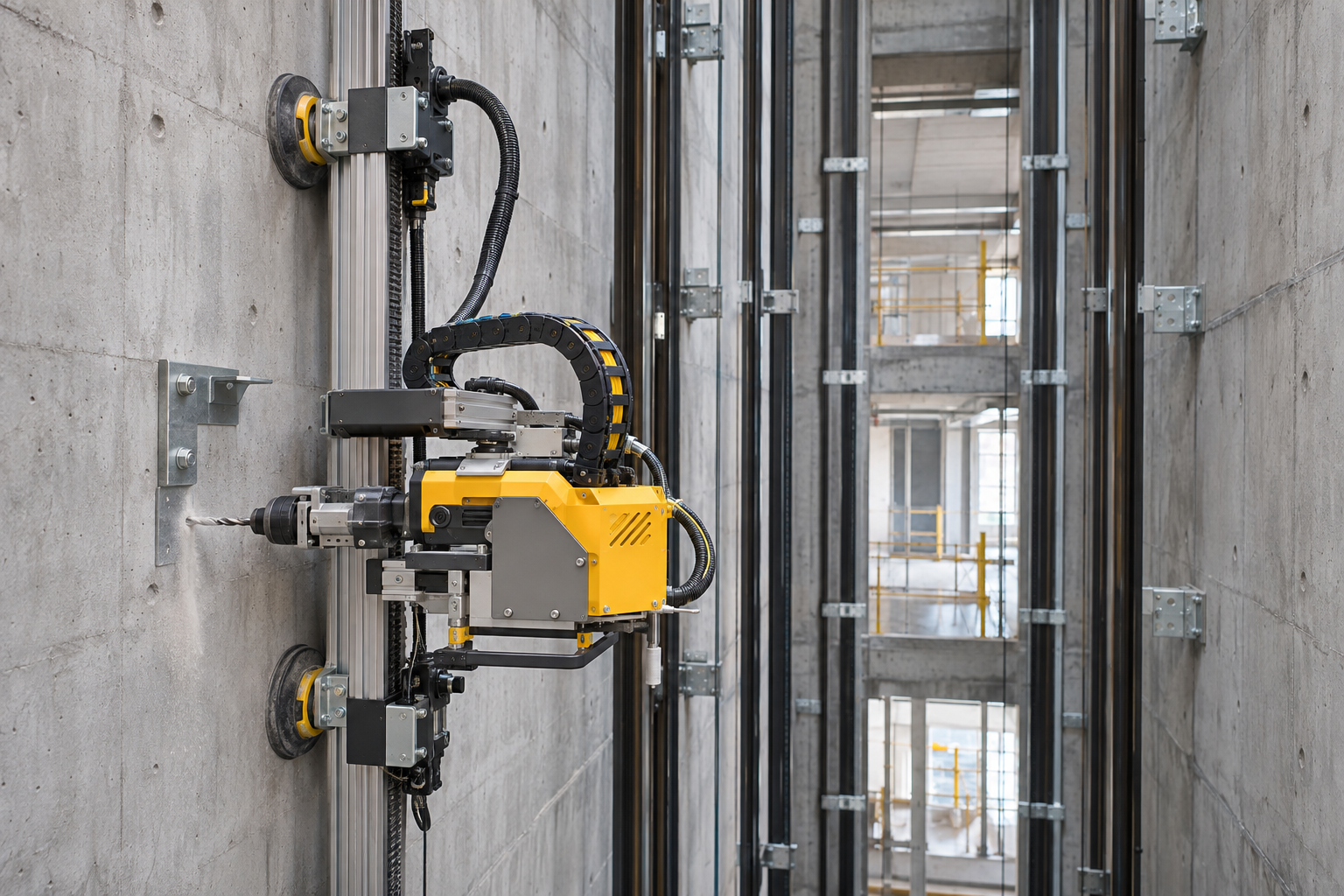
Elevator installation includes repetitive, precision-sensitive tasks such as shaft layout, bracket-hole marking, anchor drilling, material handling and work-record capture. A dedicated robot may perform selected parts of this work in an engineered system, potentially reducing prolonged exposure in the shaft and making task records more consistent.
Public project information describes the use of Schindler R.I.S.E for specific work such as drilling anchor-bolt holes in elevator shafts. This demonstrates progress in elevator installation automation; it does not mean that robots independently complete a full elevator installation. Site setting-out, guide-rail and door installation, connections, commissioning and safety acceptance still require competent personnel to organize and verify the work.
| Stage | Where AI or robots may help | Professional verification still needed |
|---|---|---|
| Pre-installation survey | Organize BIM, drawings and measurements; flag dimensional inconsistencies or missing information | Site re-measurement, datum confirmation, civil deviations and approved design changes |
| Shaft work | Assist with layout, repetitive drilling, material movement or progress records | Bracket and anchoring design, work sequence, permits and safety isolation |
| Installation quality checks | Organize image or sensor records and flag suspected deviations for review | Guide-rail plumb and joints, landing-door clearances, fasteners and final measurements |
| Commissioning and handover | Summarize fault logs, operating data and checklists | Parameter setting, trial runs, safety-function tests, fault resolution and acceptance records |
3. How can AI and robotics affect elevator installation quality?
The strongest near-term opportunity is more consistent measurement and work documentation. Digital tools can compare shaft dimensions, floor levels, openings and progress against project data. When records are tied to a specific floor and component, teams may spot missing steps or deviations earlier instead of relying on memory during handover. If a robot performs a repetitive operation, experienced installers may spend more time on critical connections, adjustment and quality review.
However, consistent data is not the same as a compliant installation. Shaft verticality, structural capacity, embedded parts and site conditions all affect the installation method. AI may flag an inconsistency, but it cannot independently authorize a changed bracket layout, guide spacing or departure from the manufacturer’s instructions. Decisions must use approved drawings, applicable standards and verified site measurements.
Digital elevator installation quality records should therefore focus on technical essentials: guide-rail alignment, spacing and joints; landing- and car-door installation and interlocks; traction machine, brake and ropes; controller wiring and safety circuits; door-operator adjustment, travel curves, leveling accuracy and acceptance tests. The objective is traceability and review—not merely an automatically generated report.
4. What does this mean for elevator exports and overseas installation?
For an elevator export or overseas installation project, the value of AI and robotics depends on project readiness. Destination-country connectivity, equipment model, electrical and acceptance requirements, installer experience, spare-parts access and service response all matter. A product described as “smart” or “AI-enabled” does not guarantee that a local team can access its service platform or that every diagnostic feature is available in every market.
- At procurement, confirm connected functions, data interfaces, remote-service scope, subscription fees and local availability.
- Clarify data ownership, access permissions, retention, behavior during network loss and cybersecurity responsibilities.
- Before overseas installation, complete shaft surveys, drawing reviews, crew briefings, tools and spares planning, and safe-work procedures.
- Define who is responsible for installation guidance, commissioning, acceptance documents, fault response and software updates; avoid leaving these obligations under a vague “smart service” label.
In East Africa, the Middle East and other markets with less-developed supply chains, remote digital support can help share fault evidence, identify parts and guide diagnosis. It cannot replace safe site management, skilled installers or essential local spares. A robust overseas elevator installation plan considers digital features, workforce capability, site conditions and lifecycle maintenance together.
5. What new skills will elevator installers need?
Robotics is more likely to change the installer’s work than eliminate the role. Alongside mechanical, electrical and safety fundamentals, future elevator technicians may need digital measurement, equipment-data interpretation, construction software, robot coordination, fault-evidence capture and basic cybersecurity awareness. Project leaders will need to identify suitable automated tasks, establish human verification points and ensure that new tools do not bypass safety procedures.
For owners and buyers, the useful question is not simply “Does it have AI?” Ask: Which specific problem does it solve? Where does its data come from? Who reviews an alert? Can local teams maintain it? Does the elevator remain safe and operable when connectivity is lost? Will software, parts and service remain available? These questions reveal more about project value than a marketing label.
Conclusion: technology cannot replace engineering responsibility
AI and robotics are gradually digitizing elevator maintenance, construction coordination and selected shaft-installation tasks. They can improve information flow, reduce repetitive work and support safer methods in some conditions, but today they are best treated as engineering tools. Installation quality, commissioning and ongoing service remain the foundation of ride performance and equipment life.
KERUI supports building-elevator sales, project selection, export delivery and overseas installation coordination. Exact features, installation scope and acceptance requirements must be confirmed against the elevator model, destination-country rules and actual site conditions.
Further reading
- How installation quality affects elevator operation and service life
- Elevator energy efficiency and energy management
- Elevator installation in East Africa: a practical site guide
References
- Schindler: R.I.S.E elevator installation robot deployed in Asia-Pacific projects. The cited use includes anchor-bolt drilling in elevator shafts; it does not establish that a full elevator installation is autonomous.
- Otis: Gen3 / Otis ONE digital platform product information, describing connected monitoring, data APIs and predictive-service features.
- Automation in Construction: autonomous construction-hoist scheduling using deep reinforcement learning. This study concerns construction hoist dispatch, not passenger-elevator installation or acceptance.
This article is general technical information, not an installation, design or safety procedure. Elevator installation, commissioning, maintenance and acceptance must be performed by competent professionals under manufacturer documentation, project specifications and applicable local regulations.