
Xiamen Port Marine Elevator Repair Guide: Vessel Schedule, Agent and Boarding Preparation
Arranging a marine elevator inspection, fault diagnosis or urgent repair during a vessel’s call at Xiamen Port involves more than dispatching an engineer. The vessel’s schedule, actual terminal and berth, elevator records, technical scope and boarding clearance all need to be coordinated. Sharing these details early with the service team and the local ship agent helps avoid delays caused by incomplete documents, an unconfirmed access request or a changed port call.
This guide is for shipowners, vessel managers, masters, chief engineers and ship agents planning marine elevator repair at Xiamen Port. Xiamen Port includes multiple port areas, including Dongdu and Haicang. The precise port area, terminal, berth and engineer access route must be confirmed against the latest voyage information from the ship agent—not inferred from the general destination “Xiamen.”
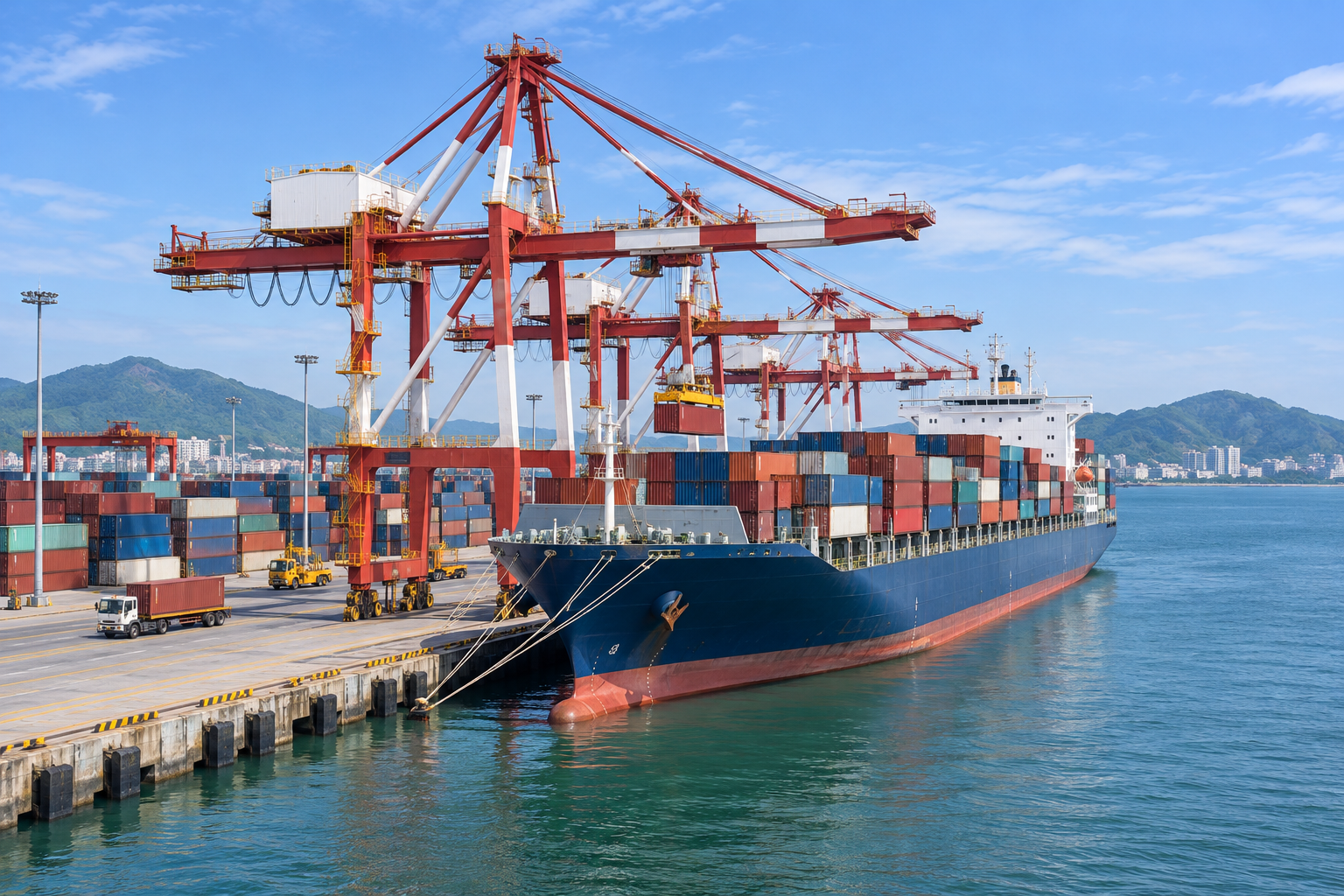
1. Confirm the port call and the actual work window
Before scheduling a ship elevator repair in Xiamen, provide the vessel name, IMO number, flag, vessel type, and current estimated arrival, berthing and departure times. ETA is the estimated time of arrival, ETB the estimated time of berthing, and ETD the estimated time of departure. The key planning detail is the practical boarding and work window: a vessel’s arrival does not mean that a technician can board immediately. Cargo operations, terminal security, berth arrangements and the ship’s permit-to-work process may all affect access.
- Port area, terminal and berth: provide the exact current terminal name, berth number and vessel side alongside; label unconfirmed details as provisional.
- ETA/ETB/ETD: state local time and when the schedule was last updated. Send revisions promptly rather than forwarding an old schedule.
- Boarding and transfer: confirm the reporting point, receiving contact, transport arrangements and any terminal-designated access route.
- Work window: identify cargo operations, crew changes, shifting or sailing constraints, and allow time for inspection, testing and reporting.
Fujian’s transport authority has described Xiamen’s digital port services as supporting vessel movement declarations and ship-boarding services. The actual boarding request and document list must still be checked by the ship agent for the specific call. Xiamen’s port rules also address pilotage for foreign vessels entering, leaving or shifting within the port. That is a vessel navigation requirement; it should not be mistaken for permission for a service technician to board.
2. Elevator records the vessel should prepare
Good technical information helps the service team distinguish an annual inspection from routine troubleshooting or an urgent repair that may require parts. Before confirming the quotation and attendance plan, prepare:
| Information | What to provide | Why it matters |
|---|---|---|
| Equipment identity | Manufacturer, model, serial number, rated load/speed, served decks and elevator location | Checks the system configuration and tool/parts compatibility |
| Technical documents | Electrical drawings, layout drawings, operation and maintenance manual, key component details | Supports inspection planning and safe isolation |
| Service history | Previous inspection reports, maintenance logs, repair records and replaced components | Shows equipment condition and recurring faults |
| Fault evidence | Time and deck of occurrence, symptoms, displayed code, photos or video | Helps with preliminary diagnosis and spare-parts decisions |
| Vessel details | Vessel name, IMO number, flag, schedule, actual berth, agent and onboard contact | Supports boarding coordination and work-window planning |
If drawings or earlier reports are missing, state that clearly and still send the available fault description. Photos and video should avoid unrelated sensitive vessel information; redact it first where appropriate.
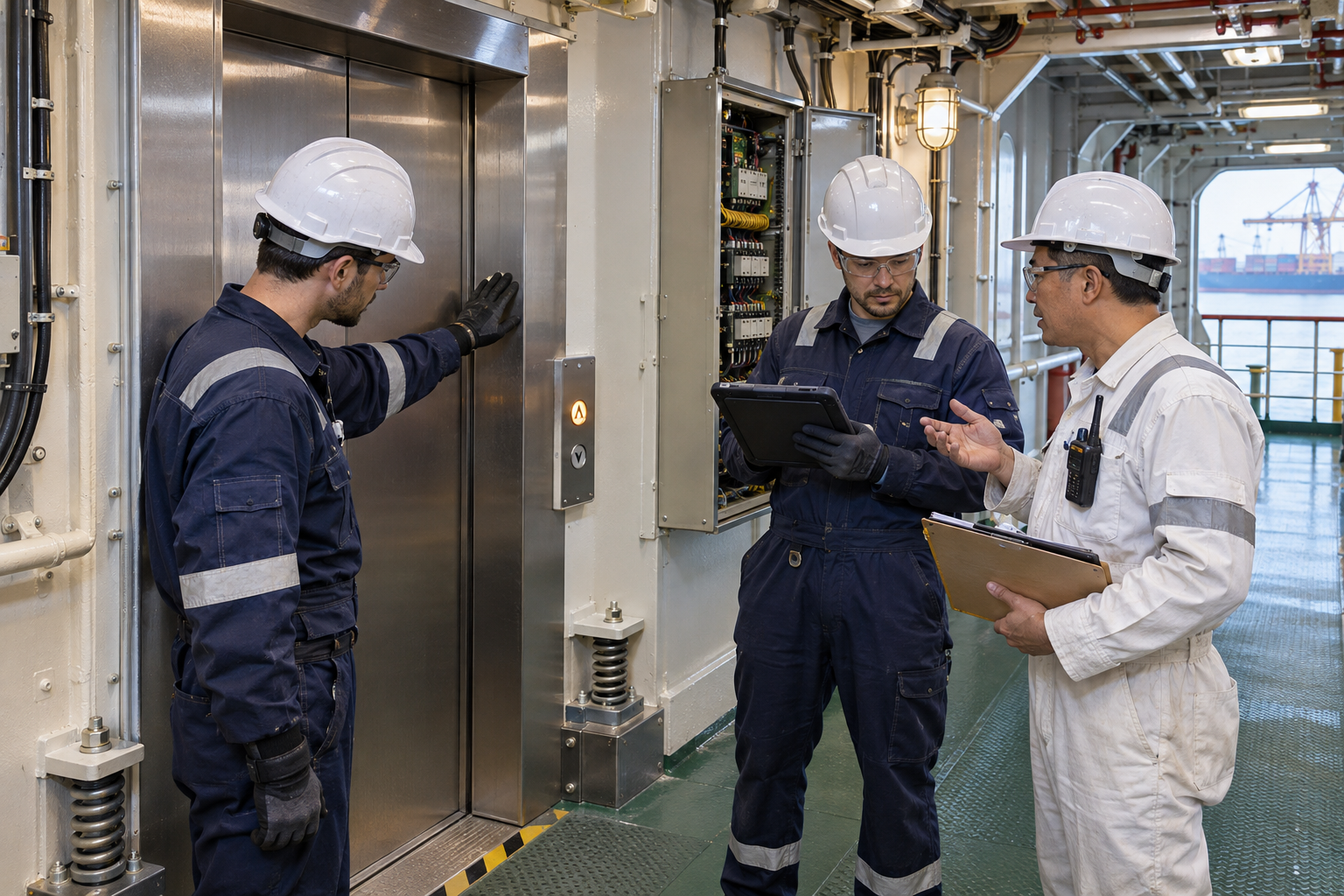
3. Coordinate the ship agent and engineer boarding file
Whether the work can start on schedule often depends on coordination among the ship agent, terminal or port-area operator, and vessel. Before dispatch, ask the agent to confirm the applicable submission method, deadline, personnel documents, meeting point, transport and site safety requirements for this call.
- The service company submits the proposed scope, quotation, engineer list and technical qualification details.
- The shipowner or master confirms the service arrangement and provides an invitation or boarding-work confirmation if required by the agent.
- The agent verifies the berth and work window, then coordinates the boarding and terminal access filings under the current process.
- The service company supplies the engineers’ identity documents, valid credentials, relevant qualifications and translations where requested. Insurance, PPE and other documents should follow the agent’s and site’s instructions.
- Only after the agent and relevant site authorities confirm access should the engineers travel to the designated reporting point. An invitation letter alone does not mean boarding has been approved.
Requirements may vary with vessel flag, personnel status, terminal, work method and current controls. Send passports, qualification records, translations and insurance evidence early for the agent’s review. The digital port platform supports certain boarding-related services, but it does not replace approval for the specific call or onsite confirmation.
4. Annual inspection, routine repair and urgent response
| Service type | Prepare | Planning focus |
|---|---|---|
| Annual inspection | Elevator records, prior reports, maintenance logs, an onboard escort and access to the machine room/shaft as applicable | Agree inspection scope, test conditions and shutdown window in advance |
| Routine repair | Fault codes, frequency, photos/video and recent adjustments or part replacements | Review the fault first; confirm parts and lead time if required |
| Urgent repair | People-at-risk information, fault status, whether the lift is out of service, sailing plan and onboard contact | Prioritize safety and access; quickly confirm boarding, staffing and necessary parts |
If cross-border carriage or temporary import/export of parts or specialist instruments is involved, have the agent and relevant logistics/customs service confirm the applicable declaration and transport route in advance. Do not assume every tool or component can be carried directly through the terminal. Repair, testing and reset work must be performed by competent personnel under maker instructions, the vessel’s safety-management system and the site permit process.
5. When the vessel schedule changes
- When ETA, ETB or ETD changes, the vessel or agent should send the updated times, berth and contact to the service company promptly.
- The service company rechecks personnel clearance, transport, parts planning and engineer availability.
- If the terminal, berth or alongside arrangement changes, the agent confirms whether the meeting point, boarding route or submitted documents must be updated.
- For a delay or cancellation, keep a written confirmation of the revised plan so engineers do not travel on the basis of outdated details.
6. Recommended service sequence
Vessel and fault information → schedule/terminal/agent confirmation → technical review and quotation → personnel and invitation documents → agent-led boarding/access filing → onboard inspection or repair → testing and vessel-side sign-off → service report within the agreed timeframe.
The service report should state the scope, findings, work completed, test results, remaining risks and recommendations. If an issue cannot be resolved during the call, record why, what parts or vessel-side support are required, and what should be planned for the next port window.
Frequently asked questions
Can we request a quotation with only “Xiamen Port” as the location?
An initial discussion is possible, but dispatch and boarding coordination require the exact port area, terminal, berth, schedule and agent details.
Can an engineer repair a marine elevator while the vessel is at anchor?
Boarding, transfer and permitted work depend on the anchorage, vessel status and current controls. The ship agent must confirm feasibility; being in Xiamen waters alone does not guarantee access.
Can the engineer board as soon as the invitation is issued?
Not necessarily. The invitation or vessel confirmation is only one part of the file; the agent’s personnel filing and site-access confirmation may still be required.
Does an annual elevator inspection always require a shutdown?
The inspection scope and test conditions depend on the system, vessel permits and inspection plan. Agree on an outage window and escort in advance; never operate equipment without vessel authorization.
Conclusion
For marine elevator inspection and repair at Xiamen Port, the most effective preparation is to coordinate the schedule, berth, elevator records and personnel access in parallel. Whether the need is an annual inspection, routine repair or urgent service, the shipowner, ship agent and service team should agree the work scope, permits and safety boundaries in advance. For foreign-flag vessels in China, follow the latest instructions from the agent and relevant authorities for the specific port call.
KERUI provides marine elevator inspection, troubleshooting, repair and port-boarding coordination. Send vessel details, schedule, fault description and available photos/video for an initial technical review. Phone: +86 189 2748 2192; WhatsApp: +86 17150859783.
References
- Xiamen Port Authority: Port planning and port-area boundaries, including planning information for Dongdu, Haicang and other port areas.
- Fujian Provincial Department of Transportation: Xiamen’s smart-port services, describing vessel movement declarations and ship-boarding service applications.
- Xiamen Special Economic Zone Port Management Regulations, including pilotage requirements for foreign vessels entering, leaving or shifting within Xiamen Port.
- Xiamen Maritime Traffic Safety Regulations, covering vessel movement reporting, pilotage, berthing and operational safety.
This is a general service-preparation guide, not a guarantee of port access or boarding approval. Rules, document lists and processing times may vary by voyage, vessel, terminal and personnel status. Follow the latest confirmation from the ship agent and relevant authorities.