
Factory Elevator Selection: A Practical Guide to Freight Lift Capacity and Configuration
Factory elevator selection starts with the material flow—not a capacity label. What will be moved, how will it be loaded, how many trips are needed at peak times, and what happens if the lift is unavailable? A useful specification brings together the goods, handling equipment, building and maintenance plan.
This guide helps factory owners, facility managers and procurement teams plan a freight elevator or warehouse goods lift. It is an introduction for project discussions, not a substitute for a site survey, structural calculations or project-specific compliance design.
1. Define the purpose: people, goods, or accompanied goods?
“Factory elevator” describes a location, not a single equipment category. Staff access, pallet movements and heavy machinery handling can require different solutions. A goods-only lift must not be treated as a passenger elevator just because a person fits inside. Whether an attendant may travel with the load depends on the equipment’s approved use, manufacturer’s instructions and local requirements.
Map the routes for incoming materials, production supply, work in progress and finished goods. Where shift changes overlap with freight peaks, evaluate separate arrangements for people and goods and keep pedestrian access routes clear.
2. Freight elevator capacity: count more than the goods
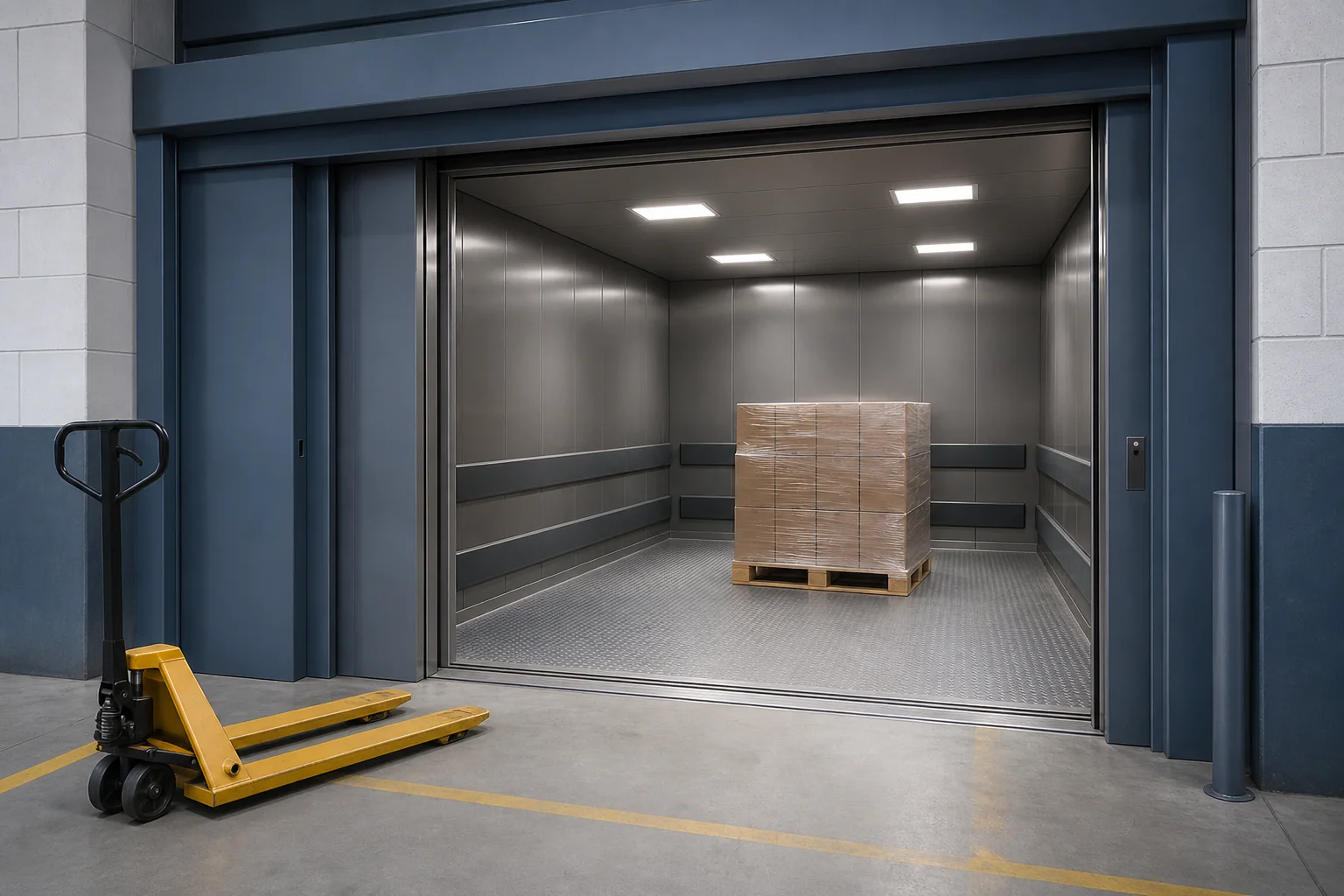
List everything that enters the car in one movement: goods, packaging, pallets, handling equipment and any authorised accompanying operator. Comparing the goods’ net weight alone with the rated load leaves important information out.
Illustrative example: goods weighing 1,200 kg, pallet and packaging of 80 kg, a 120 kg manual pallet truck and an authorised 80 kg operator total 1,480 kg. This is a demand calculation—not a recommendation to buy a 1,500 kg lift. Dimensions, load distribution, loading conditions and future production needs still require assessment.
If a forklift enters the car during loading, tell the supplier even if it does not travel with the lift. Provide its own weight, loaded condition and axle or wheel loads so the car floor and sill can be checked. Being within the overall rated load does not prove that concentrated loading is acceptable. Manufacturer guidance distinguishes loading methods, but regional classifications must not be applied universally. See Schindler’s freight loading guidance.
3. Car dimensions and doors: fitting inside is not enough
The car’s internal dimensions and the clear door opening are different measurements. Supply the largest packaged load, pallet size, handling equipment envelope and turning needs. Check landing corridors, corners and waiting areas on every served floor, as well as the complete route from unloading point to elevator.
A single entrance serves loading and unloading from the same side. Opposite entrances can reduce reversing in a suitable material-flow layout, but are not automatically better. Confirm entrance positions, floor access and control arrangements together. Wide openings, levelling and sill loading also affect goods handling; see KONE’s goods lift overview.
4. Quantity and speed: evaluate the whole handling cycle
A freight trip includes waiting, loading, door operation, travel, unloading and return. In a low-rise factory where handling takes much of the cycle, a higher rated speed alone may do little to reduce queues.
Record peak pallets per hour, origin and destination floors, batch size and loading times before comparing one lift, two lifts or separate service zones. Avoid selecting elevator quantity from floor area alone. For a production-critical route, also consider how materials will move during maintenance or a breakdown.
5. Industrial elevator configuration: focus on the working conditions
| Item | Questions to resolve before ordering |
|---|---|
| Car and floor | Are bump rails, wear resistance and slip resistance suitable? Have concentrated and wheel loads been checked? |
| Doors and levelling | Do clear openings, loading dwell time, door protection and levelling suit the handling equipment? |
| Duty | Do daily operating hours, peak starts and sustained use fall within the equipment’s design capability? |
| Environment | Do dust, moisture, corrosion, temperature or cleaning methods need a special design? Standard equipment is not automatically suitable for hazardous areas or cleanrooms. |
| Controls and interfaces | Are access control, logistics dispatch or AGV integration required? Who defines interface scope and fault behaviour? |
| Maintenance and response | Are service access, fault reporting, emergency communication, local support and critical spare-part lead times defined? |
Required safety features are not optional cost reductions. Door interlocks and safety circuits must not be bypassed to keep production running. Qualified professionals must confirm the applicable design, testing and acceptance requirements.
6. Traction or hydraulic? Compare the complete project
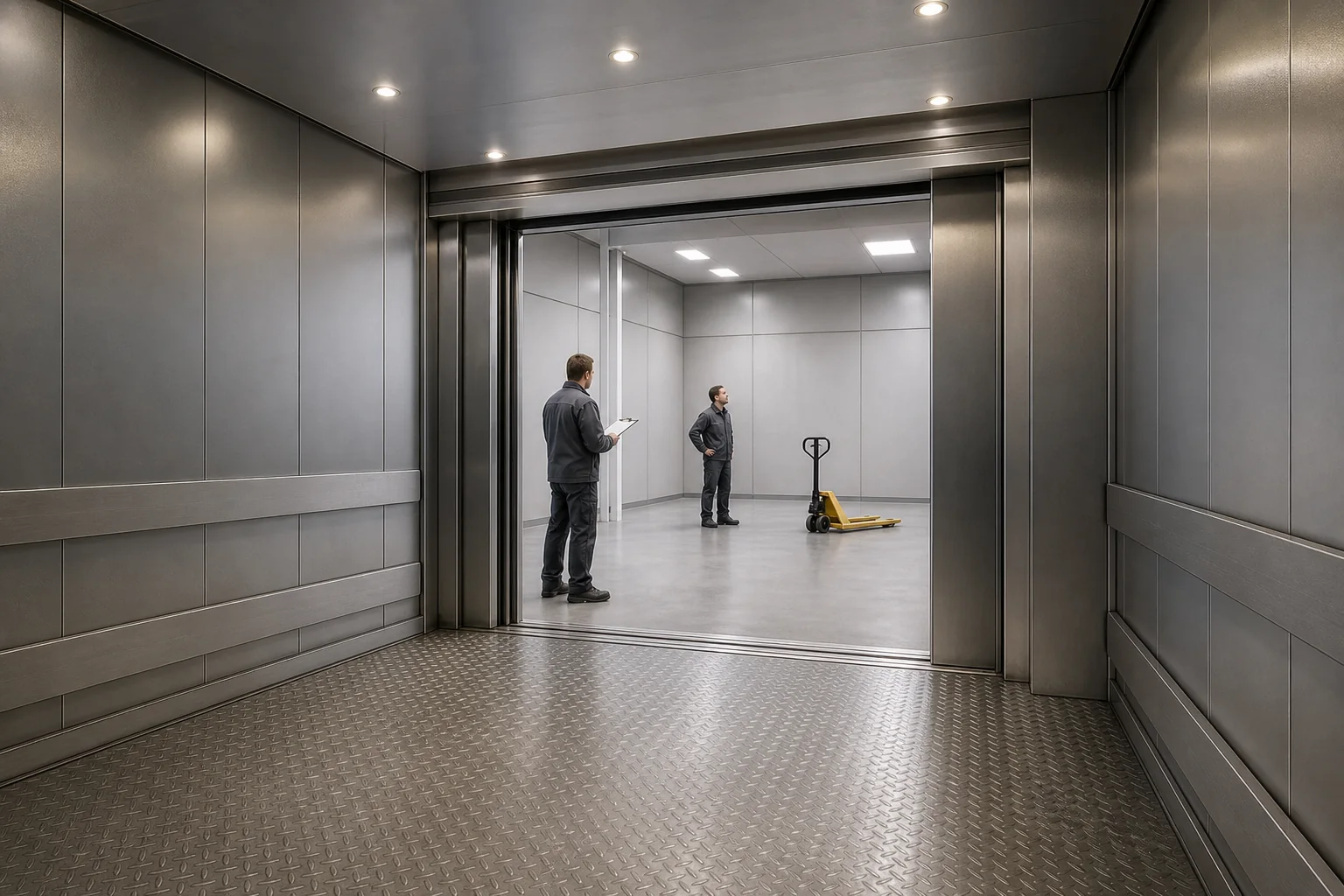
Do not select the drive simply because the building is a factory. Compare travel height, load, duty, shaft, pit, headroom, electrical supply and maintenance arrangements. Product ranges differ, so a particular model’s limits are not universal rules. The Schindler 2600 planning brochure illustrates how drive arrangements and building dimensions are specified separately.
When comparing factory elevator prices, consider building work, installation, commissioning and acceptance, energy, maintenance, wear parts and downtime—not just the equipment price. The best-value configuration is the one that fits the intended operating life.
7. Buying factory elevators from China: an enquiry checklist
For elevator procurement from China and overseas factory projects, agree on technical inputs early to reduce gaps between supply, shipping and installation. Prepare:
- Destination country and city, factory use, target opening date and local approval requirements.
- Floors, travel height and levels; shaft, pit, headroom and landing access drawings.
- Maximum load weight and dimensions, packaging and pallets, handling equipment data, and whether people accompany goods.
- Daily operating hours, peak hourly demand, loading method and expansion plans.
- Electrical supply, environmental conditions, interfaces, documentation language and training needs.
- Responsibility for shipping, import clearance, overseas elevator installation, inspection, maintenance and after-sales support.
KERUI can discuss building elevator selection, supply from China and export delivery needs using your project information. Configuration, service scope and pricing are subject to a written project proposal; certification and delivery times are not assumed to be identical across countries.
Frequently asked questions
Is a higher-capacity factory elevator always better?
No. Capacity, dimensions, loading conditions and throughput should work together. An oversized specification can add equipment and building costs without solving the actual bottleneck.
Can any freight lift carry a forklift?
No. The supplier must assess the forklift, goods, wheel loads, loading process and approved equipment use. The name “freight lift” is not enough.
When should selection start for a new factory?
Preferably before the building layout and shaft dimensions are fixed, so logistics, structural design and elevator planning can be coordinated.
In summary: start with material flow, then define capacity, dimensions, quantity, drive and operating features. Finally, agree on installation and maintenance responsibilities. This is a stronger basis for factory elevator selection than choosing a model first.
This is general educational guidance. Manufacturer references explain planning considerations; they do not imply a dealership relationship or a performance promise for KERUI products. Project specialists must confirm the final design.